 Skip to content

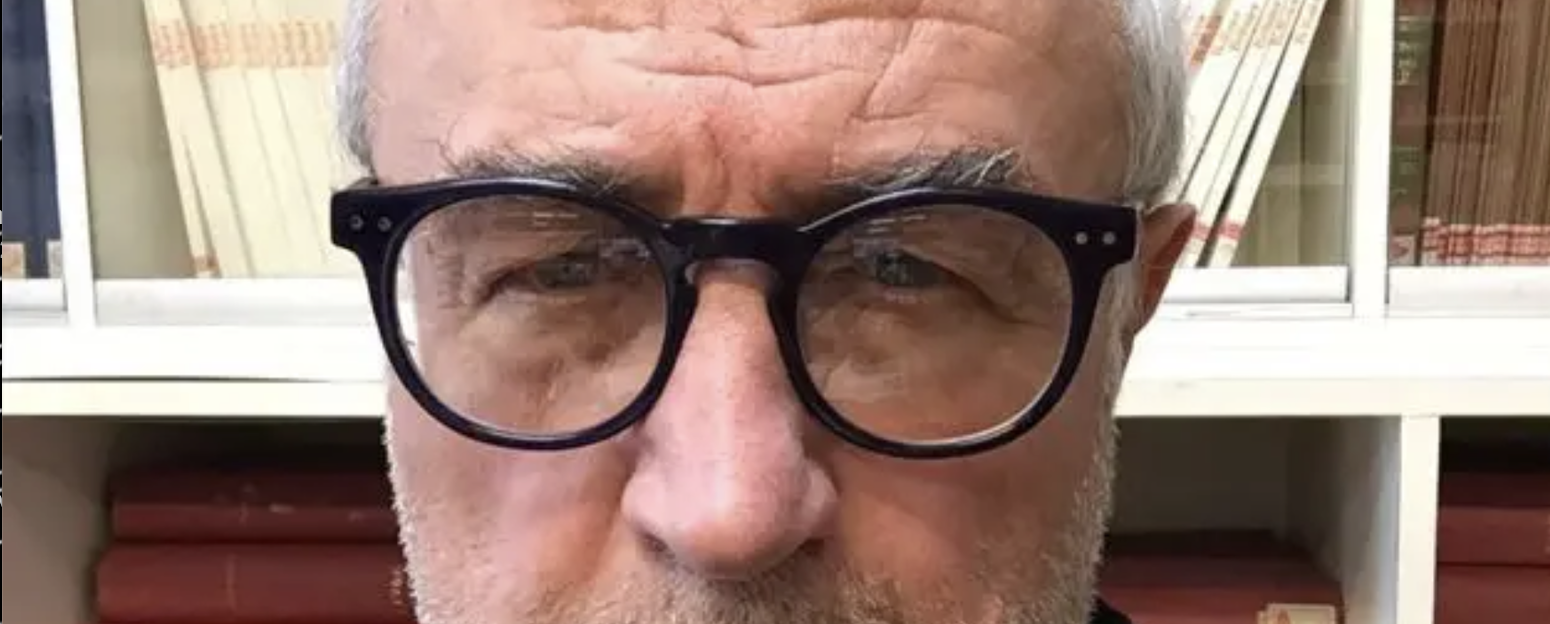
ITALY — An eighty-year-old communist running errands in a tracksuit in an upper-middle-class neighborhood — Francesco Pecoraro’s fictional avatar is a thoughtful, sad, sweet, engaged, hypochondriac boomer. He wanders in place: mainly in his kitchen, and at the grocery store where he goes and buys plastic-wrapped lettuce. He could have been the protagonist of a real novel — a bourgeois corpse of a novel — if he hadn’t been too busy taking preliminary notes to actually write one. He’s an old man who’s seen it all in the twentieth century, a man who can’t help holding on to the bygone century’s ideologies while rotting away in a world that doesn’t need him anymore and that won’t provide any alternative vision or story or plan for him.
The book, La fine del mondo, records the minutiae of his often disgusting life. It reads like a wild and engrossing mood swing, as it takes you from exquisite etchings detailing human and fish anatomy, to conversations with a surgeon on what dissecting a body can mean, to the bottomless doomscrolling that a curious old man’s life is bound to be these days, phone in hand, as he waits for his own death watching short videos of someone else’s death — or some tuna being dissected at the fishmarket in Tokyo.
Where intellectuals vis à vis mass culture were concerned, Umberto Eco used to divide the world into apocalyptic ones and integrated ones. He resented both, as they embraced aprioristic, unrealistic stances. Ambitious male novelists tend to gravitate towards the accomplished middle-class novel or the ruthless, macho big book experiment. La fine del mondo is a mature piece of writing that avoids this dichotomy. It is as poignant (and liberatingly cringe) as middle-class novels still aspire to be, and as dark and pessimistic as Adorno ordered us to be. The result is a helpless but dignified, honest as hell book about gauging time, losing friends and loving life.


You’re reading this essay for free. With a membership, you can read the full magazine, and you get access to our fabulous Library.
Here’s our offer: 3 months unlimited digital access + 1 print edition for € 38,00 € 19,00
You’ll get Issue Twelve in print as your first magazine, right to your mailbox.