 Skip to content

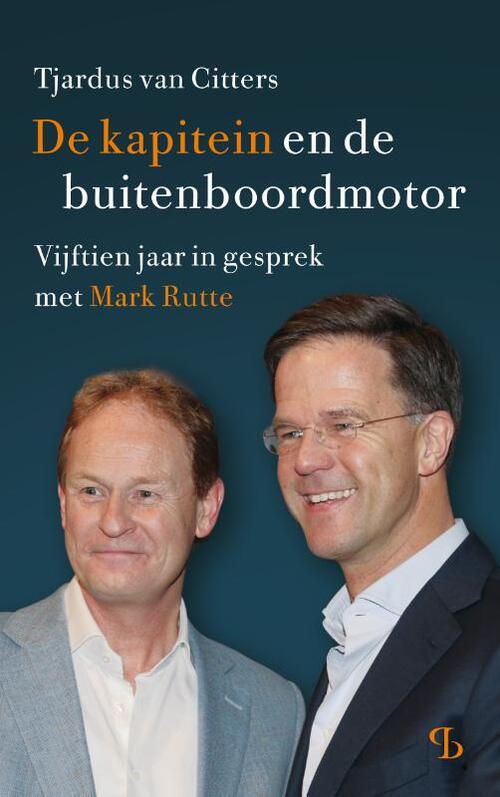
De kapitein en de buitenboordmotor
Tjardus van Citters
(Balans, 2026)
The Netherlands — The position of NATO Secretary General is a curious one. On paper, you’re leading the most powerful military alliance in history. In reality, you’re the errand boy of the President of the United States, by far the most powerful member of NATO. It’s no coincidence that the secretaries general are usually politicians from smaller member states. Picture a former French president in such a subservient role.
Former Dutch Prime Minister Mark Rutte wears it easily; in fact, he seems to revel in his role. After Trump dropped bunker busters on Iran, Rutte texted him about this « extraordinary action ». When NATO members seemed to agree on a five percent defense spending target, Rutte texted: « yet another big success ». Trump eagerly shared that private message on his Truth Social network, which would have embarrassed most people — but Rutte?
Were Rutte’s words befitting the Secretary General of NATO, at a moment when the radical-right Trump was subjecting one NATO ally after another to the whims of his tariff policy and putting pressure on democracy at home? At the conference, Rutte went even further by calling Trump « Daddy ». The criticism grew louder: Whose side was Rutte really on?
Now Tjardus van Citters stepped into the spotlight, publishing De kapitein en de buitenboordmotor (the captain and the outboard motor; Balans, 2026). For the full sixteen years that he was prime minister of the Netherlands, Mark Rutte turns out to have leaned on this completely unknown figure from outside his right-liberal party.
You don’t remain prime minister for sixteen years in a coalition country like the Netherlands without political elasticity. Rutte managed to govern with the center-left PvdA as well as work with the radical-right PVV. Difficult issues seemed to slide off him. No, he hadn’t lied to parliament about this or that. He simply had « no active recollection ». It earned him the nickname « Teflon Mark ».
Van Citters felt that Rutte laughed too easily and too often, a trait of which it was never entirely clear if it was Rutte’s great strength or a weakness. His laugh functioned as the forward outpost of his elusiveness. It was infectious, until the moment you thought: yes, ok, but now what? Which direction are we heading, what obstacles lie ahead?
Rutte tended to downplay the premiership, but Van Citters urged him to guard against diminishing the office of prime minister. To not speak of « the little job, » but of « the job ». It says something about how power in the Netherlands is symbolized, namely that it isn’t. In a country where « just act normal » is the highest conceivable virtue to be achieved for a citizen, the prime minister must pretend that he’s doing not much else other than what the others are doing, as if there’s no noteworthy power at all.
Rutte was a master. He knew how to lie low. In the morning he would jump on his (standard model) bicycle just like anyone else and cycle to the tiny office in a tiny little tower that Dutch prime ministers occupy. Maybe he’d wear his blue windcheater, or on the weekend his hoodie, and most often he’d bite into an overly green apple, so conspicuously for the cameras that it appeared to be all part of the strategy.
What seemed genuine was the notorious creature of habit, the eternal bachelor Rutte living in the same simple apartment with a gas heater that he inhabited for decades, the weekly visit to his mother, the old Saab he drove, the recurring ski holidays with the same friends, the fixed table at the restaurant in New York, the city he visited every year with a childhood friend. Rituals from which he would under no circumstances deviate. Here, the ordinariness took on something obsessive.

What’s real and what’s fake? Sometimes you get the sense that all he does is fake, and, strangely, that makes it real again in its own way. He said he wanted to go into teaching after his premiership, even though it was perfectly clear that he would simply become NATO secretary-general. Yet, throughout his premiership he’d teach a few hours each Thursday at a vocational school in a deprived neighborhood of The Hague.
Van Citters also shows us an engaged Rutte, someone moved by people’s suffering who keeps a finger on the pulse even when the cameras stop rolling. His anger over Russia’s evasiveness surrounding the downing of flight MH17, in which 196 Dutch citizens died on 17 July 2014, was not feigned. Yet, he revealed himself as one of the driving forces behind Nord Stream 2, the controversial pipeline meant to bring Russian gas into Europe via the Baltic Sea. Indignation over Russian misdeeds, yes, but business is business.
Rutte has never been a man of ideological vision. Vision was « like an elephant blocking the view, » he uttered in a speech about the country’s future. He later regretted this wording, yet it is telling of the period in which he reigned. The liberal status quo was so pervasive that you no longer realized it was simply an ideology too. It was the water the Dutch swam in, or better: the water in which they drifted lazily. Rutte presented himself as the ultimate process manager, stretching the status quo to infinity. Only when forced, did he change course, whether on Europe, climate, or neoliberalism and the role of the state, but never in any fundamental way.
This attitude — that of The Man Without Qualities — makes Rutte ideally suited to be NATO secretary-general in the Trump era. His main task is to steer the organization through this period without too much damage: to preserve the status quo. But what if that simply is no longer possible? On top of Trump’s constant threats to leave NATO, Trump wanted to annex Greenland, threatening a direct conflict with another NATO member state (Denmark).
« I’m not saying anything. My task now is purely behind the scenes, » Rutte declared at the time. What is taking shape in the coming years is a match between Rutte’s elasticity and the American president’s imperial drift. And no outboard motor in sight. Rutte is sailing solo, amid the Trumpian storm.