 Skip to content


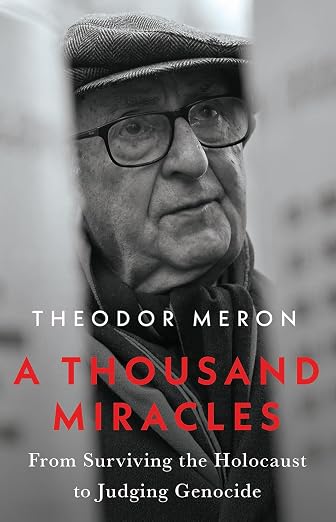
A Thousand Miracles: From Surviving the Holocaust to Judging Genocide
Theodor Meron
Hurst & Company, 2026
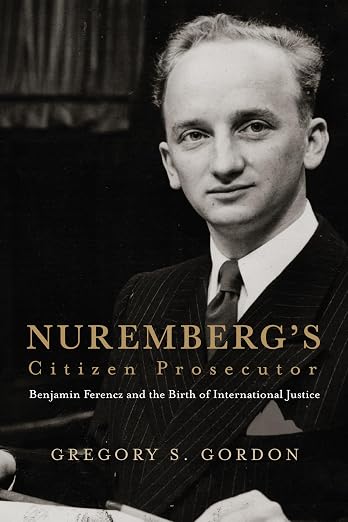
Nuremberg’s Citizen Prosecutor: Benjamin Ferencz and the Birth of International Justice
Gregory S. Gordon
University of Virginia Press, 2025
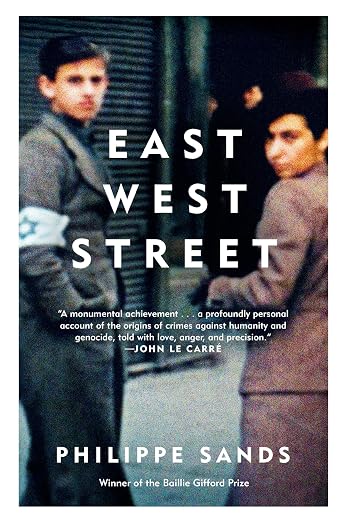
East West Street: On the Origins of Genocide and Crimes Against Humanity
Philippe Sands
Weidenfeld & Nicolson, 2016
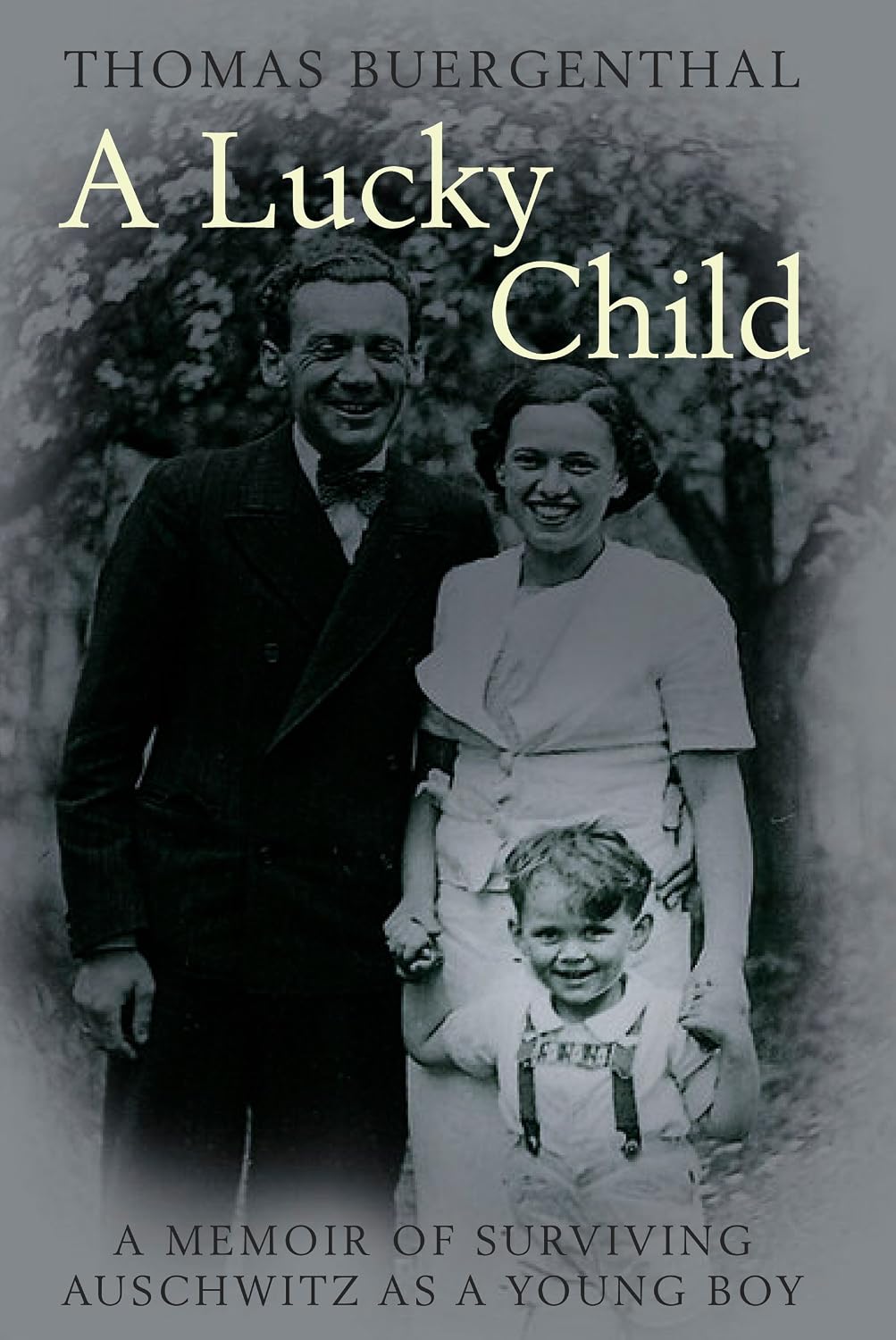
A Lucky Child: A Memoir of Surviving Auschwitz as a Young Boy
Thomas Buergenthal
Profile books, 2009
International law is dead. The world may be divided, but that is one thing politicians, media and the public seem to agree on. President Trump stated, « I don’t need international law, » to The New York Times in January 2026. He added that only his own morality would guide and restrict him. That same month, Canadian Prime Minister Mark Carney said in his remarks at the World Economic Forum that states should « stop invoking rules-based international order as though it still functions as advertised. » A few weeks later, at the Munich Security Conference, German chancellor Friedrich Merz declared that the international legal order « no longer exists ».
Like in any investigation of a murder, the question is who killed it and where it died. According to some, it happened in Gaza. The Commissioner-General of the UN agency for Palestinian refugees (UNRWA), Philippe Lazzarini, told the Spanish newspaper El País in September 2025 that « Gaza is becoming the graveyard of international humanitarian law ». For others, this death occurred in Venezuela, Iran, Sudan or Ukraine. « The already ailing system faces total collapse, » the American legal scholar Oona A. Hathaway wrote in The New York Times after the US military intervention in Venezuela in January 2026. Regarding the question of whodunnit, the traces lead to Russia, Israel, the United States or « the West ».
This dominant narrative of a failing world order and dying international law not only ignores the countless norms and treaties that still relatively successfully regulate everything from aviation to banking and chemical weapons. It also assumes that recent events are the cause of the weakening of international law, rather than the consequence. Today’s politicians and military leaders bear direct responsibility for the recent interventions and attacks that ignored the legal order. But it could be argued that they merely exploit its fragility — a fragility that has emerged in the past few years due to complacency or a lack of commitment. For the post-war generations it was abundantly clear why an international legal order was important and what it should achieve. In the 21st century, this clarity seems to have gotten lost.

The absence of global wars in the last eight decades is primarily the result of the expanding network of treaties, organisations and institutions that were built on the rubble of World War II. The system has been far from perfect and did not eradicate all violence, but it prevented the escalation of conflicts between great powers and increased the depth and breadth of justice. It is primarily the work of two generational groups of lawyers and diplomats, who were united in their efforts to transform their experience of World War II and the Holocaust into an order of international law.
Like the French lawyer René Cassin (1887-1976), who was severely wounded as a soldier during World War I and played a crucial role in drafting the Universal Declaration of Human Rights, which was adopted in 1948. In 1968, Cassin received the Nobel Peace Prize for his work. Or Jacob Robinson (1889-1977), a Jewish jurist from Lithuania who fled the Nazis in the 1940s, wrote extensively about minority rights and developed new concepts for reparations for victims.
This article is behind the paywall. Want to keep reading this article?
Subscribe to the European Review of Books, from as low as €5,00 per month.
Already a subscriber? Sign in