 Skip to content

THE ARCTIC CIRCLE — « I come from a very specific little place called the Mari El Republic, and I see that people who are interested in minority cultures like mine, sometimes think of them as these preserved-in-amber, self-contained worlds to be consumed or rescued. That’s just not how it feels from within that culture. White Moss is a story told from within Nenets culture. »
I’m speaking to Irina Sadovina — a Britain-based translator from Russian and Mari (a Uralic language spoken primarily in the Mari El Republic in Russia), who recently translated a novel that I found a profoundly unfamiliar and riveting read. White Moss (Pushkin Press, 2026) was written by Nenets writer Anna Nerkagi (born in 1951 in the Polar Ural tundra). The novel follows members from a nomadic Indigenous Nenets community in Northern Siberia. There’s Alyoshka, who pines for his former girlfriend Ilne (who left the community years earlier), while his mother tries to make him care for his new bride. Ilne’s elderly father Petko ponders his waning role in society, their neighbor Vanu tries to help both men. The setting of this camp of reindeer herders on the icy tundra feels distant, but the novel’s themes — like transitioning life phases and lost love — resonate far beyond the arctic circle.
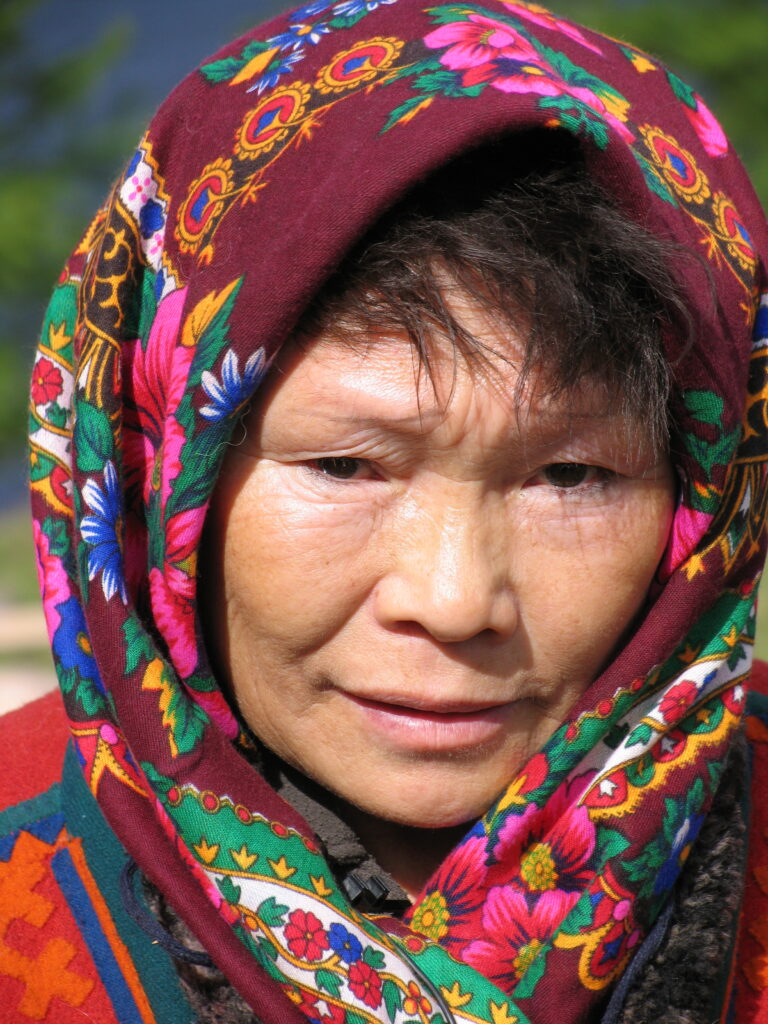
On her author’s portrait on the back cover, Nerkagi — wearing a thick, colorful headscarf — looks impatient, like she needs to get on with her day. Which was probably the case: she founded and runs the Tundra School for Nenets Children on the Yamal peninsula in northern Siberia. As a girl, she was taken away by the Soviet authorities and sent to a boarding school. After university, she published her debut novel Aniko of the Nogo Clan (1976). In 1980, she returned to nomadic life. White Moss originally came out in 1996, and her work has continuously been in print, translated into five languages.
Irina Sadovina was given the book by a friend during a teaching stint in Siberia. She read it overnight, and decided the book needed an English-language audience. White Moss turned her into a literary translator.
What about White Moss convinced you it should be translated into English?
« As a story told from within the Nenets community, it seems both strange, but also very relatable and human and true. It made me realize how frustrated I have been with the Anglo-driven cultural industry. Because when a story like this is offered up to a global audience, it’s ignored or exoticized or immediately folded into some kind of rescue narrative. It’s shoved into a worldview and agenda that are so far removed from the world where the story comes from. »
How does that insider-perspective mark the story?
« The novel’s characters are part of the real, historical world of the Nenets, the decisions they make are real. There’s no sense of: look at these Indigenous people out there with their traditional ways. They’re not expressing some grand exotic wisdom. Of course, there is wisdom, but for me it lies in the kind of care and gentleness that makes it possible to live another day and another season in this landscape. »
I found it fascinating how gender roles are very rigid — men hunt, women kindle the fire — but it doesn’t feel like one is valued over the other.
« Especially with a topic like gender, there is an expectation that for us, as readers, to care about a book, it needs to declare its allegiance to what we think is right. This book certainly doesn’t.
The Nenets society as depicted here relies on strong gender complementarity. Its patriarchy is far removed from the patriarchy in Western-centric discussions — that of the nineteenth-century bourgeois family ideal.
In their situation, there’s a minimum of two people involved in a family tent, and there are two very different jobs to be done. If those jobs aren’t done, everybody dies. I can appreciate, as a reader, how this structure of labor would be tied to strongly defined gender roles.
There’s a very disturbing scene in the novel where one of the male characters beats his wife. It’s a familiar kind of violence perpetrated by men. But another kind of violence takes place right before: this woman had been withholding food and warmth from their old neighbor. This is a kind of violence that, in the tundra, can be perpetrated by women. She chased that other man away from her fire, which means she was trying to leave him to die. »
You went to visit Anna Nerkagi in the Yamal Peninsula — what was that like?
« It took days to get to Nerkagi’s school in the tundra, on planes, cars, a ferry, a boat, ATV’s — I cannot overstate how long it was and how roadless in some parts.
I was almost done with the draft, but I had some questions about different kinds of sledges or birds — or what it meant, culturally, when a character behaved in a certain way. Nerkagi wrote the book in Russian — a language of intercultural communication; hundreds of communities can use it to learn about the Nenets. But there are very specific Nenets words, wildlife and cultural elements that she never translates or explains. What helped a little is that I come from a community that’s close to the land — even though it’s a very different type of land — and my language, Mari, is Uralic, like Nenets.
I asked Anna my questions: « Here I think you mean this bird, but this ornithological book on the Yamal Peninsula suggests it’s this other bird. » And Anna — I love her, but her replies were often along the lines of: oh well then, I guess it’s that bird? She had other things to do. She has a school to run!
One of the schoolteachers cleared up a lot these queries for me, and I’ve kept in touch with her about other questions that I had. »
What was your impression of Nerkagi?
« She reminded me of the women in my family. Extremely tough, extremely grounded, very focused, a little bit scary. She’s definitely a visionary. The school is a place for kids to learn and be integrated into modernity, without having to tear them away from traditional life — for them to still consider themselves Nenets and learn how to be Nenets adults. Near the school grounds, there is an area for elders, who put their tents up there when they’re not able to migrate anymore. »
How did the visit expand your understanding of the novel?
« White Moss shows that for a young person from a small traditional community, every direction you take means loss. When you choose to stay with nomadic life, that’s loss, when you go away, that’s loss. When you build a good life, loss will still find you. In the book, no matter how much Petko loves his family, the wolves eat his wife and his daughter leaves him. You get this sense of melancholy and hitting walls everywhere.
Well-meaning outsiders may think: ‘oh look at these poor nomads being destroyed by evil governments and corporations’ — and it is all true. But the visit allowed me to see that loss is not all there is: Indigenous communities have agency and continue to exercise it. »
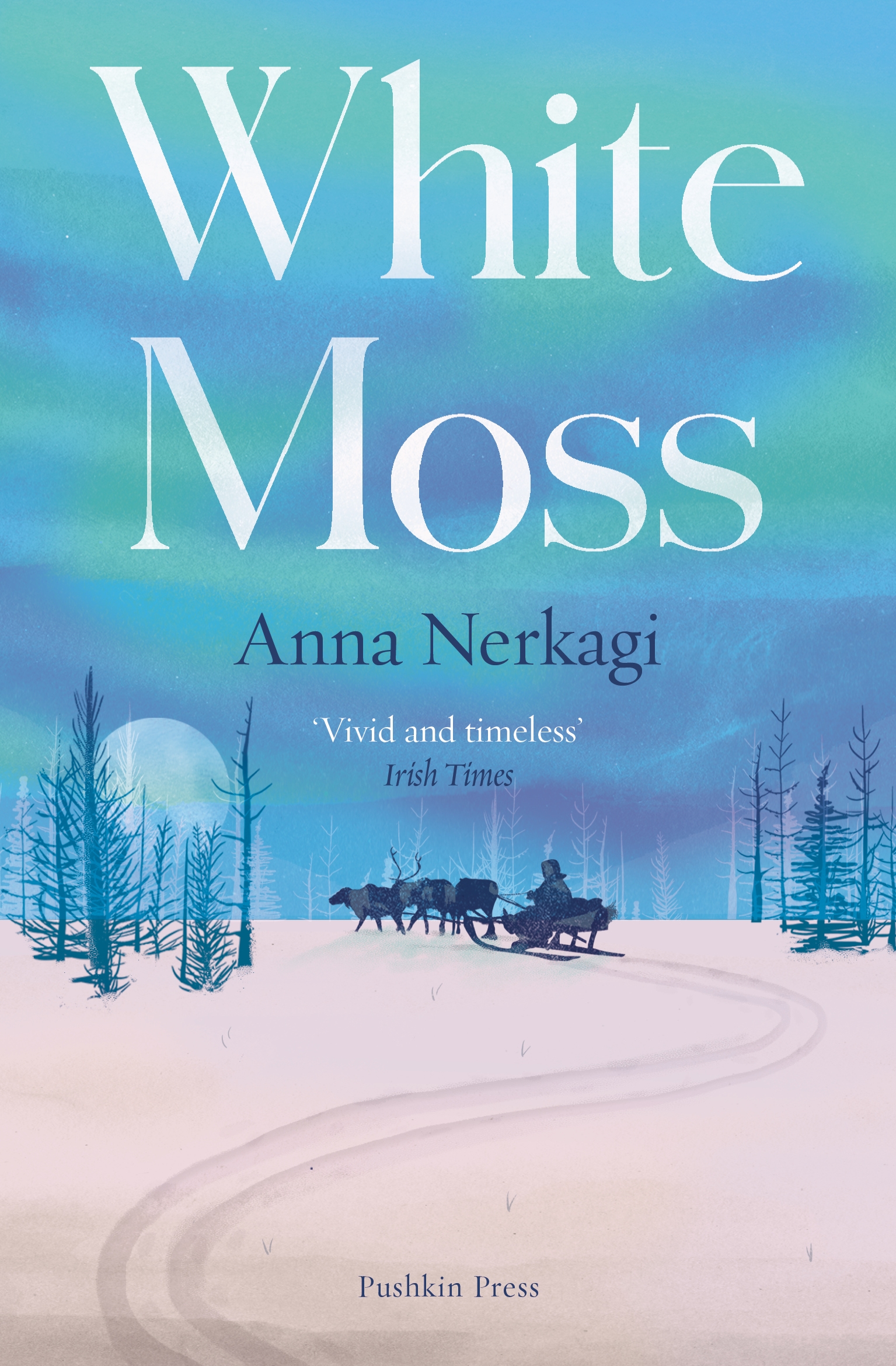
White Moss
Anna Nerkagi
Pushkin Press, 2026
Translated by Irina Sadovina


You’re reading this essay for free. With a membership, you can read the full magazine, and you get access to our fabulous Library.
Here’s our offer: 3 months unlimited digital access + 1 print edition for € 38,00 € 19,00
You’ll get Issue Twelve in print as your first magazine, right to your mailbox.