 Skip to content

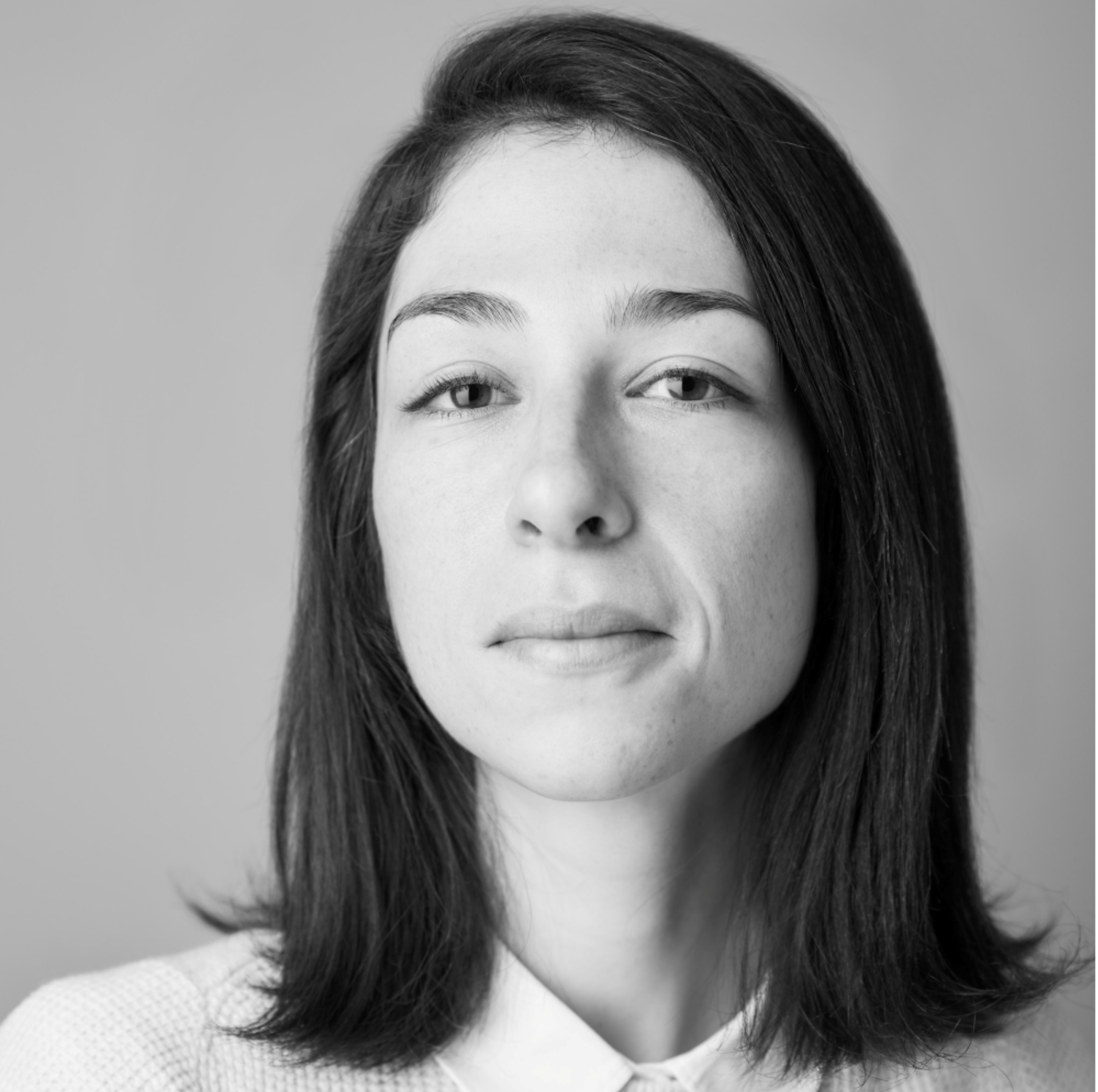
RUSSIA IN EXILE — Many writers have left Russia since the 2022 invasion of Ukraine, and now live in exile. Others still manage to live in Putin’s Russia, despite his increasing stranglehold on free expression. In this issue we’re publishing the new short story « Death of an unknown woman » by Oksana Vasyakina, a poet and fiction-writer who still lives in Russia. I spoke with Vasyakina’s English-language translator Elina Alter. Alter, who was born in St. Petersburg in 1989 and came to the US as a child, relaunched Circumference, a magazine of world-translation. She told us about other Russian-language writers we should be reading, and about russophone platforms that have opened up in Europe since the 2022 invasion.
As Polina de Mauny, editor of the Paris-based Editions Tourguenieff (which publishes Russian writers in exile), told me of the current diaspora, « there are many little islands, but we are all connected. »
What’s it like being a Russian writer today, either in exile or at home?
« I can only give you my view of it as a translator who lives in New York, but contemporary Russian literature seems like a fractured landscape. People who left Russia in the 1990s and the aughts have communities that they’ve developed, and established readerships; people who’ve left more recently are trying to get similarly organized. There are bookstores that have opened in Berlin and in Prague, websites, publishing houses, like Tamizdat in New York. But there is also a lot of anxiety and confusion because of the most recent expansion of the foreign agent law. [The 2012 law, which originally targeted — and effectively shut down — NGOs and human rights groups as « foreign agents », has steadily been expanded and now includes individuals.] Basically, it subjects people designated as ‘foreign agents’ to a really onerous reporting requirement in terms of business transactions, taxes, and what they can publish. The most recent expansion has hit a lot of writers. And for publishers, the problem is: can they still sell books by those writers? It’s both targeted and arbitrary. Last fall, a really excellent writer, Polina Barskova, who lives and teaches in the US, was labelled a foreign agent. A lot of Polina’s fiction and poetry is informed by diaries kept by Soviet citizens, so the absurdity of the situation should be particularly obvious. »
What has the war in Ukraine done to the equation?
« There was an enormous outpouring of horror, guilt, and self-recrimination among Russian writers after the start of the full-scale invasion, followed by arguments, and attempts to reckon in some way with their own sense of responsibility. I don’t think any of these things have been resolved. »
Is there a word in Russian that is particularly hard to translate into English?
« One of translation’s many troubles is limitation. The word грёза (gryoza) can mean dream, vision or hallucination (sometimes with the ominous echo of гроза [groza]n — thunderstorm — and угроза [ugroza] — threat). But in translation I can choose only one definition, so the richness of multiple meanings, which may all resound in the original, is lost. »
Alter recommends:
• Polina Barskova, author of Living Pictures (NYRB, 2022), a US-based poet and essayist who works from diaries and archival material largely about the Siege of Leningrad.
• Alla Gorbunova, who « writes philosophical, folktale-inflected short stories and poetry. » Alter translated her short story collection, (Th)ings and (Th)oughts (Deep Vellum, 2025).
• Egana Djabbarova, a poet-essayist now living in Hamburg. Her first novel My Dreadful Body was just published in English translation (New Vessel Press, 2026).
• Ivan Sokolov, a poet, scholar and translator who teaches in the US.
• Elena Kostyuchenko, an investigative journalist and activist, author of I Love Russia (Penguin Press, 2023).
• Daria Serenko, a Siberian poet and activist now living in Europe.