 Skip to content

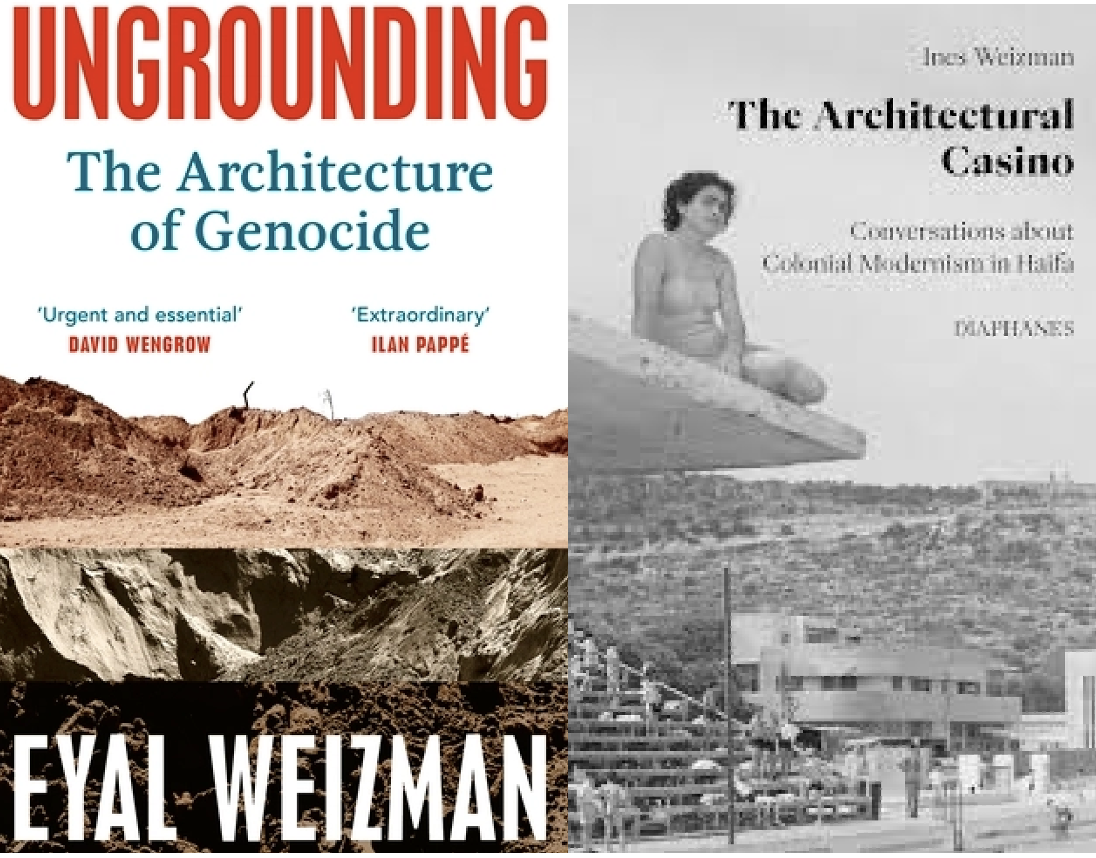
UNITED KINGDOM — Eyal Weizman is the founding director of Forensic Architecture; Ines Weizman is professor of History and Theory of Architecture at the Royal College of Art. Ines is a contributor to the ERB and a member of our brain trust; Eyal we profiled in Issue Three (« An axe to grind should make you sharper »). They are a couple. Each has just published a book that uses architecture to explore history, geopolitics, war.
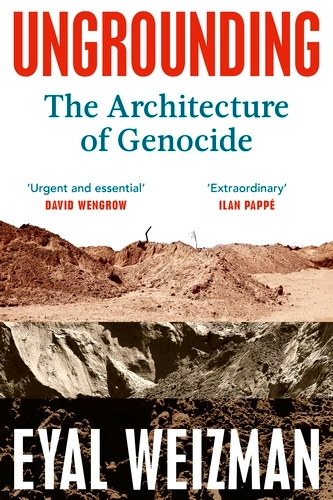
Ungrounding (Fern Press, 2026) is Eyal Weizman’s brilliant psychogeography of Gaza, this « hinge between the fertile Levant and the more arid North Africa, » which since the Bronze Age has been the Eastern Mediterranean’s coastal highway. Weizman is founder of the London-based research agency Forensic Architecture, which is currently providing evidence of Israeli genocide in Gaza to the International Court of Justice. Ungrounding gives us the long backstory to the genocide and offers a chilling glimpse of the « real-estate sharks cum politicians » who plan to transform the zone into a futuristic Gulf-style colony: Gaza as a forerunner to Elon Musk’s Mars, where the remaining Palestinians will live in hyper-surveilled camps with names like « Emirati Compound. » And the alternatives? The book concludes with a more human plan for Gaza’s future designed by Palestinian architects and urbanists, a biblical return of the exiled where historic neighborhoods are rebuilt house by house, and every family’s vines and fig tree replanted.
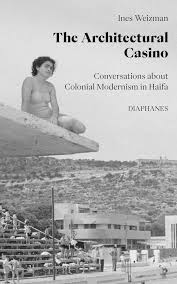
« A rhythmanalysis of a port city like Haifa is, as for almost all Mediterranean port towns, tuned to the cyclical time of the sea and the winds, and then to the way in which… ships, trains, buses and cars, the ebb and flow of oil through international pipelines, adapt to it. » Thus opens Ines Weizman’s spellbinding history of early twentieth century modernism in Haifa. The book takes us back to a moment between the wars, when Haifa was one stop on the commercial and cultural thoroughfare of « a fluid hyperconnected Middle East » that ran from Cairo through to Beirut and Damascus. The Architectural Casino (Diaphanes, 2026) is thus the compendium of a lost urbanity, revisited without a trace of colonial nostalgia. In Issue Nine, Weizman wrote about the night in July 1943 when Josephine Baker performed at a benefit for the Free French in Haifa’s now demolished Bat Galim Casino. Other items in Weizman’s book: the history of pioneering women photographers in pre-war Palestine, some of whose work quite literally ended up in the junkyard, or the eccentric striped house that Adolf Loos designed but never actually built for Baker.