 Skip to content

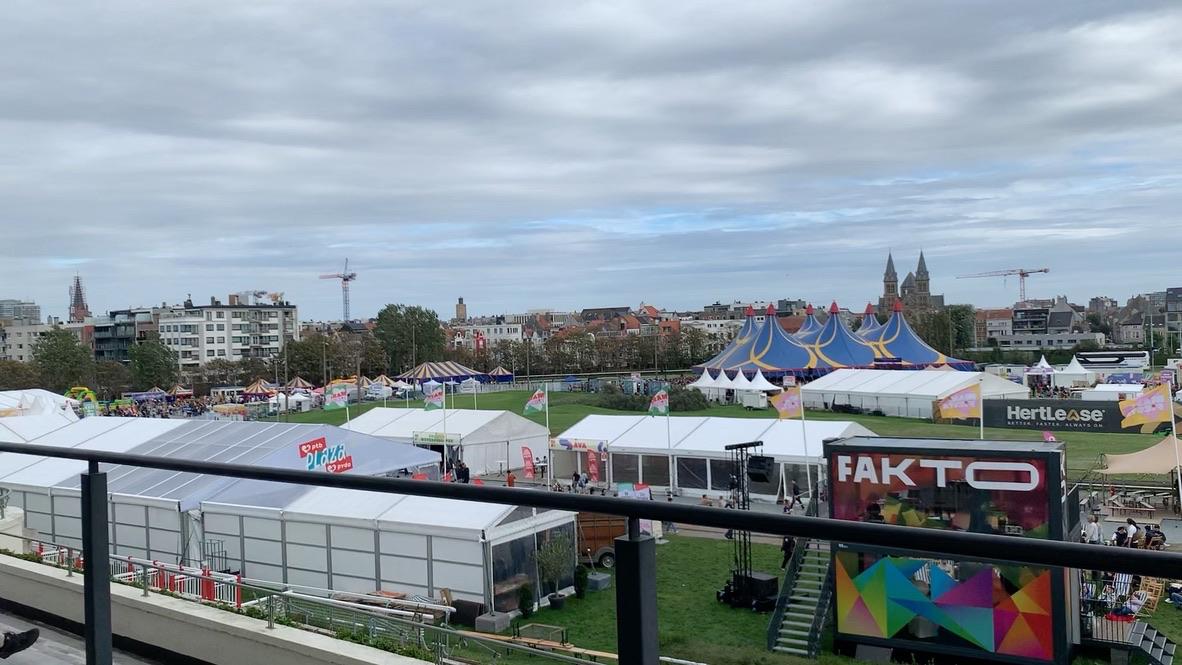
Sitting at the border of Oostende’s North Sea coast is a Napoleon-era hippodrome – normally home to horses and 90’s nostalgia bands from the surrounding Flemish countryside – except for one weekend in September, when the hippodrome is transformed into a bipolar festival: half party, half socialist thought exchange.
ManiFiesta has been balancing that tightrope for quite a while: operating since 2010, the festival mixes political debate, unions and activists with dance classes, concerts and football. Take a lap around the hippodrome that weekend, and you could catch a glimpse of a progressive utopia.
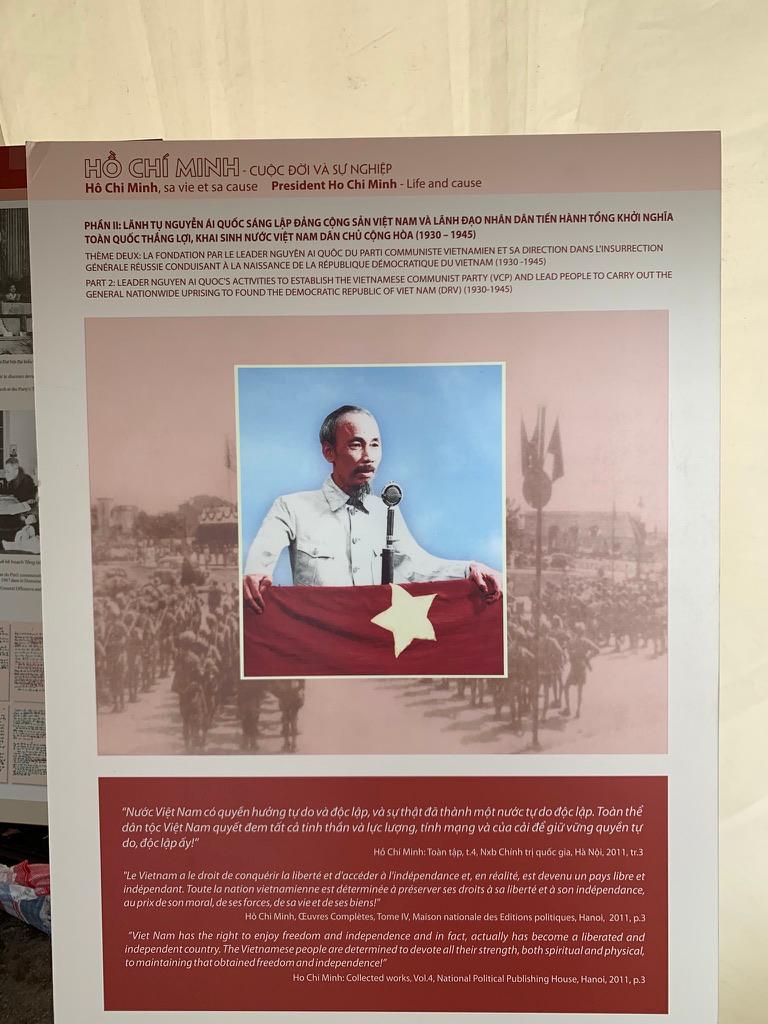
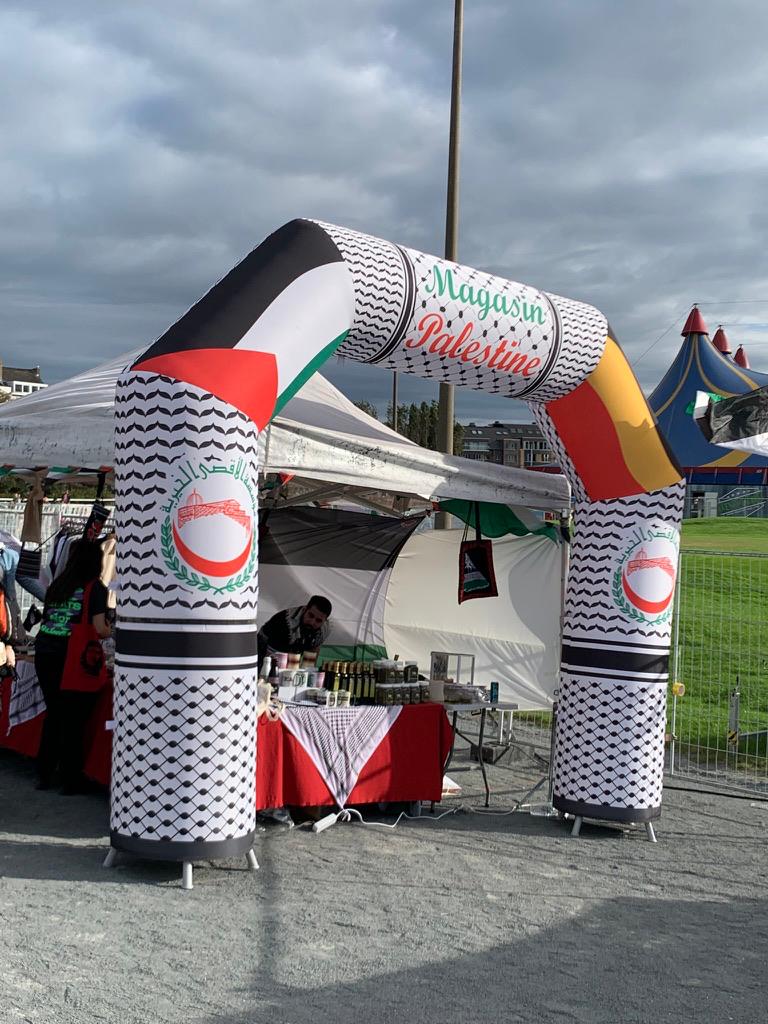
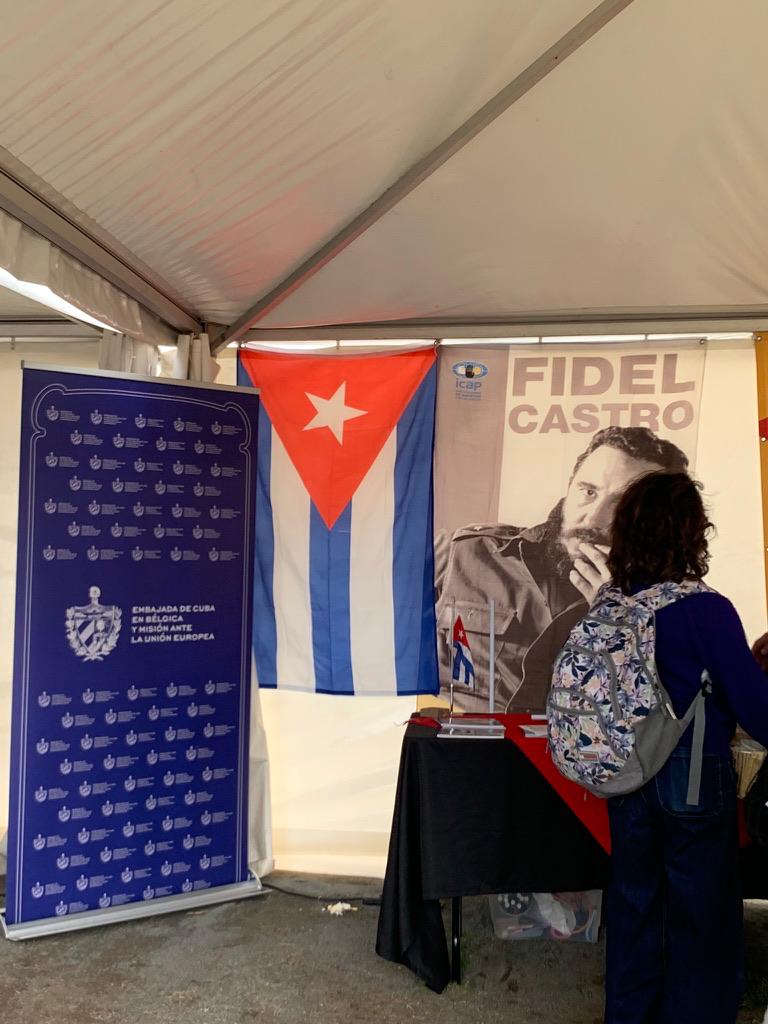
The Barcelona-based Balkan Paradise Orchestra plays a genre called worldfusion. Palestinian arts and craft stores sell olive oil and jewelry. Enthusiastic Cuban and Venezuelan campaigners explain the far-reaching consequences of American embargos. Pan-European unions plan strikes against growing austerity measures in multiple countries.
And in the midst of it all, nobody states their pronouns. Weeks prior, in the US, a revolution within the revolution had started. Alexandra Ocasio-Cortez (AOC), the New York congresswoman who came to prominence in the late 2010’s/early 2020’s, proclaimed the death of « WOKE 1 » – the self-dubbed identifier for that era of left progressive « politics ». Remember that friend who posted a black square in solidarity with BLM all those years ago (maybe it WAS you!!), the mass protests, the virtue signalling, the unsuccessful, unproductive attachment to excessive identity politics.
Silly times, right? Centering a political movement on minority rights, systemic racism, anti-harassment at its core suddenly appears almost embarassing. In its place, WOKE 2. From identity, to class.
Perhaps this is why at this year’s ManiFiesta edition, every mention of identity politics was immediately turned into a plea for class consciousness, a plea for direction action, strategies for winning elections.
Perhaps this is why among the most popular examples of progressive success stories in the panels and debates I attended was of course Zohran Mamdani in the US, whose campaigning is becoming a template for an ever-growing network of progressive European mayors who visited him this week.
And perhaps this is why historian Anton Jäger’s Hyperpolitics (2026, Verso Books) was sold out at the socialist bookfair inside the hippodrome grand stands. Jäger’s assessment of the moment essentially mirrors AOC’s Woke 1 comments: 2020’s hyperpolitics offers much politicisation, with little institutional framework. Mass protests, mass movements, that barely change policy.
But simply blaming the left’s politically unsuccessful decade on the performativity of Instagram sliders and protests signs might be a tad too convenient. The issue is much more structural: union membership (with some exceptions in Scandinavia) has been declining at large in Europe. So has collective bargaining. Centre-right (and left) imposed austerity measures permeate in multiple European states, and just this week, Berlin’s Left Party won in an election that’s been immediately overshadowed by the federal government’s reneging on its flagship promise to collectivise part of the city’s housing market (a legal measure that was voted for in a referendum).
Besides, an overt focus on identity and culture is (partially) what worked for much of Europe’s far-right. Of course with the added bonus of real political leverage, given that centre-right parties have consistently worked to tear down the proverbial « firewall », voting with the far-right (over 20 times in the European Parliament alone!).
It’s this predicament that ManiFiesta’s hosts seems to be stuck in. The Belgian Workers Party PTB/PvdA (Parti du Travail de Belgique/Partij van de Arbeid; the party of work.) was once a fringe and overly academic Marxist party. In recent years, it has grown more popular in Belgium, now polling as the strongest party in Brussels and catching up in Wallonia.
Behind its success, according to political scientist Pascal Delwit, is a mix of new and old. The PTB/PVDA communicates almost exclusively on everyday problems, affordability, pensions, and healthcare (WOKE 2!!) – mixed with young, engaging discourses on social/identity issues (WOKE 1!). All the while it has also stuck to traditional party politics, with a solid membership and activist base – including its Medicine for All program. The PTB/PVDA-led initiative offers patients cost-free consultations in twenty two clinics across Belgium.
But this approach has its limits – a glass ceiling that other European progressives seem to reach as well. For all its success, the party’s growth in Belgium’s Flemish region has been slow. Here, the right-wing Vlaams Belang and N-VA (Nieuw-Vlaamse Alliantie (New Flemish Alliance) hold the monopoly on workers’ interest. The same is the case for Germany, where a progressive affordability agenda, even if evidence-based, has proven to be insufficient in a recent state election in which the far-right AfD (Alternative für Deutschland) won a vast majority.
The majority of AfD voters self-identified as workers, around 90% argued that they’re dissatisfied with their economic circumstances, yet over half of its voters favour massive welfare cuts and oppose taxing the rich. German progressive parties, as well as media outlets, explained the impacts of an AfD-designed economic agenda repeatedly. This hardly deterred them.
While AfD voters remain worried about the economy, and especially migration, the party didn’t just fearmonger. It had fun. Community get-togethers, barbeques, and public forums spread a sense of belonging.
Sounds an awful lot like ManiFiesta. The difference is, of course, who gets invited to the barbeque – and who’s willing to actually show up.