 Skip to content

The most sublime of the violins made by Antonio Stradivarius (Cremona, c. 1644-1737) have names like roses: there is the « Countess Polignac » and the « Davidov », the « Lady Tennant » and the « Molitor, » and they’ve been owned and played by the world’s greatest musicians.
Stradivarius’s technique evolved with time; his violins’ bodies grew longer and deeper, their sound richer. In 1719 — at the height of his « Golden Period » — he made nine known violins. Of those nine violins, two were lost in World War II. Till now, when one seems to have surfaced.
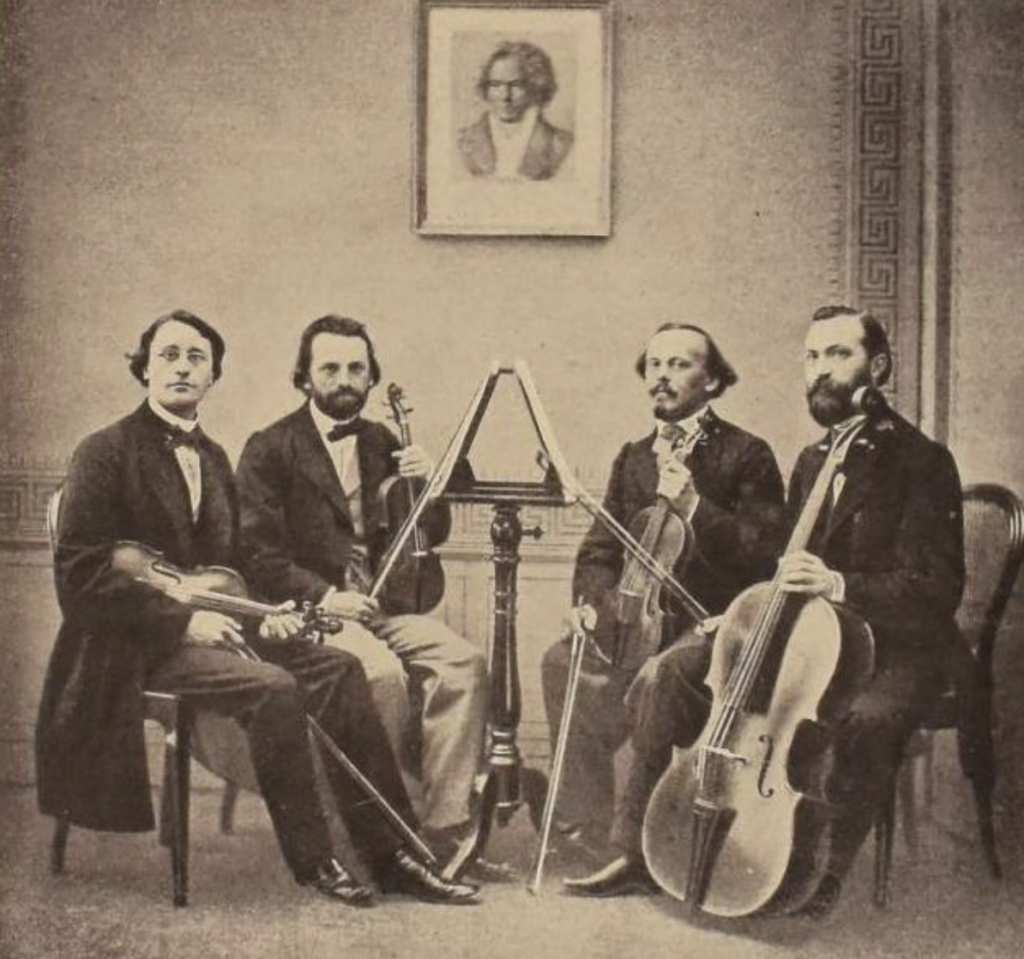
Pascale Bernheim’s Paris apartment is in a happy tumult. Jagged notes of music, bursts of laughter erupt from the living room — the members of Quatuor Agate are practising a Beethoven String Quartet. Bernheim wanders into the kitchen. She’s been giving TV and radio interviews all week; this morning it was a Swedish newspaper. We sit down to a lunch of roast chicken and chocolate cake from last night’s cello recital: me, Pascale Bernheim, and her cousin Pierre Hodgson, my old friend who’s invited me to join them.
Hosting young string quartets in her living room is what Bernheim does for fun, but it’s not why foreign journalists are suddenly knocking on her door. Bernheim is a founding director of Musique et spoliations, a group devoted to tracking down musical instruments looted during World War II. Its most recent success is the return of a lost violin made by the workshop of Albert Caressa, the great twentieth century Paris luthier (someone who makes, repairs, and deals in stringed instruments), to the family it was stolen from. It was « the first musical instrument returned in France since the beginning of the 1960s », Bernheim tells me.
In April, her organization announced that it had located an even more legendary instrument: a Stradivarius that hadn’t been seen since 1944. The violin is worth ten million euros, but its current owner – a Strasbourg luthier – refuses to acknowledge that his instrument is the long-lost « Lauterbach. »
This isn’t the first time Pascale has encountered the luthier, Jean-Christophe Graff, or indeed this very same violin. Over lunch, she tells us the story of the looted instrument:
Back in the 1990s, an East German violinist brought Graff a violin he’d bought as a young music student in the former DDR; it was beat up and needed repair. Graff, to the violinist’s surprise, identified the instrument as a « Vuillaume », made by the finest nineteenth century French luthier. The violinist sold his « Vuillaume » to Graff (he’d never much liked its sound, too « sombre » ) and for several years, Graff’s « Vuillaume » made the rounds of exhibitions and festivals — until an Englishman called Charles Beare, probably the best violin expert in the world, said, no, in fact, the inside label was correct: it was a Stradivarius, from the Italian master’s golden year of 1719.
Graff was reluctant to accept the Englishman’s verdict. In 2017, he came to Bernheim to learn more about his violin: was it really a Stradivarius, and if so, had it been looted?
« Pianos are easy to identify, » Bernheim says, « they have registration numbers inside them, like automobiles. Stringed instruments are trickier. » They showed it to the expert authenticators — including Beare, who repeated his earlier verdict. Bernheim suggested that Graff do a dendrochronological study of the wood; it confirmed Beare’s judgment, and corresponded to the archival descriptions of the Lauterbach Stradivarius.
« Its measurements and structure, its varnish, the color of the wood, its markings, all the accidents that occur during the life of a violin — all that information was also written in [London violin-maker] William Hill’s 1913 diary entry, » recording his repair of the Lauterbach, Bernheim tells me.
There could be no doubt. Of the two missing Stradivariuses from 1719, one of them (called the « Lautenschlager ») has a back made from two joined pieces of wood, the other — the Lauterbach — is made from one piece. Graff had in his possession the legendary Lauterbach, missing for 82 years.
When people talk of looted Nazi treasures, they mostly think of objects stolen from Jewish families. The Lauterbach (named after a nineteenth century composer who was one of the violin’s owners) reminds us of the wider non-Jewish worlds that Hitler’s war also destroyed.
The violin’s last legal owner was an amateur chamber musician called Henryk Grohman (1862-1939). Grohman came from a German manufacturing family living in Łódź who were fierce Polish patriots. (His nephew was assassinated in the 1940 Katyn Forest massacres, when the Soviets killed 22.000 Polish officers.) Grohman, who had no direct heirs, died in 1939.
« In his will, he left some of his possessions to the Museum of Warsaw, » Bernheim says. « The violin was not included. But in September of that year, when the Germans reached Warsaw, his executor decided to give the violin to the museum for safekeeping. The Lauterbach, hidden in the museum’s chapel, was most likely stolen by a German soldier called Theodor Blank. The violin disappeared from our radar in 1944, despite the Allies’ efforts to track it down. »
After Pascale Bernheim identified Graff’s violin, without revealing the name or location of its current possessor, the news again went dark; for almost ten years, the instrument disappeared from view.

You’re reading this essay for free. With a membership, you can read the full magazine, and you get access to our fabulous Library.
Here’s our offer: 3 months unlimited digital access + 1 print edition for € 38,00 € 19,00
You’ll get Issue Twelve in print as your first magazine, right to your mailbox.
Until 31 March 2026, when an Alsatian newspaper reported on an evening of wine and classical music, in which the young violinist Emmanuel Coppey performed the same Sibelius extract on three different instruments made by three famed violin-makers, including a 1719 Stradivarius.
Jean-Christophe Graff was described as being one of the protagonists of the evening, which took place in a Colmar museum. The Lauterbach was openly back in play. Bernheim meanwhile had been continuing her own research. The Museum of Warsaw had confirmed that Henryk Grohman’s original bequest to them did not include the Stradivarius; the violin’s ownership, at his death, thus reverted to his heirs. She’d teamed up with a genealogist who found that Grohman, though childless, had descendants in Austria and Argentina who knew all about their forebear’s legendary Stradivarius. A week before the Colmar concert, Bernheim was in Argentina, meeting with the South American branch of the Grohman family.
« Grohman’s descendants would like to reclaim the violin, if the law allows them, so that this exceptional ten-million euro instrument can once again be played and brought back to life, » she tells me. All that remains is for the Strasbourg luthier to acknowledge the obvious. (« He now agrees it’s a 1719 Stradivarius, so which one is it? He doesn’t say. ») As far as Bernheim is concerned, her foundation’s work is done.
Bernheim comes from a French Jewish family; her parents managed to survive in exile — her father joined de Gaulle’s Free French — and returned to France after the war. Her mother, Claude de Soria, was a sculptor, her father an art-dealer, her sister Emmanuèle was a novelist.
Pascale was the only music fanatic in the family. She noticed that there were groups devoted to recovering art looted by the Germans, but nothing for musical instruments. In 2017 — the same year Graff approached her — she founded Musique et spoliations with Corinne Hershkovitch, a lawyer. « There’s a sensual relationship between an instrument and its player, that’s what makes them so special, » she says. A Picasso doesn’t need to be looked at, but « an instrument needs to be touched, held, played, to keep its sound and value. »
Eighty-two years after its disappearance, the Lauterbach Stradivarius’s true origins and lineage has been reclaimed. It’s a triumph of research, memory, tenacity, and connoisseurship. And the other 1719 Stradivarius that’s still missing, the two-pieced Lautenschlager that was stolen from a Berlin museum during the war? It was last heard in the 1950s, when the violinist David Oistrakh was recorded playing a Shostakovich piece on it, Bernheim tells me. In 1998, Russia passed a much-criticized law declaring that property looted by the Red Army was to be kept as restitution for war damages. Not much chance the Lautenschlager will be heading home to its pre-war owners, so let’s hope the latest Russian-based Oistrakh is enjoying it.