 Skip to content

My best friend in Brussels told me he never used the word meadow before he met me. And one of my fellow editors believes the ultimate form of tea is one that comes in a teabag.
I have indeed spent a substantial part of my life wading through meadows in all kinds of weather and every possible season. I grew up in the countryside, and for 1990s and 2000s Latvian kids, summer often meant being sent to your grandparents. That is where we picked up the crafts.
I learned to recognize plants and flowers, and what they are good for. And these skills do come in handy. Recently, while walking the Camino, one of my travel companions had an aching foot, so I put a ceļmallapa (Plantago major, the greater plantain), a very common roadside plant, on it. I saw the confusion and distrust in his face. But hey, I grew up with ceļmallapas constantly healing the bruised knees and shins I earned while playing outside. Even if it is a placebo, my knees went through a lot, and they are still there!
This weekend, I had the perfect opportunity to revive my inner meadow-wanderer. My Latvian best friend had a birthday, and she invited a bunch of city people and me to her countryside home. We ate melleņu klimpas (blueberry dumplings), new potatoes with dill and cottage cheese, yeast pancakes with bearberry jam and other foods that make you feel like a Latvian kitchen in July is the top of the achievements of the entire civilization.
There were workshops too. I gave the group a little « morning » workout at 4pm, which was a mix of yoga, gymnastics warm-up exercises I remembered from school, and, for the grand finale, a relay race involving hay bales: pushing them across a cut meadow, jumping over them, and generally proving that the perfect gym is the meadow.
Then there was my friend’s workshop: taking wicker baskets and going into the meadow to pick tea. When I was little, I did not appreciate another part of my meadow-wading education: picking plants and flowers for tea. I never thought of it as a skill. It was just something people did. Only now I’m learning what a wonderful superpower I have.
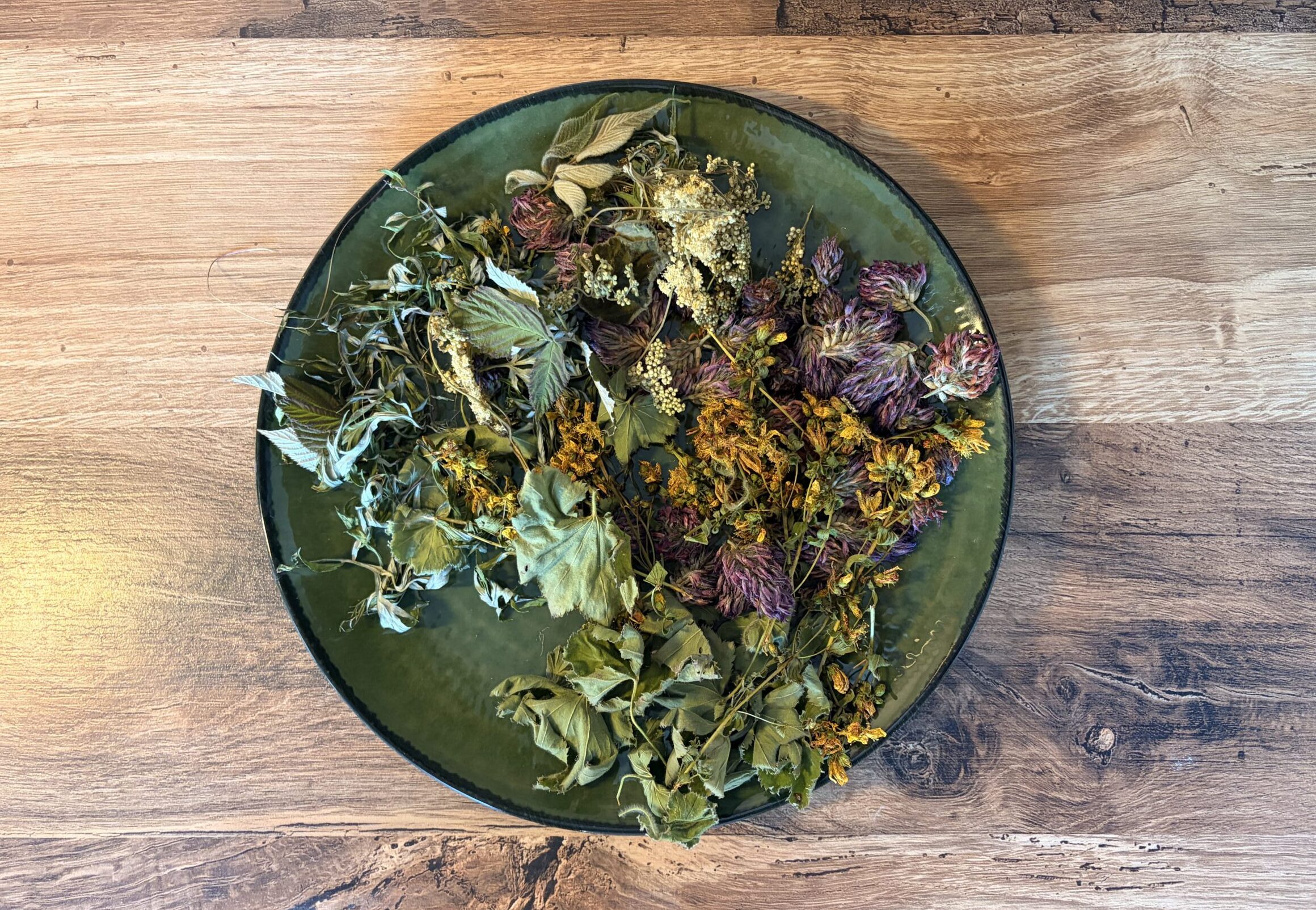
And oh, the meadow provided. I’ll show you what was in my basket.
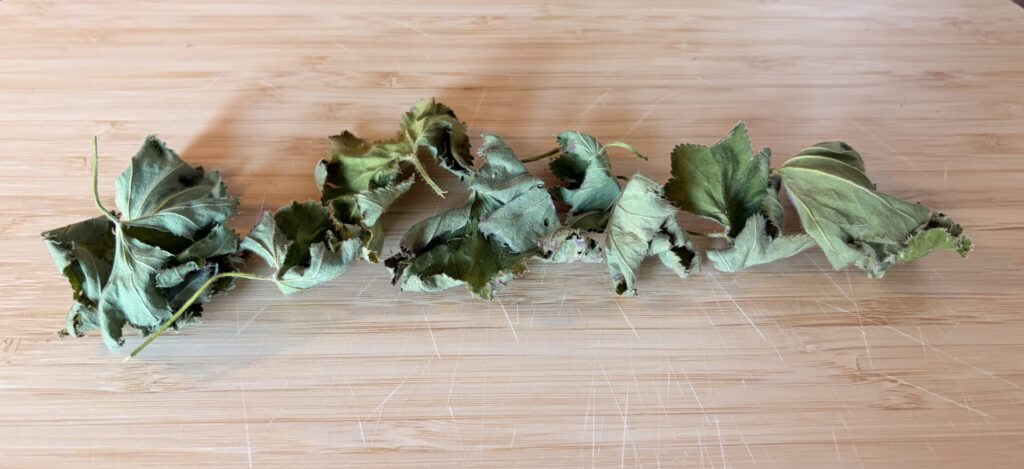
First, raspodiņi (Alchemilla). The translation is « dew pot », which is a beautiful name for a plant that literally stores the morning dew in its leaves. In Latvian folk knowledge, its tea is associated with women’s health, digestion, and general strengthening. It is one of those plants that looks rather modest until you know exactly what you are looking at.
Then came vīgrieze (Filipendula ulmaria, meadowsweet) and asinszāle (Hypericum, St John’s wort):
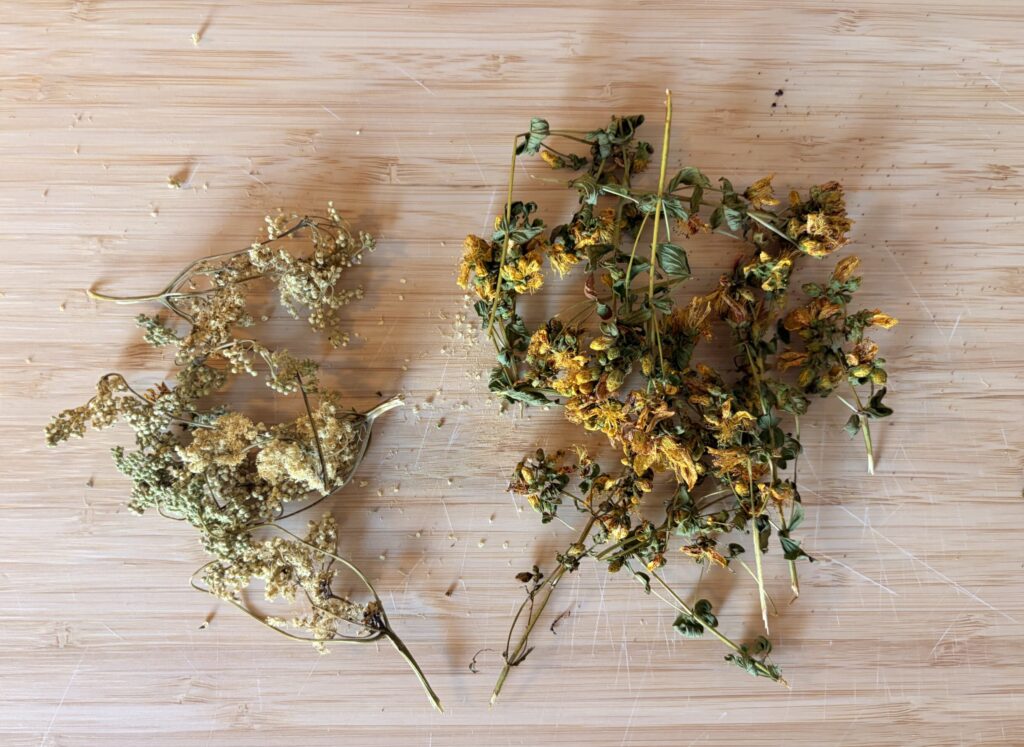
Vīgrieze smells like a hot July evening. We drink it when the nervous system needs a hug. Asinszāle also does that.
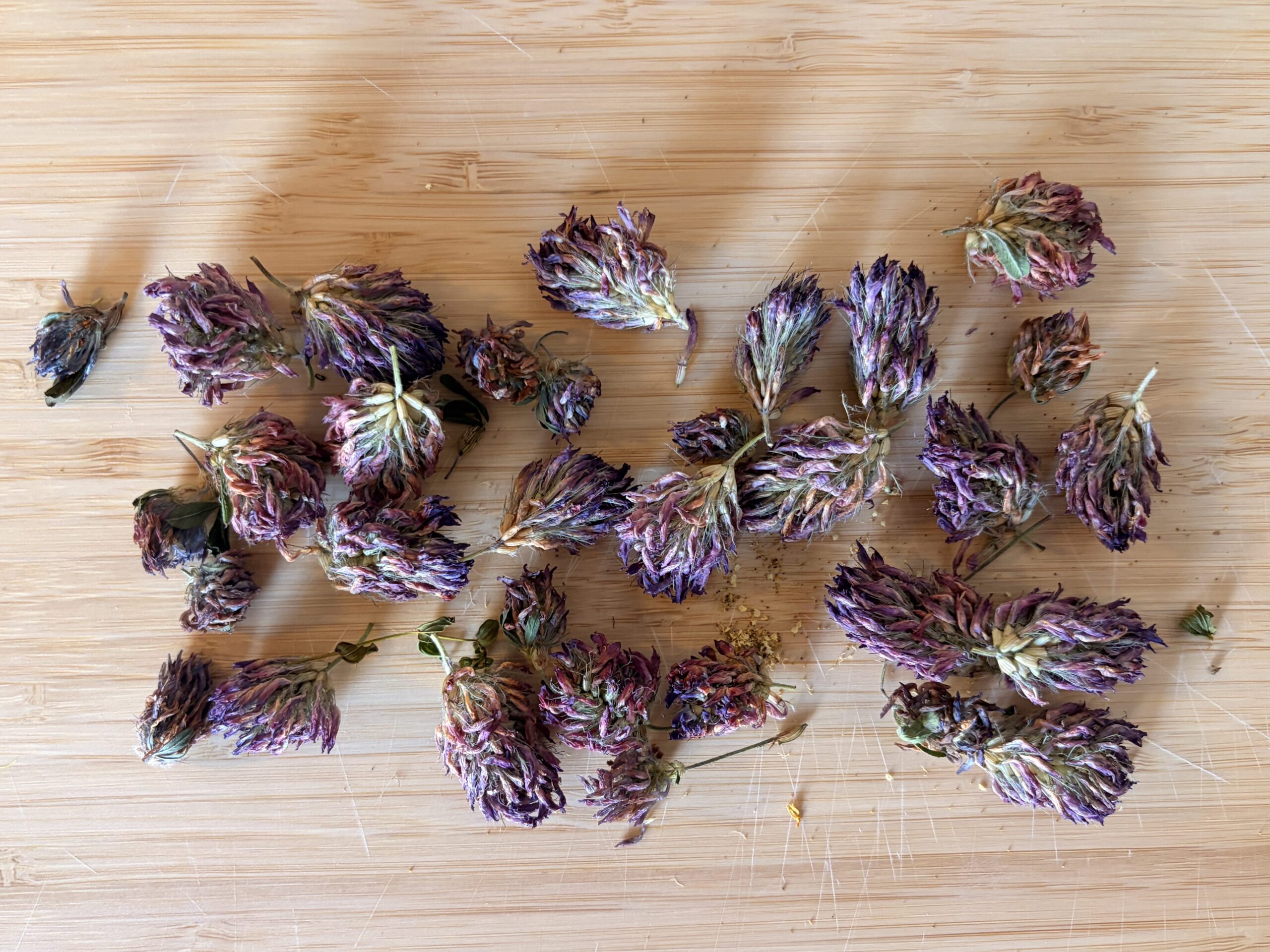
There was sarkanais āboliņš (Trifolium pratense, red clover). Traditionally, it is used for menstrual pain, skin, hair, bones, circulation, and all sorts of internal order.
Vībotne (Artemisia, mugwort) is a bit more on the bitter side, but it’s also a superpower. This is the plant you turn to when the stomach is feeling sad.
And then raspberry leaves: rich and green. Their tea is the sort of thing you drink when you have a cold, a tired body, or just a need to feel like someone is taking care of you.
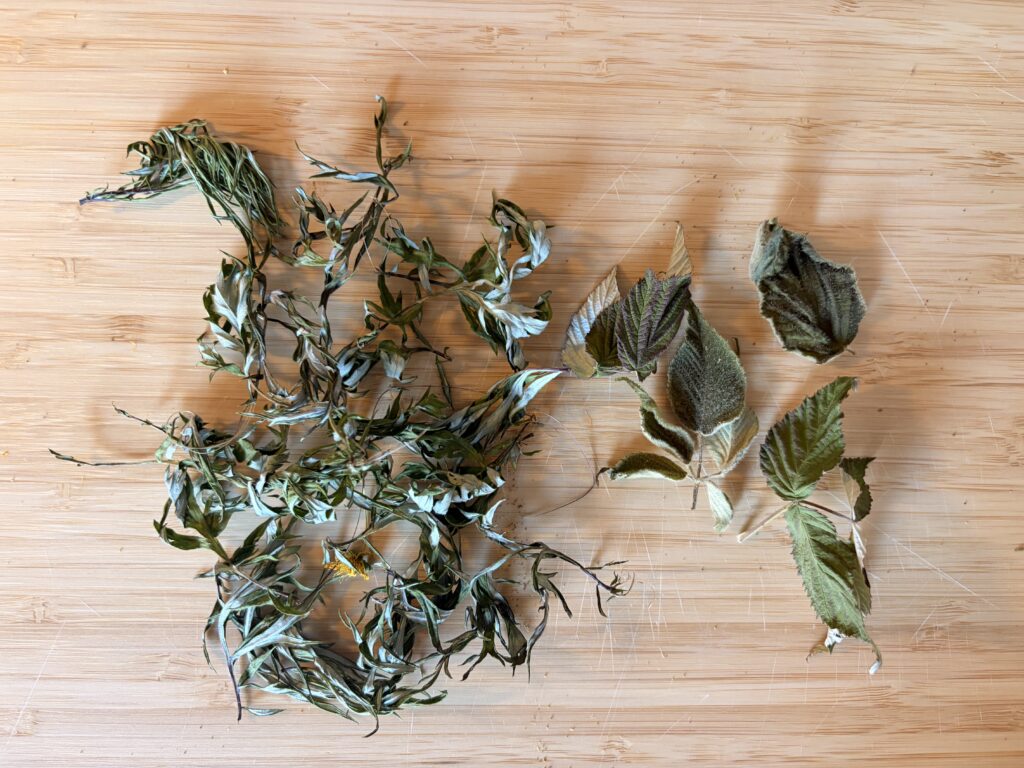
A notable mention goes to pelašķis (Achillea millefolium, yarrow), although I could not find any in this particular meadow. In my childhood, yarrow was part of the same emergency department: to be drunk when there’s a cough, runny nose, fever, stomach trouble, general human fragility. It is one of my favourites, more for its taste though.
Ta-dā. It’s a whole world in that one meadow: it’s tea, medicine, memory, exercise equipment, birthday entertainment, and a whole system of knowledge. Meadows are the best.
Oh, important: don’t eat or boil any plant you don’t properly know. Not every plant wants to be your friend.