 Skip to content

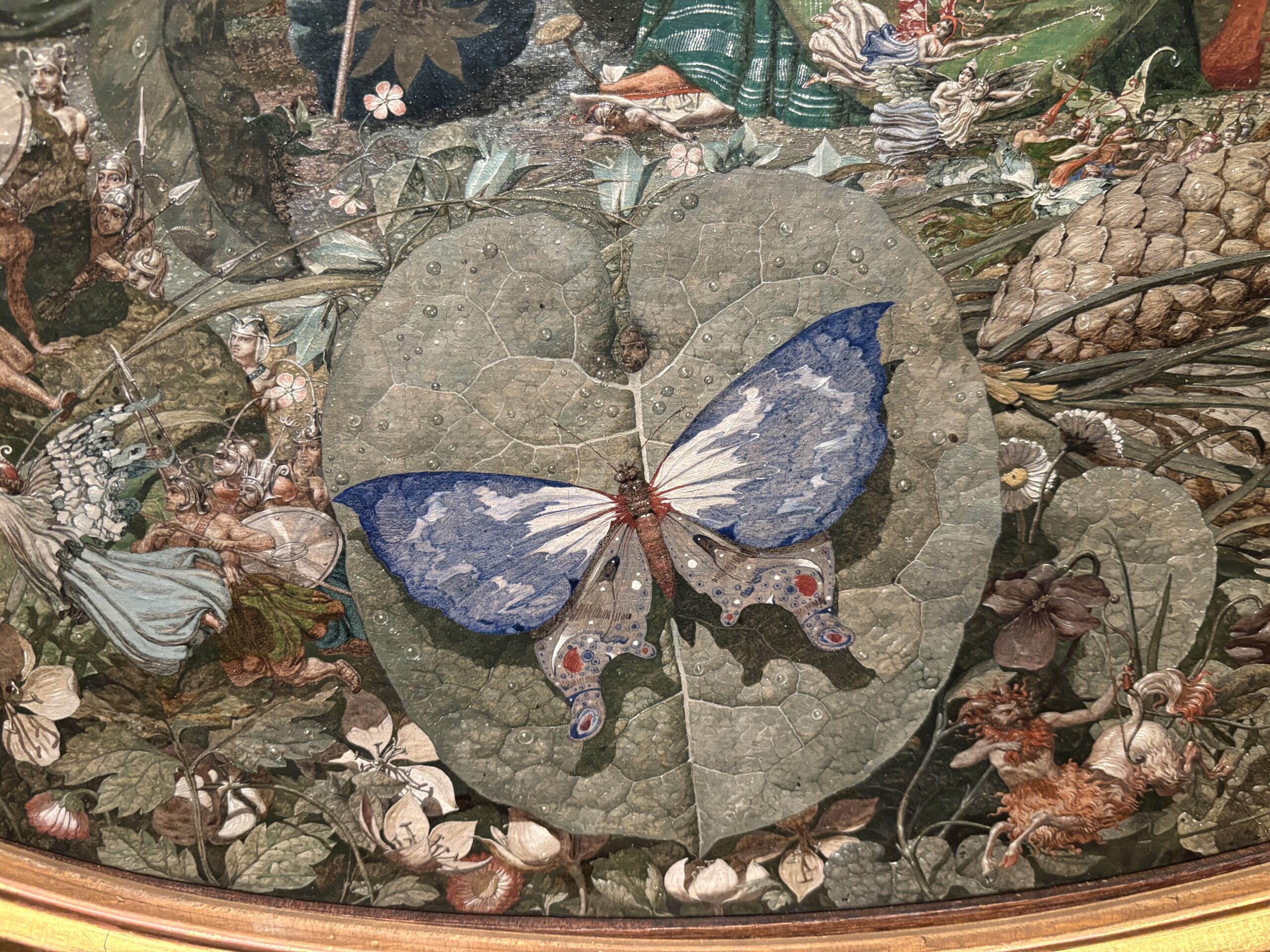
In August 1843, the English painter Richard Dadd stabbed his father to death. The Egyptian sun god Osirus told him to. Dadd, an ambitious and accomplished young artist, had returned from a Grand Tour of the Eastern Mediterranean in a high state of psychosis. After killing his father, he escaped to France intending to assassinate the Emperor of Austria. Instead, he was caught and spent the remaining 42 years of his life in English asylums, first in the notorious Bethlem (popularly known as Bedlam) and then in Broadmoor. One doctor described Dadd fondly as a « thorough animal », although apparently he was always completely sane on the subject of art and the latest art-world trends.
The doctor’s handwritten report is part of a glorious exhibition of Dadd’s art at the Royal Academy in London that’s running through 25 October. Dadd had the good timing to be mad when psychiatry was going through a humane spell: Broadmoor had open wards where patients were allowed plenty of books, sweets, walks in the countryside, and access to art and theater. Dadd painted prolifically, and the hospital staff members amassed large collections of his work, presumably at rock-bottom prices. (Patients weren’t allowed to sell on the open market.) Interestingly, Dadd continued working in exactly the same genres he’d been producing before his crack-up – microscopically bejewelled scenes from fairyland; Orientalist and classical subjects; seascapes, and portraits of his patrons – only now his « patrons » were the asylum directors.
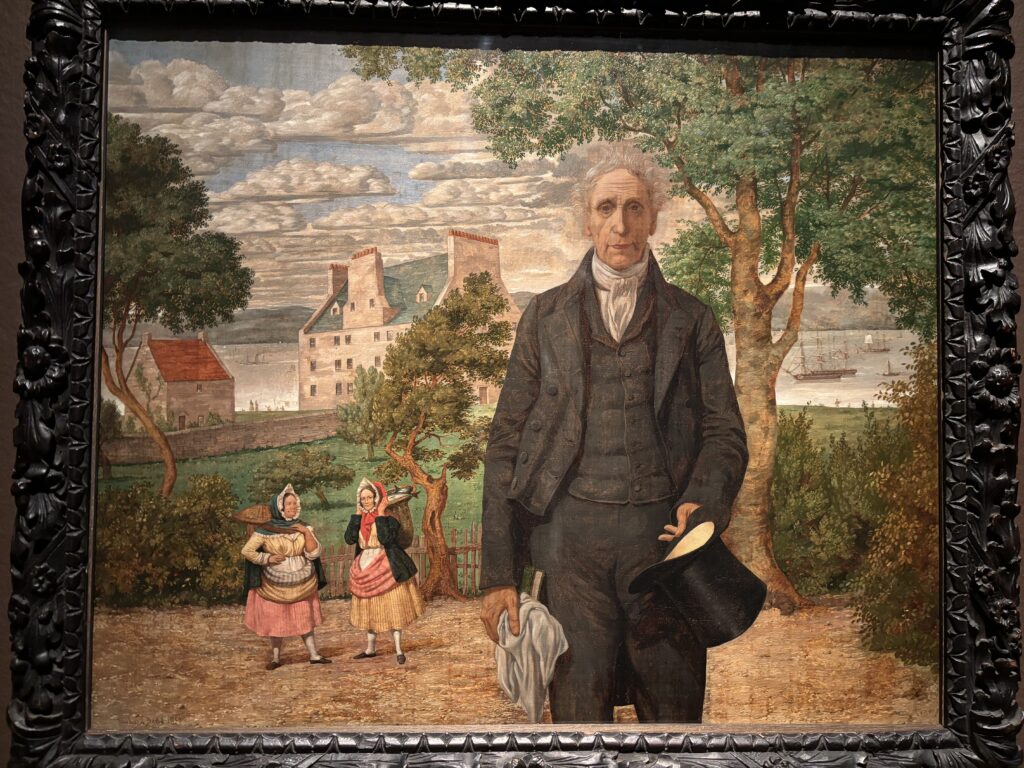
One of my all-time favorite British portraits is by Dadd; its permanent home is in the National Gallery in Edinburgh. It’s of Alexander Morison, a visiting physician at Bethlem. The picture shows a tall gaunt gentleman with wispy white hair, his lips pursed in an expression of sweet haggard resignation. Behind him is the Scottish estate to which he had retired: a manor house on the banks of the Firth of Forth. You see sailing ships and tiny fishermen in the distance, and in the foreground, two fantastical-looking women in striped skirts carrying baskets of fish on their backs. The scene is at once hyper-realistic and wonderfully absurd, like an early Italian Renaissance painting of St. George and the dragon.
Richard Dadd has long enjoyed a cult following – his gruesome biography doesn’t hurt. His high point was the 60s and 70s, when his psychedelic scenes of goblins dancing under the brims of hats made people wonder if he’d been tripping. Today, it’s not hard to see him in a continuum of British dreamers from William Blake and Lewis Carroll to the novelist Susannah Clarke.