 Skip to content


Last week, I wrote about Nebraska, a novel in which a mother pushes her handicapped child in front of a train.
This week I’m reviewing an only slightly less murderous non-fiction book about mother-child dynamics. Rachel Aviv is a best-selling author and staff writer for the « New Yorker ». Her mother, she tells us, is an unpublished writer who deluged the « New Yorker » with stories the magazine invariably rejected. Her mother, she says, still searches Aviv’s most far-flung pieces of reportage for hidden messages about her.
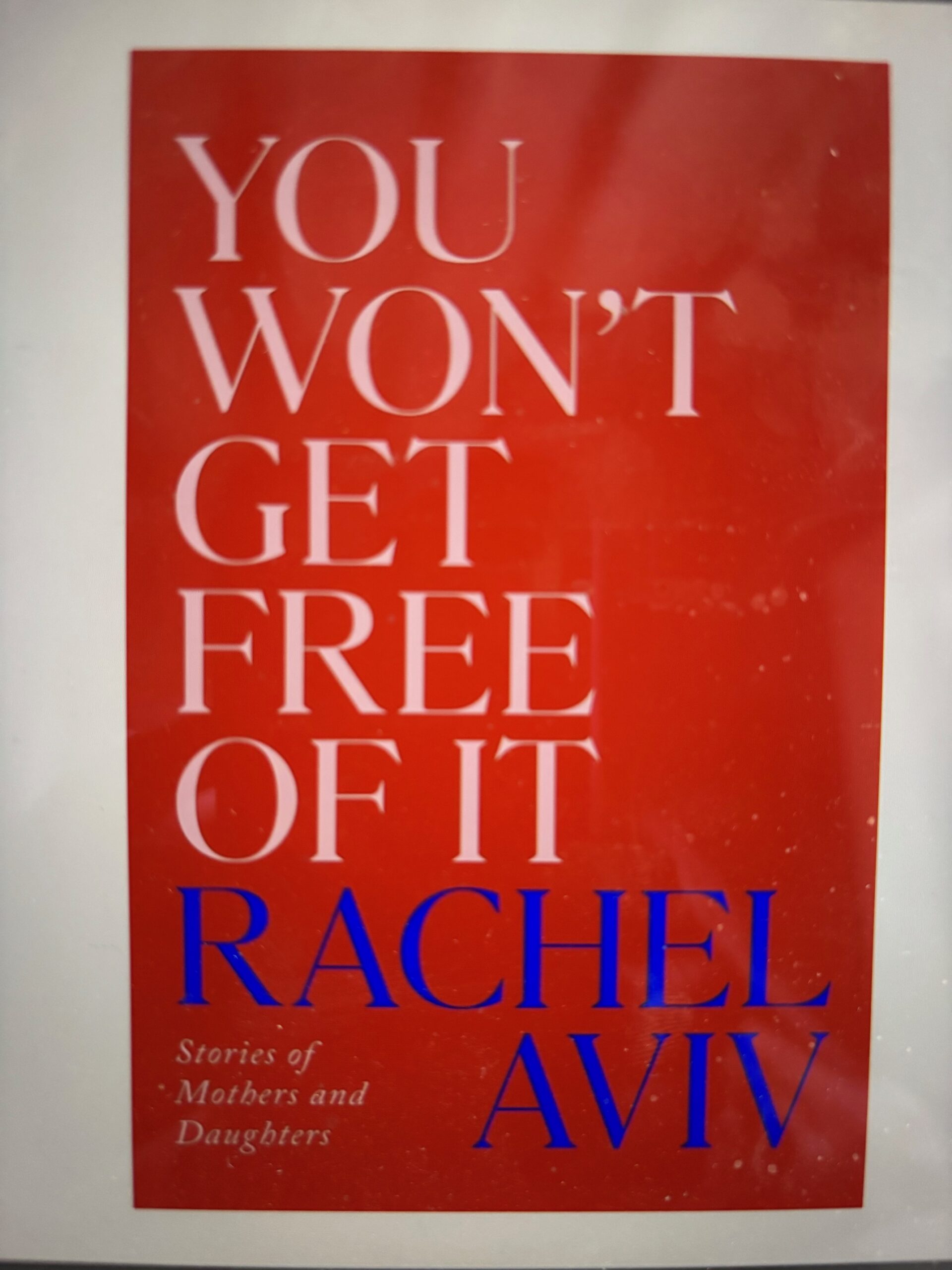
Now Aviv’s published You Won’t Get Free of It: Stories of Mothers and Daughters. (Alfred A Knopf, 2026.) All of its chapters originally appeared in the « New Yorker », but many of these articles Aviv has reworked, this time probing deeper into aspects of the story – a child given up for adoption, a still-born baby – she’d previously overlooked.
What emerges is a collection of mothers who, for one reason or another, don’t feel so motherly, even if they don’t actually push their children onto the train tracks. In one piece, a Philippine woman who has left her husband and small kids to become a nanny in the US, realizes, after she’s paid her children’s way through college, that she no longer wants to go back home to this family she hasn’t seen in sixteen years: a younger colleague who shares her single bed has become her « real » daughter.
The final and farthest-reaching piece is about the great Canadian writer Alice Munro, and the scandal that erupted after her death in 2024. For years, Munro and her family and entourage concealed the fact that Munro’s second husband had sexually abused the youngest of her three daughters, beginning when the child was nine. Munro’s daughter eventually pressed charges; Munro chose to cut contact with her daughter and stay with her husband, even after he pleaded guilty to, and was convicted of, indecent assault. Some of Munro’s later fiction circles around the abuse, somewhat self-servingly. Significantly, Aviv writes, it was only once Munro got Alzheimer’s disease that she admitted that it was « beastly » to have sacrificed her daughter to her now dead husband’s compulsions. Aviv’s conclusion is that Munro preferred art to motherhood; my own feeling is that, having experienced, after her first divorce, the humiliations and perils of being a single woman in her 40s, Munro decided it was better to be married to a pedophile than not to have a man in the house. (After all, despite having grown up on a farm in rural Ontario, she couldn’t drive.)
Aviv’s chosen subject of not-so-motherly mothers is a riveting one, and her prose is warm and approachable. But You Won’t get Free of It stays frustratingly on the surface. Even in a chapter about a schizophrenic woman who starves and freezes herself to death in an abandoned house, Aviv doesn’t allow herself to venture too deep inside that house of madness, lest she never come out alive.