 Skip to content


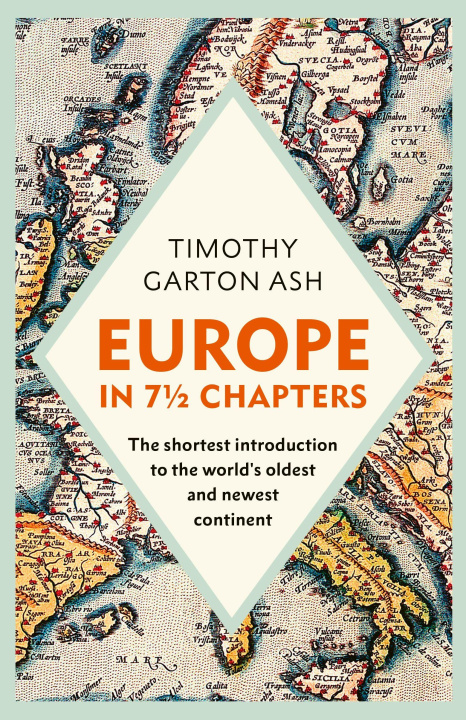
Europe in 7 ½ Chapters (2026)
Timothy Garton Ash
Random House UK Ltd
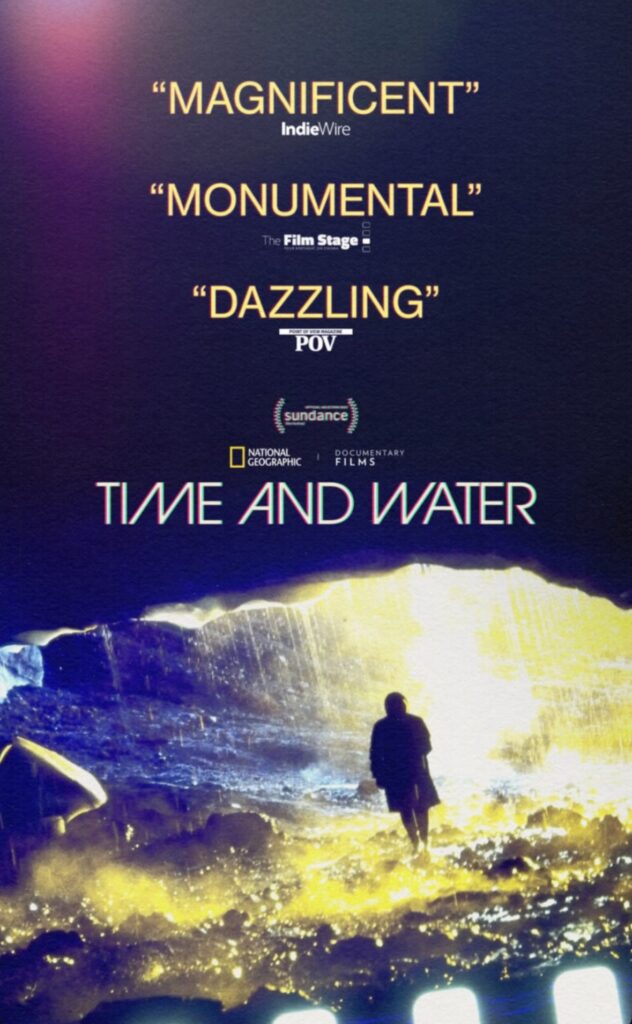
Time and Water (2026)
Sara Dosa
National Geographic
Such a shame that children no longer get to learn about nature without added explicit warnings about doom and destruction. At school, at the zoo, on screen: everything fascinating ends with a warning that it is disappearing. Whenever there’s talk about nature, my brain waits for the but, as in « but we, bad people, are destroying all of it. »
The Icelandic documentary Time and Water (2026), by Sara Dosa, is, once again, announced with a cheerful subtitle: How to say goodbye to something you never thought you could lose? For ninety-two minutes, gorgeous footage of Iceland’s glaciers alternates with lovely images from the family archive of the writer Andri Snær Magnason, who explains how his adventurous grandparents explored the glaciers. Director Sara Dosa lets him philosophize about what time is.
After the screening I drank a beer, possibly two, and went home where I finished my book: Timothy Garton Ash’s ultra-short history of Europe, Europe in 7 ½ Chapters (2026), published just last month. Garton Ash doesn’t sweep Europe’s disgraceful episodes under the rug, and he acknowledges the paradoxes and impossibilities of questions such as what Europe is, why it is, where it is and who it is.
All blended together. In the film, a symbolic funeral is held for an Icelandic glacier that has ceased to live, though remnants of its ice are still there. I thought of Europe. In the film, the Icelanders put up a memorial. I thought of the people searching for the exact middle point of Europe, which I had just read about in Timothy Garton Ash. In the film, time brings eternity, but only for time itself, not for the events and things that live within time. In the book, time does something else: Garton Ash describes two modes in which the EU does its work. In normal mode the wheels turn slowly: all decision-making is complex and forever lasting. But in crisis mode everything goes fast, fast, fast. Then happens what Finland’s president and former prime minister Alexander Stubb describes as: crisis – chaos – sub-optimal solution.
That feels close to how we all live: in sub-optimal solutions that don’t stand the test of eternity. Do we resign? Must we slog away and just archive things, like the Icelandic writer and narrator of the film Andri Snær Magnason, before everything plunges into crisis again? Garton Ash offers a lovely quote from Václav Havel, who writes that hope makes it possible to work for something just because it is good, not because it stands a chance of succeeding:
It is not the conviction that something will turn out well, but the certainty that something makes sense, regardless of how it turns out.
(Try getting that into your AI!)