 Skip to content

Some people remember 2000 as the year our computers DIDN’T all explode.
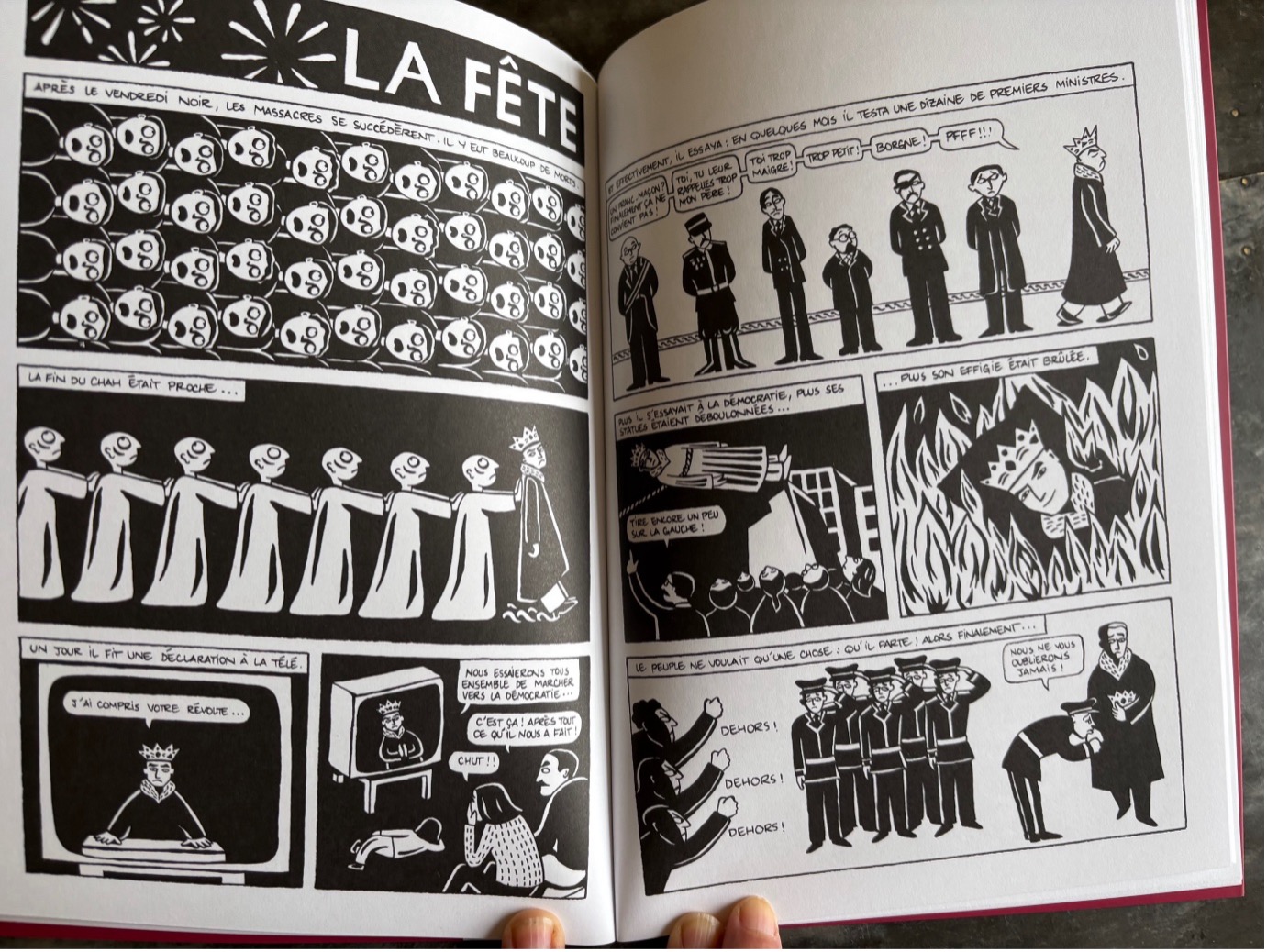
I remember it as the year Marjane Satrapi’s Persepolis appeared. Persepolis was a comic-book autobiographical novel, and its heroine was a sassy little girl called Marji, growing up in Iran in the final days of the Shah’s regime. I reviewed the first two volumes in the New York Times Book Review, when they came out in English.
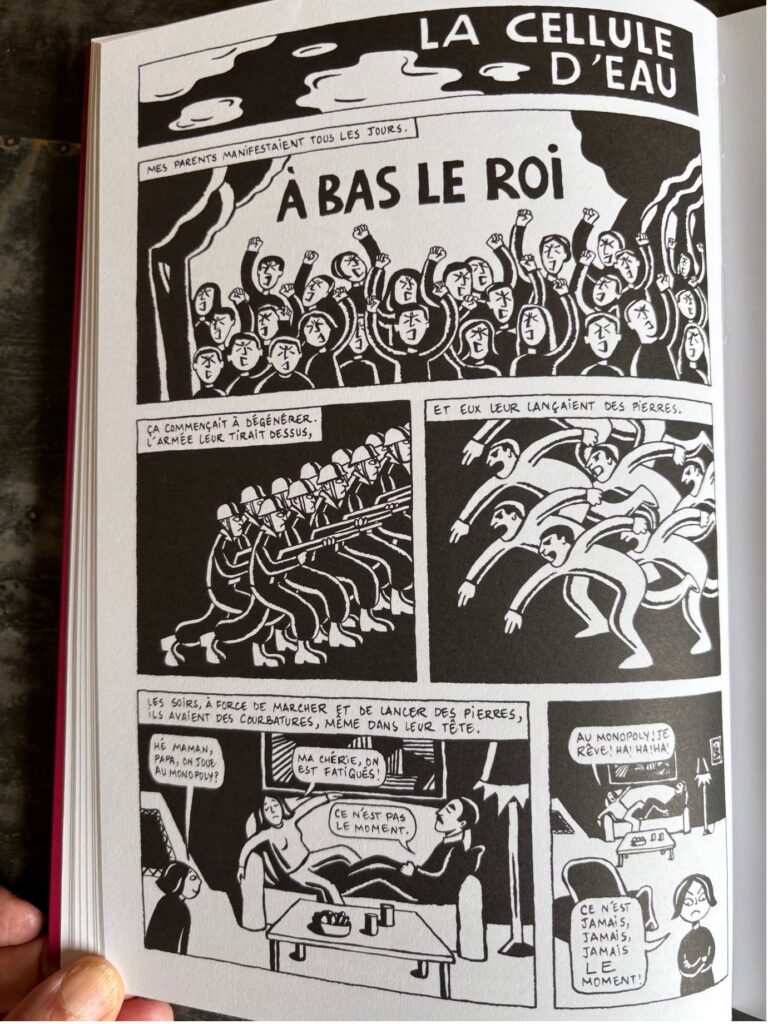
Marji grows up in a fashionably radical household in Tehran; her parents march in daily demonstrations against the shah. Satrapi skewers the hypocrisies of Iran’s bourgeois left: When Marji’s father discovers that their maid is in love with the neighbors’ son, he busts up the romance, intoning, « In this country you must stay within your own social class. » Marji sneaks into the weeping girl’s bedroom to comfort her, reflecting, « We were not in the same social class but at least we were in the same bed. »
Marji dreams of founding a new religion based on social justice. « I wanted to be a prophet … because our maid did not eat with us. Because my father had a Cadillac. » The book is full of Marji’s tête-à-têtes with God, who resembles Marx, « though Marx’s hair was a bit curlier. »
In Marji’s French lycée in 70s Tehran, piety is taken as a sign of mental illness: Marji’s teacher summons her parents to discuss the child’s worrying psychological state. A few years later, of course, it’s the prophets who are in power, and the lycée teachers who are being sent to Islamic re-education camps. Marji is 10 when the shah is overthrown, and she discovers that her great-grandfather was the last emperor of Persia. He was deposed by a low-ranking military officer named Reza, who, backed by the British, crowned himself shah. The emperor’s son, Marji’s grandfather, was briefly prime minister before being jailed as a Communist.
When the present-day shah is ousted, Marji’s parents and their Marxist friends, newly freed from prison, celebrate. Their jubilee is brief. Soon these same friends have been thrown back into jail or are murdered by the revolutionaries; Marji and her schoolmates are made to wear hijabs and taught self-flagellation instead of algebra. Those who can decamp for the West.
Marji will be among those who decamp: her parents, alarmed by her repeated run-ins with the Revolutionary Guard, pack her off to Europe. Her final place of exile was France, where the real-life Satrapi became an adored and best-selling writer-artist-filmmaker, revered for her opposition both to Iran’s repressive regime and to her adopted country’s hypocritical Iranian policies.
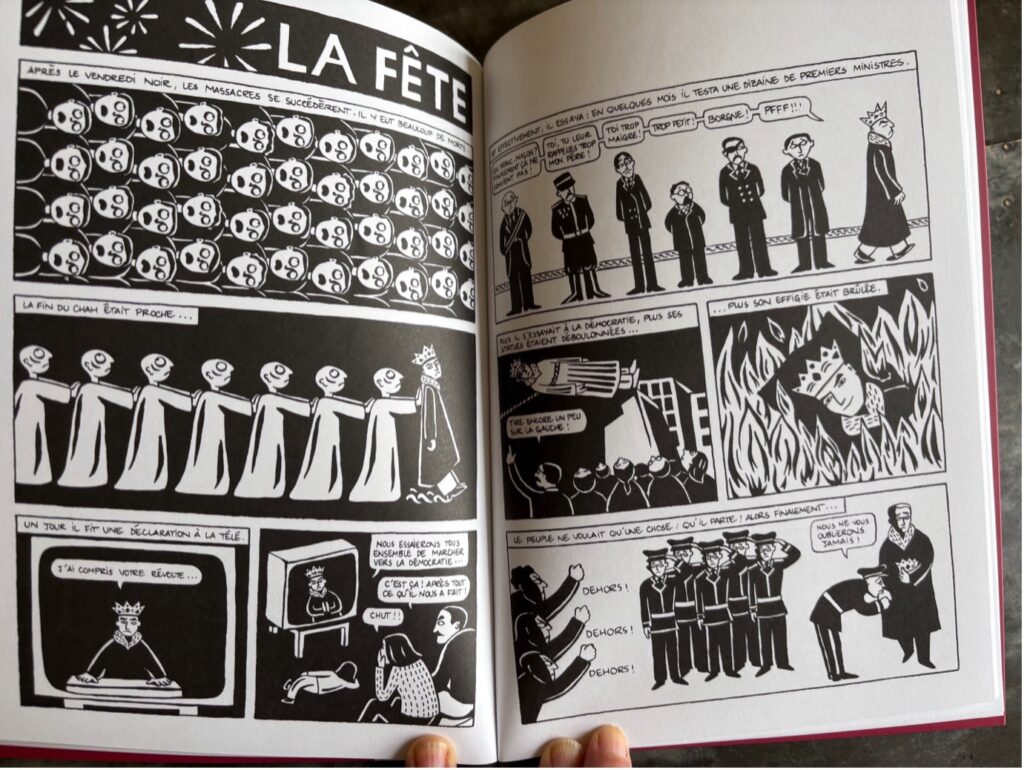
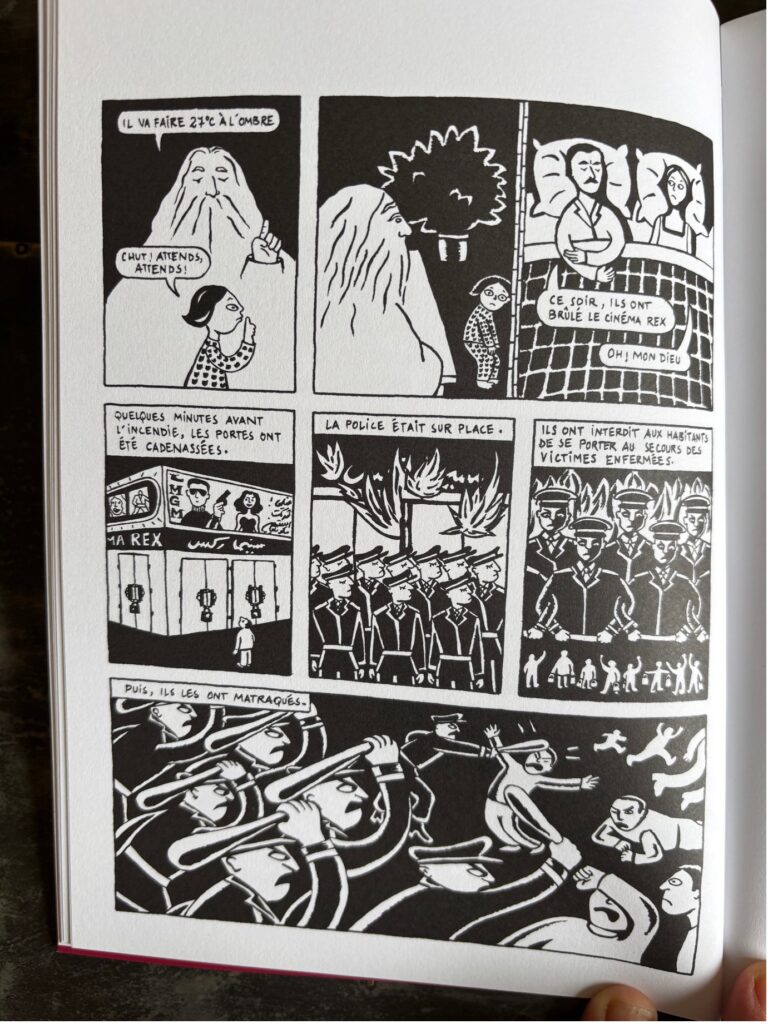
Looking through my old much-thumbed copies of Persepolis and her other two comic books, Broderies and Poulet au Prunes, I’m struck this time by the wicked genius of Satrapi’s thick inky black-on-white drawings, by how she blends German Expressionism and Persian miniature in a child’s deranged dreamland.
Last week Satrapi died in Paris at the age of 56. Her husband had died of cancer the year before; the cause of Satrapi’s death, her family said, was « sadness ».