 Skip to content

I’m futzing around the kitchen, heat-wave grumpy. I’m cooking white beans with tomatoes for dinner; I soaked the dried beans overnight, but they are a little too old, too long in the tooth. And the kitchen is sweltering, even though it’s after sundown. All I want to do is lie on the cool tiled floor, like my dog. These damn beans, either they’re rock-hard or they’re mush, and the kitchen’s too hot.
Oh what’s she doing now
Right now, this instant?…
And what’s she thinking about –
me?
Or –
oh, I don’t know –
why the beans refuse to cook?
– from « 9-10 pm Poems » written in 1943 by Nâzım Hikmet, English translation by Randy Blasing and Mutlu Konuk
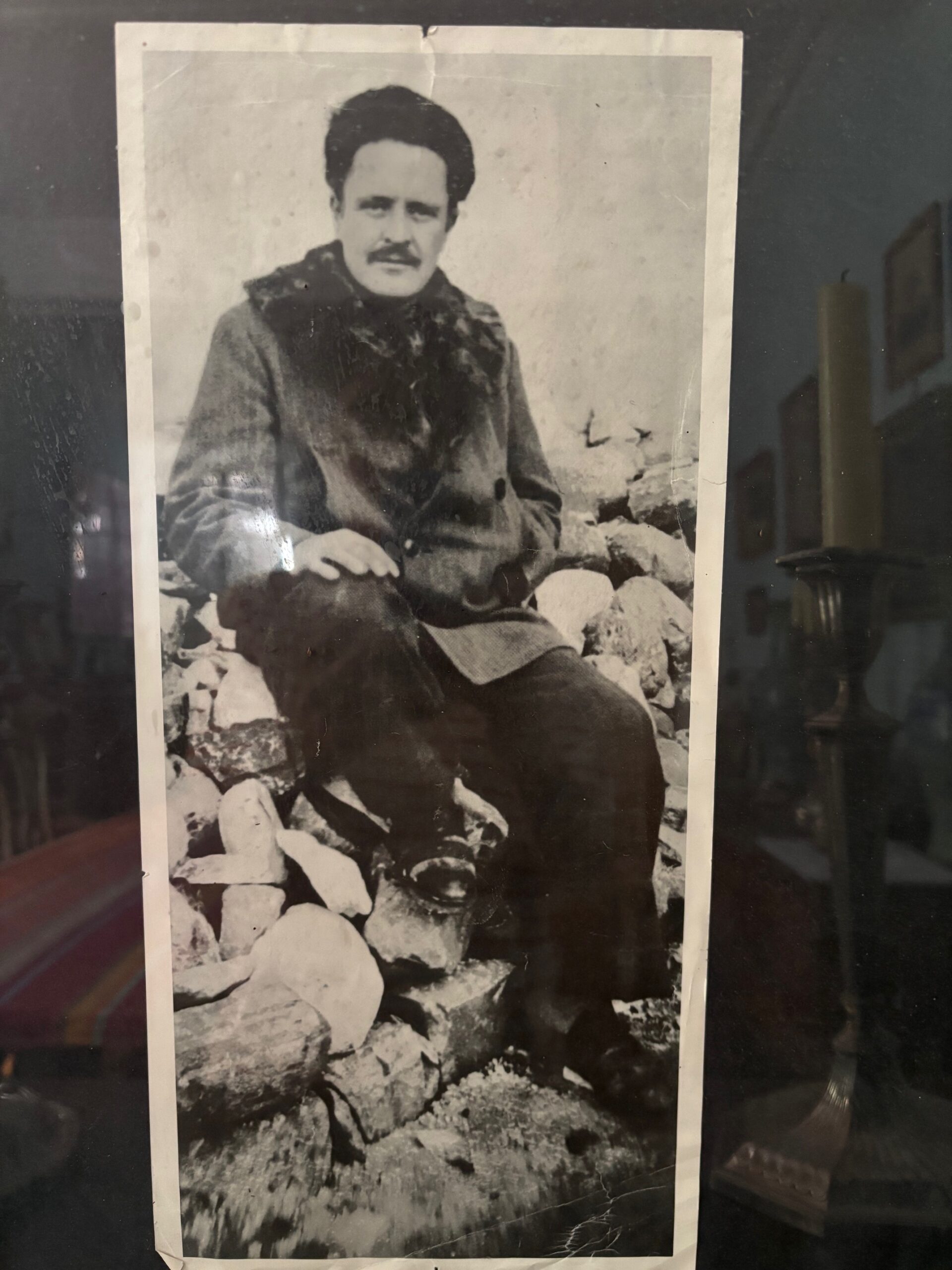
This snatch of poetry comes into my head whenever I cook beans. It’s from a poem written on 23 September 1945 by Nâzım Hikmet, an imprisoned Turkish poet who was missing his wife, and hoping she was thinking of him too.
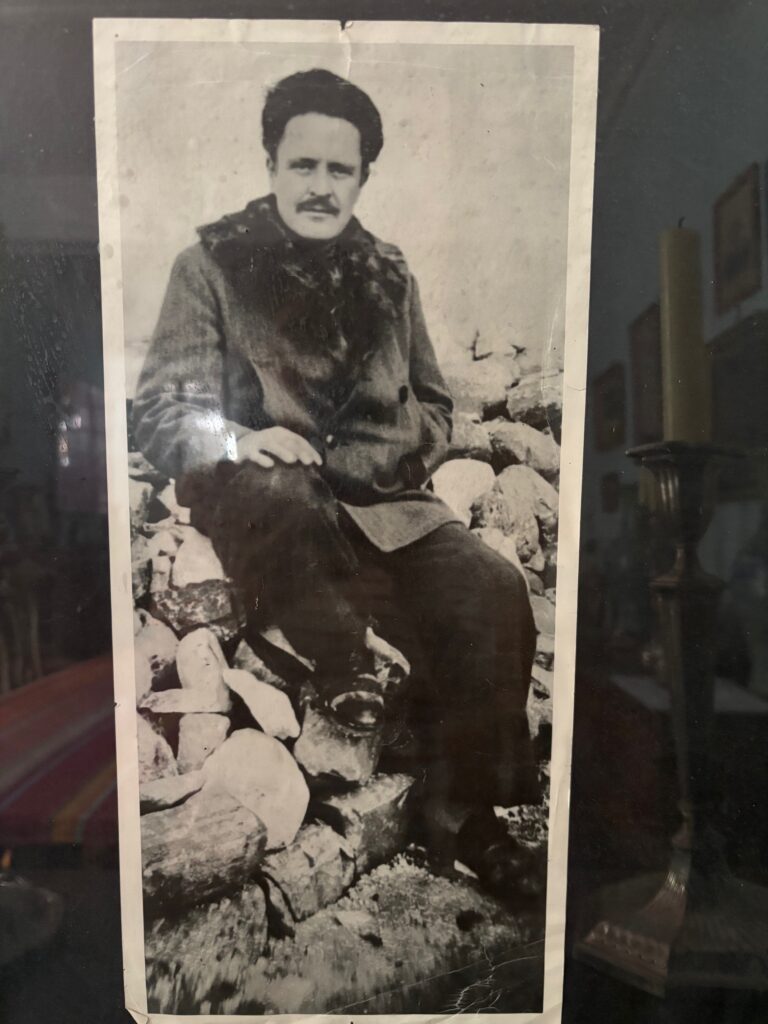
There are a lot of great modern Turkish poets, but Nâzım Hikmet is the greatest. Born in 1901 into an upper-class Ottoman family, he became a Communist as a teenager and never lost the faith. Exuberant, generous, with wavy red-gold hair and movie-star good looks, Nâzım Hikmet spent fifteen years, off and on, imprisoned for his politics. On Nâzım’s final release in 1950, the Turkish government drafted him to fight in the Korean War – a sneaky kind of death sentence for a 49-year-old who’d already had several heart attacks. Nâzım defected, via a young friend’s speed-boat, to the Soviet Union, where he died in 1963, desperately homesick for Turkey and disillusioned with Soviet reality.
In the early 1990s, I lived in Istanbul. I studied Turkish with a voluble impassioned Communist translator who lived up the Bosphorus with her bedridden mother, but I never made much progress, partly because my teacher and I both preferred talking about twentieth century Turkish poetry to doing grammar.
Nâzım’s prison poems from the 1930s and 1940s are glorious. (Above all, read his 1940 « Letters from Chankiri Prison ».) Lively, chatty, diary-like, they swing from a self-mocking despondency to exultant love of all humanity, combining anecdotes about the hatchet-murderers who are his cell-mates, advice to new inmates, with scraps of the outside world: news overheard on the radio; the landscape, seasons, nightfalls he glimpses from his cell window; visits from his wife Piraye.
I re-read Nâzım’s poem from 23 September 1945 in an English translation, and then I check the Turkish original to find out what kind of beans the poet imagined his wife cooking that night.
O șimdi ne yapıyor
șu anda, șimdi, șimdi?…
Ve ne düşünüyor
beni mi?
Yoksa
ne bileyim
fasulyanın neden bir türlü pişmediğini mi?
Fasulye could be either long green runner beans, or the kind of dried white beans I’m making. White beans, I decide – dried beans really do take forever to cook, especially on an old-fashioned stove where the gas is pretty feeble.
There’s a breeze outside now, rustling through the plane trees, and the dinner table is laid, and the white beans are finally ready, and we can raise a glass to poets living and dead, both free and behind bars.
When I lived in Istanbul, I went to interview all Nâzım Hikmet’s surviving friends and family, including Piraye’s son, the editor and critic Memet Fuat, a tall handsome blue-eyed man who was then in his mid-sixties. Memet Fuat adored Nâzım, who was a loving, tender stepfather to him, lavish with his advice about poetry and women. (« Are you in love yet? Why not? Remember, son, you must never say no to a woman. ») We discussed Nâzım’s poem about Piraye cooking beans. « What’s she thinking about – I dunno, maybe – me? » Of course he knew that his wife was missing him day and night, and not fussing about the beans, Memet Fuat smiled, Nâzım was just being coy.
Nâzım and Piraye’s love story ended badly: Nâzım’s young cousin Münevver Andaç started visiting him in prison, Memet Fuat told me, and as soon as he was released, he divorced Piraye, who’d waited twelve years for him, and married Münevver, who was pregnant. Memet Fuat didn’t judge Nâzım for being unfaithful to his mother: the guards allowed Nâzım and Piraye « family time » on her visits, he said, but Piraye was an Ottoman lady who wasn’t comfortable being « intimate » with her husband in a public space, whereas Münevver was « modern ».
Nâzım spent barely a year with Münevver Andaç and their baby son, before he defected to the Soviet Union. Münevver hoped to join him, but she wasn’t allowed out of Turkey. After her husband’s escape, Münevver was subjected to extreme police harassment and surveillance, and Nâzım in his Moscow exile married a much younger Russian wife. Later, Münevver Andaç settled in France with her son and became a respected translator, it was she who first persuaded Editions Gallimard to publish Orhan Pamuk and who translated Pamuk’s novels into French.
There are no real villains or heroes in this story, there are just a lot of beans that won’t cook.