 Skip to content

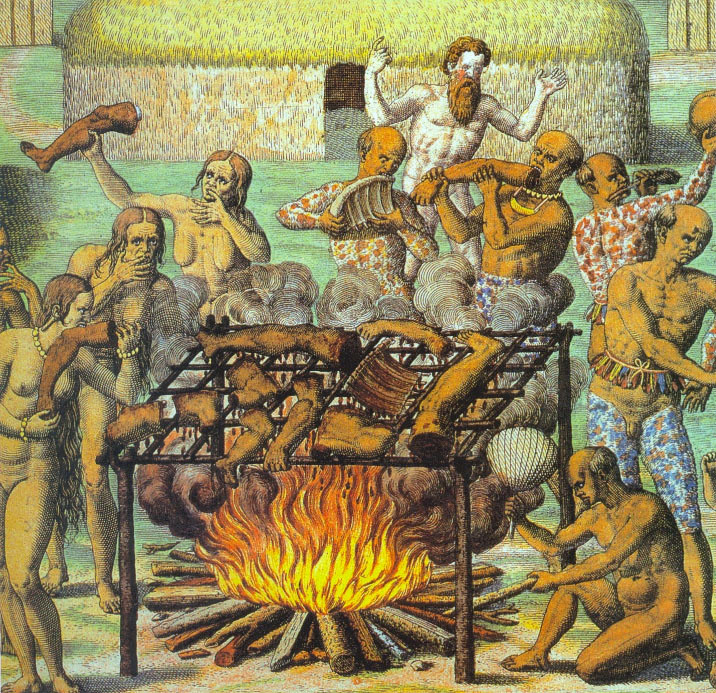
This summer, when it’s been too hot to contemplate cooking any kind of meat, let alone human, Le Monde has been publishing a wonderful seven-part series on cannibalism by the science journalist Hervé Morin.
Cannibalism is widespread in the non-human world, Morin reports, so why do humans have this taboo? Has it always been so, across time and place? (And does the same taboo apply to the cultured human flesh we can now concoct in a laboratory, I wonder?)
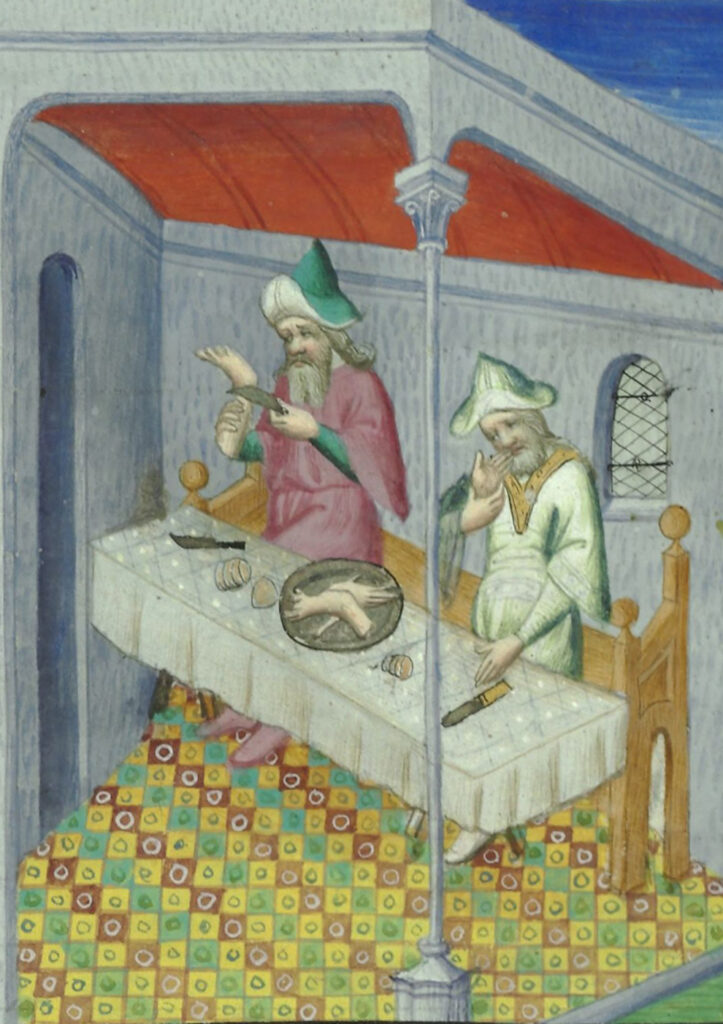
Morin visits various archaeological sites across Europe and the Americas, places where humans were butchered and eaten by other humans. Given that some people, scientists included, resist the idea that our ancestors ate each other unless they were absolutely starving, the burden of proof is high. The site that best meets Morin’s standard of proof is the twelfth century AD Puebloan settlement at Cowboy Wash, Colorado where traces of human myoglobin – « a molecule that comes from the heart and muscles » – have been found both in cooking vessels and in fossilized human shit.
The series’ conclusion? « Our species has always practiced anthropophagy, sometimes regularly and on a large scale…whether it’s to honor the dead, gain favor from the gods, incorporate or annihilate our enemies by winning trophies from their corpses, but also for medical or pharmaceutical reasons. »
Readers’ online responses have run from the atheist who says, predictably, « yes, and isn’t the Christian rite of communion glorified cannibalism? » to the relativist who feels that condemning another group’s eating habits is a form of « othering » (alterité). Not many countries are tempted to dive so deep into the sociology and ethics of cannibalism as the French. From my linguistically-limited internet trawl, I observed:
- Germany would seem to have the highest number of people actually convicted of modern-day cannibalism.
- Enter « cannibal » on an English-language site, and you get referred either to Hannibal Lecter, or to the insect world.
- On a Brazilian website, I encountered the Movimento antropofágo, which sounded promising, but turned out to be a bunch of twentieth century poets, artists, and musicians who believed in « cannibalistically » absorbing foreign influences.
Only in France, it seems, is cannibalism a cross-disciplinary field of study, beginning with Claude Levi-Strauss’ Nous sommes tous des cannibales. Is it just that the French are much more serious about anything that could possibly be considered food?