 Skip to content

I have learned what artistic freedom is. It happened in a secret museum somewhere in Sweden. I had to wade through tall grass toward a windowless barn, painted in faluröd, the reddish-brown color that sets the tone in the Swedish province of Värmland. I had the code to a padlock that was hanging from a sturdy wooden door… but let me first tell you how I got there, and what remarkable things I’d seen beforehand.
As young adults, artists Karin and Marc Broos settled in the woods of Värmland. Living on little, Karin mainly painted, while Marc made… well, everything, low-budget, until in 1998 there stood an entire museum: the Alma Löv Museum of Unexpected Art. It’s an artist-run museum that is now known in art circles both inside and outside Sweden as an exciting free space that adds to what big city museums are offering. Karin is a well-selling artist, with exhibitions at home and abroad; Marc is the one who makes wild sculptures, audio and video recordings, paintings, machines and all these weird outbuildings (a house rotating on its axis). Today it not only shows the work of Marc and Karin but also that of renowned artists, with every summer a new exhibition, initiated by Stella Broos, daughter and current artistic director. This year’s exciting show is called What Resonates Between Us.
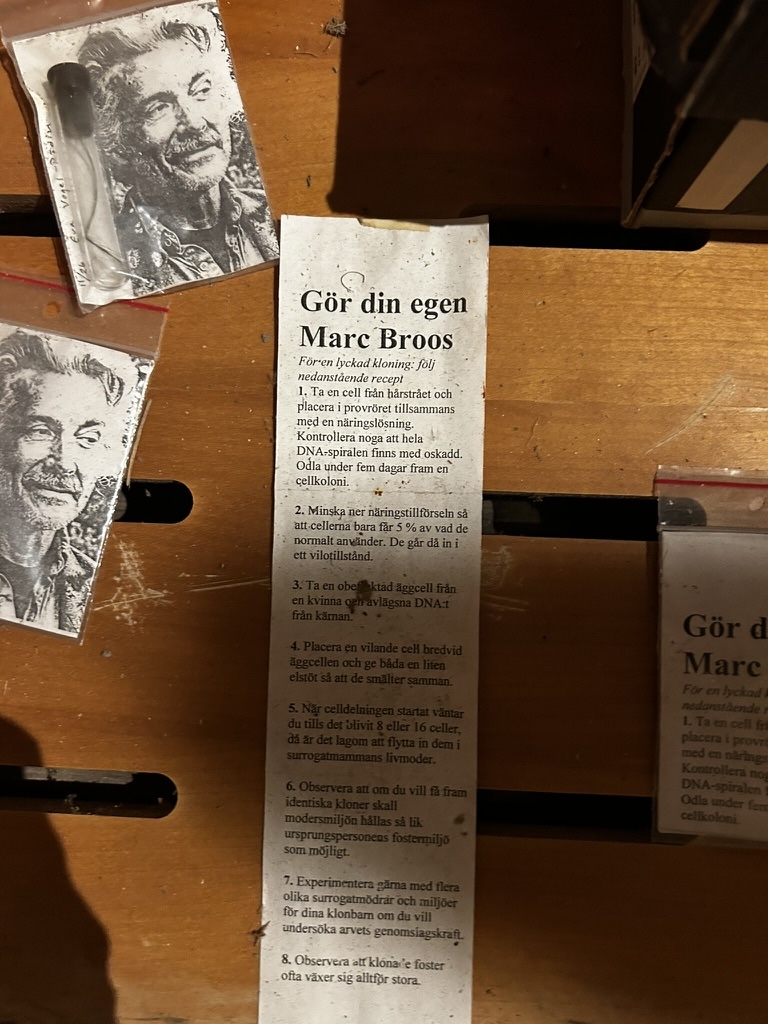
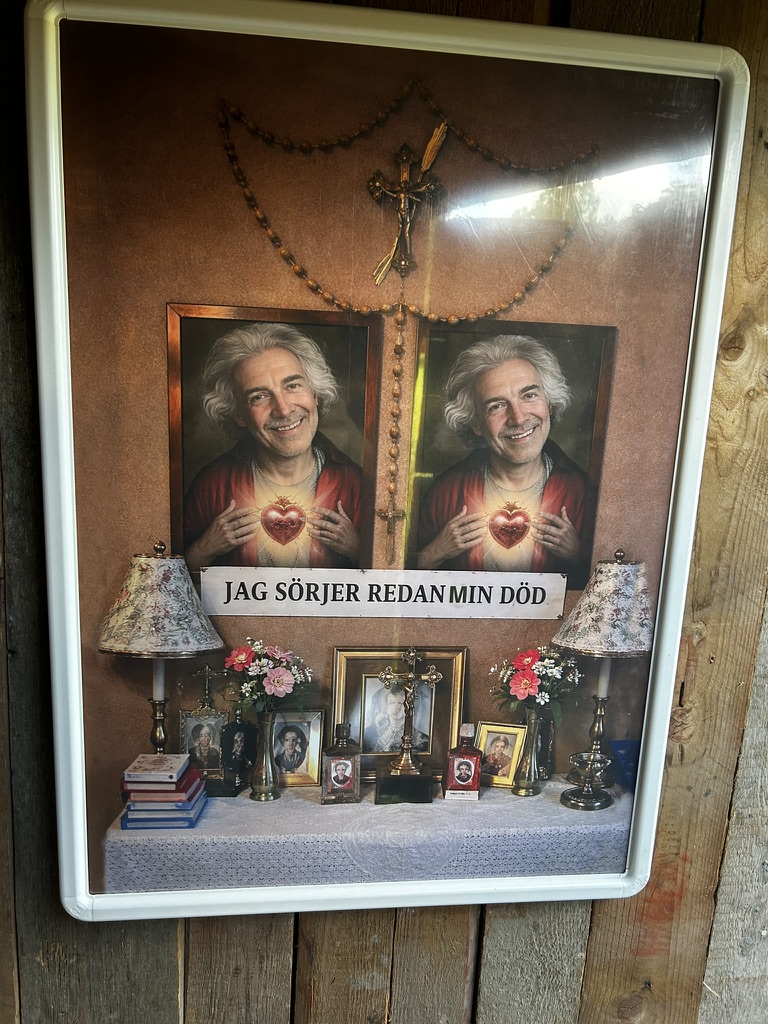
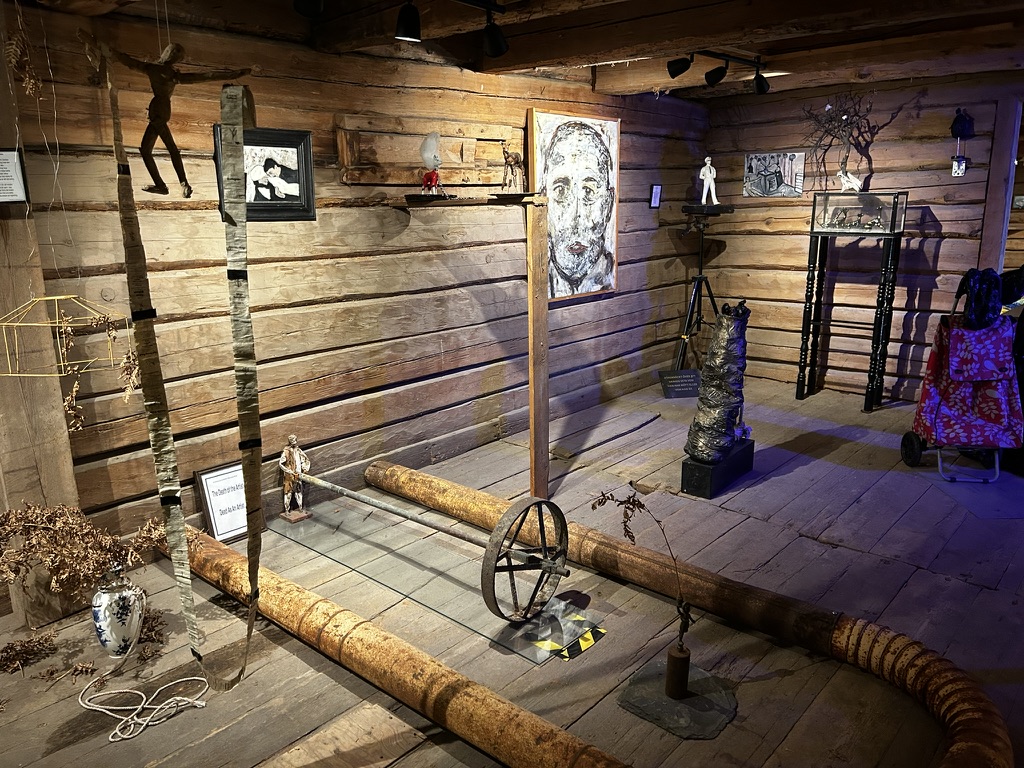
Back to the secret museum: through another Broos daughter I had the code to the padlock of the barn. It was an ancient sockenmagasin: the place where, in the eighteenth and nineteenth centuries, farmers were required to store their grain in good years as a buffer against years of poor harvest. I opened the door. Above my head, an arrow pointed to a switch I had to flip, upon which lights and music came on and a wondrous world became visible. I saw paintings of dogs, arrangements with Barbie dolls, cut-up nature photography in which leaves seemed to be exploding, documentary photographs, abstract paintings, weird figures, life-sized dolls, machines, casts of penises, ropes, chairs. Broos clearly couldn’t care less what was high and what was low, what was kitsch, what was elitist, what was popular or unpopular, good or not good. It was a museum from one, for… whoever. Everything carefully arranged and lit, music here and there, showcased for an abstract ideal visitor (not a funder or marketing department). I’ve often thought that many of us are doing something similar in our own minds: collecting ideals, tragedies, weird phenomena, anything strongly relating to our sense of self. And that for some it can also lead to something outside of our heads, to a diary for example, or to public collections of pictures, songs, posts, stories. Artists and writers can sublimate their collections into art. And this artist, here Marc Broos is truly free.