 Skip to content

This hurtling millennium began with a bug.
Y2K brought a profound fear as people watched the clock ticking round to midnight. The computers that would make the new millennium so frictionless, first had to overcome a kind of hazing ritual where their ability to cope with years starting with 2 (of which there would be hundreds!) was tested. The bug was essentially about the anxiety of dependence. More than 26 years later, if you look around at the digitisation of every aspect of our lives, you see that this dependence has proven itself true.
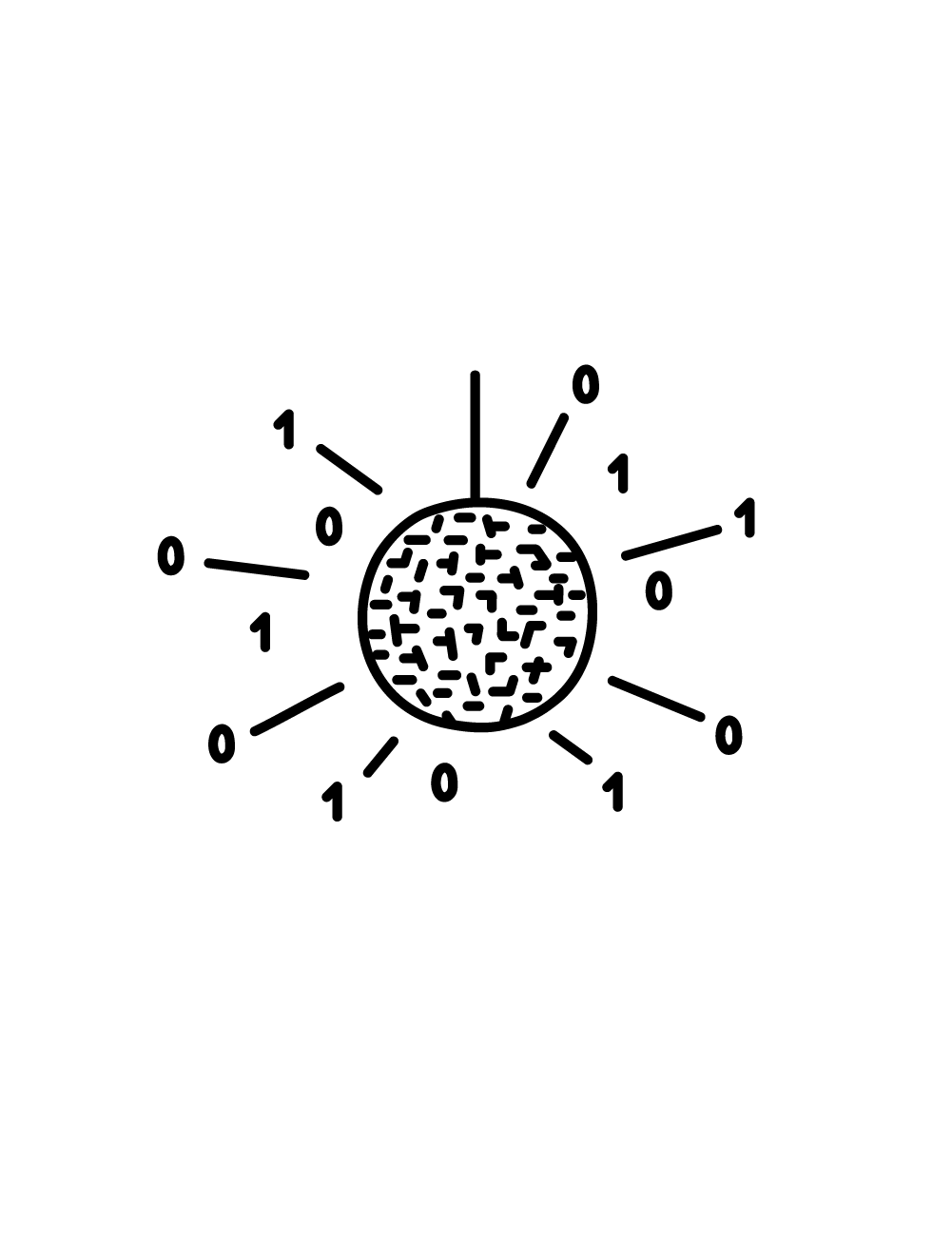
The internet is now often « wireless » at the point of use, and when people talk about « the ether » and « the cloud », they seem to be looking upwards to something celestial. In reality, only about three percent of all internet traffic goes by satellite, and the rest zips along a network of physical cables, often buried in the earth and sediment. The fretwork is intricate and complex, sure, but it is also bizarrely simple. It is light running down strands of glass, following many of the same routes that telephone cablesfollowed in the nineteenth century. A pulse of light down the glass is a 1, a pulse of no-light is a 0, and this binary sequencing can describe any kind of text and code that a computer at the other end reads with ease. The optical glass data fibres are held in pairs, with one to « transmit » and one to « receive ».
There are fewer than twenty subsea data lines between Europe and North America, many of them from around the turn of the millennium. Most of them are owned by networking companies who rent out their capacity to the likes of TikTok or home broadband providers. Large technology firms have started laying their own recently, like Google’s Grace Hopper cable (New York to Cornwall) in 2022 and Amazon’s Fastnet (Maryland to Cork) in 2025, anticipating demand spikes from heavy video transfer and AI chatbots.
This article is behind the paywall. Want to keep reading this article?
Subscribe to the European Review of Books, from as low as €5,00 per month.
Already a subscriber? Sign in

- Marc Niemeyer cites this anonymous newspaper verse in « Excess and Irony in Transatlantic Cable Poetry », where « Field » denotes Cyrus Field, the entrepreneur who funded the cable project:
To the Cable Tow
The westward course of empire yet
Demands a higher speed;
Columbia would go ahead
While Europe lags indeed.
But Field has found a remedy:–
As Europe is so slow,
Our continent, impatient, takes
The eastern world in tow
↩︎ - The burning down of City Hall also delivered a newspaper verse that Niemeyer used, worth repeating here:
Phiz! pop! bang! pop! loud the cannon roar!
O was there ever such a time in New York streets before?
And now, three lusty cheers for all who helped to lay the wire —
We’ll have a glorious time, and set–the City Hall on fire!
↩︎ - Ciarán then made a joke about « flat earthers » who reject this curvature and refute the great circles; those people usually discover their arguments online, through the cables he watches over. These communities of the utterly convinced are often just separate, lonely bodies with laptops and keyboards. Their atomisation might embody this millennium’s true bug. ↩︎
- Al-Faw is also where the Iraqi government is building an enormous seaport that will offer traders an alternative to the Suez for moving things from Asia to Europe. Goods, like the information, will be able to arrive at Al-Faw from the export powerhouses of Asia (recent Hormuz crisis notwithstanding) and travel overland. ↩︎