 Skip to content

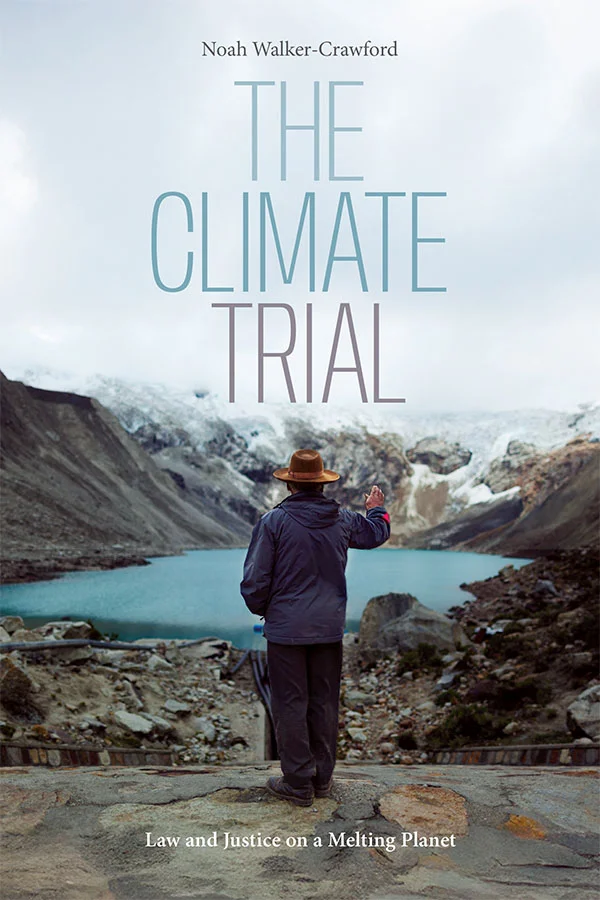
Fossil fuels: the F word in duplicate. While international climate conferences get bogged down in ineffectual declarations and unmet targets, courts of law have become significant sites of climate action. In The Climate Trial (2026) activist-turned-anthropologist Noah Walker-Crawford tells the story of a case at the forefront of the judicial battle against climate change. In 2015, a Peruvian farmer sued German energy company RWE, claiming damages for flood risk to his home in the Andes — and almost won. The unlikely part was that the company doesn’t actually operate in Peru. But with scientific studies showing how much individual polluters contribute to global warming, what matters is that its emissions do.
Even though last year a German appeal court finally ruled in favour of RWE, it affirmed its 2017 decision that under German nuisance law a company like RWE could be held legally liable for its share of damage threatened by global warming to a property halfway across the world.
In his book, Walker-Crawford1 sets out the chain of events behind this improbable lawsuit. In 2014, climate activists from non-profit Germanwatch had witnessed faltering negotiations at the UN Climate Change Conference in Lima. They wanted to put more pressure on industry and governments through legal action, and so after the conference, they travelled to the Cordillera Blanca — a Peruvian mountain range affected by glacier melt — to see whether there was a case there to support. Until that point, Walker-Crawford recounts, no lawsuit had ever successfully held a company or country liable for its contribution to climate change.
Rheinisch-Westfälisches Elektrizitätswerk has been burning coal to generate electricity since the late nineteenth century. The company runs lignite mines and coal-fired power stations across Europe and North America, while it also invests in renewables and battery storage. However, in 2015, RWE was the highest carbon emitter in Europe and thus an obvious target for a lawsuit in Germany. But who could bring the claim?
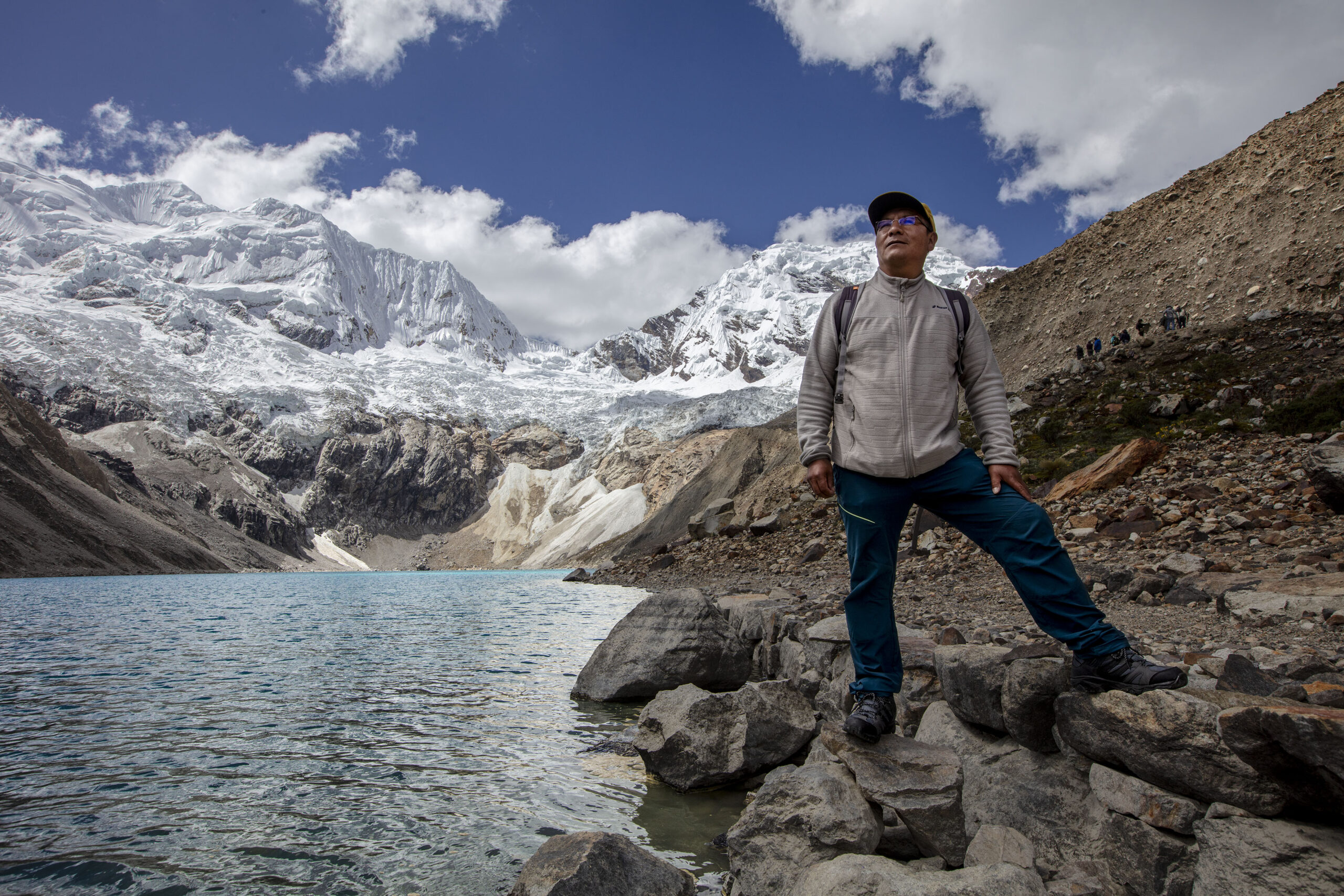
Saúl Luciano Lliuya, a farmer and mountain guide, lives in Huaraz, a town beneath Lake Palcacocha surrounded by mountains. It has become a precarious place. He has witnessed the glaciers melting and the rising volume of water in the lake, which increases the risk of flooding the town below. As Walker-Crawford explains, Andeans engage with mountains as living beings and they feel their suffering as the glaciers retreat. The traditional response is to offer pago — a tribute — to appease the mountains, but Lliuya came to recognise that « blame for the changes [lay] not with Peruvians like himself but with wealthy countries and large companies » and he wanted to take some action. Walker-Crawford was instrumental in making that happen: not only had he previously worked at Germanwatch but he was then living in the Andes doing academic research. Through mutual friends, he helped introduce Lliuya to the German activists who told him that he had a case.

You’re reading this essay for free. With a membership, you can read the full magazine, and you get access to our fabulous Library.
Here’s our offer: 3 months unlimited digital access + 1 print edition for € 38,00 € 19,00
You’ll get Issue Twelve in print as your first magazine, right to your mailbox.
Germanwatch now had the protagonists, but what would the claim be based on and how would it be proved? Section 1004 of the German Civil Code protects property from an ongoing or imminent unlawful impairment, which includes neighbourhood disputes about environmental damage. Lliuya was being represented by prominent environmental lawyer, Roda Verheyen, who had previously won cases for Greenpeace. Verheyen argued that the law allowed for a definition of « neighbour » capacious enough to protect people affected by climate change wherever they live. The appeal court agreed. While Walker-Crawford asserts that « climate change makes us all neighbours on our shared planet » Lliuya’s case shows that the law does, too.
The author’s fluency in Spanish, German and English turned out to be useful. When the German court first ruled in Lliuya’s favour, Walker-Crawford was there to translate the Peruvian’s words on the courtroom steps: « The lakes are the tears of the mountains. Today justice heard the mountains crying. » Given his role in Lliuya’s case, Walker-Crawford is unapologetically partisan in his book. With an anthropologist’s eye, he records the reactions of RWE’s five lawyers to the court’s decision-making. He notes how « their eyes widened and eyebrows furrowed » and then they « began to sink into themselves ».
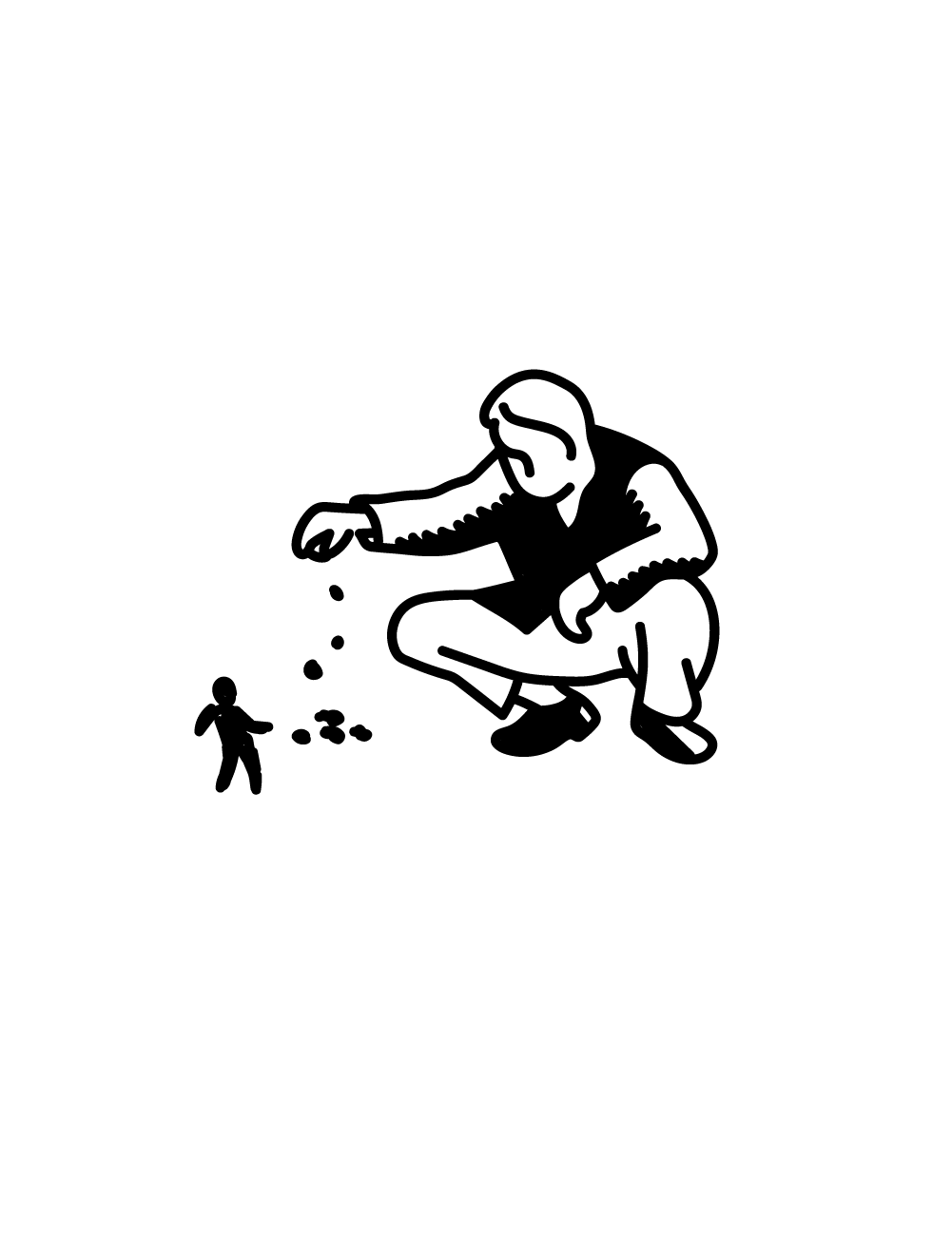
RWE must have been surprised to learn it had a neighbour living 10.000 kilometres away, and a legal obligation to avoid causing damage to his house when operating coal-fired power stations in Germany. RWE claimed it was being responsible: it had operating permits, it was supplying electricity, its share of global emissions and the science of climate change were not in dispute, and the company planned to become « carbon neutral ». But the court held that the company had a duty to avoid harming others — the legal « duty of care ».
Contemporary theorists of climate responsibility like to cite French philosopher Emmanuel Levinas, whose more extensive way of thinking about this duty of care has significance for how we live on a changing planet. Levinas pushed back against the orthodox view that responsibility is about one’s own actions, countering that the foundation of humanity is the infinite, asymmetrical and inescapable duty to another. In Levinas’s framing, when the Peruvian farmer appeared in the German court, RWE encountered his « visage » — which represents both his presence and vulnerability, but also his capacity to demand that the company take responsibility for him.
After ruling in 2017 that RWE could be legally liable in principle, the German court turned to whether the facts supported the law in Lliuya’s case. That depended on scientific evidence. The first task was establishing RWE’s contribution to climate change. Until 2013, records only showed the carbon emissions of nation states. With the launch of the Carbon Majors database and its yearly updates2, studies now trace carbon emissions to specific companies. At the time of Lliuya’s court case, RWE’s share of total worldwide emissions since its earliest operations came to 0,38%. Although RWE reportedly couldn’t understand why it was being singled out, one answer could be: why not? The claim followed the emissions rather than the money: RWE was being sued for €17.000, which represented 0,38% of the remedial work needed to shore up Lake Palcacocha.
The next link in the causal chain was to connect global emissions to the melting glaciers above Huaraz. That was achieved through recent developments in « attribution science », in which climate scientists model the risk of environmental impacts in a specific location, and then evaluate whether its cause was anthropogenic (fossil fuel emissions) or natural variability. In 2021, Oxford scientists published a study finding that the glacial retreat above Lliuya’s hometown was « entirely attributable » to the increase in temperature from global warming. The study became evidence in Lliuya’s case.
As in the British nursery rhyme « The House that Jack Built », the court found it could locate the cat that killed the rat that ate the malt that lay in the house in the Andes. There was a legally plausible chain of causation: the emissions rising into the atmosphere from RWE’s power plants in Germany increased the level of greenhouse gas concentrations, making the global temperature hot enough to melt glaciers, thus causing lake waters to rise and risk flooding people living in the towns and villages below. But the probability of risk to Lliuya’s house was where the case came unstuck. Court-appointed experts concluded that the risk of what’s known as a glacial lake outburst flood (a sudden, catastrophic release of meltwater) threatening Lliuya’s house within the next thirty years was just one percent. In his case, the scientific advice was that it didn’t meet the « imminence » test that German law requires.
Despite the final verdict in its favour, for RWE, there was a reckoning. The company had won the facts, but lost the law. Germanwatch claimed that the court’s decision set a precedent that reaches far beyond the individual ruling and legal commentators agreed. In their blog on the website of Columbia Law School’s Sabin Center for Climate Change Law, two legal scholars opined that « the case has redefined what is possible in climate litigation and catalysed a new generation » of lawsuits. Since the 2017 court decision, more and more climate action lawsuits are being brought against fossil fuel companies3. In European courts, there are currently cases against Shell, ENI and Total — including one brought by a Belgian farmer for extreme weather damage to his crops. Saúl Luciano Lliuya has a new neighbour.

- Noah Walker-Crawford was a colleague of mine at University College London before he joined the Grantham Institute at the London School of Economics ↩︎
- Carbon Majors is a database of production data spanning back to 1854, from 178 of the world’s largest oil, gas, coal and cement producers. ↩︎
- For an overview of which cases have recently been filed, see the Grantham Institute’s snapshot of global trends in climate change litigation on their website. ↩︎