 Skip to content

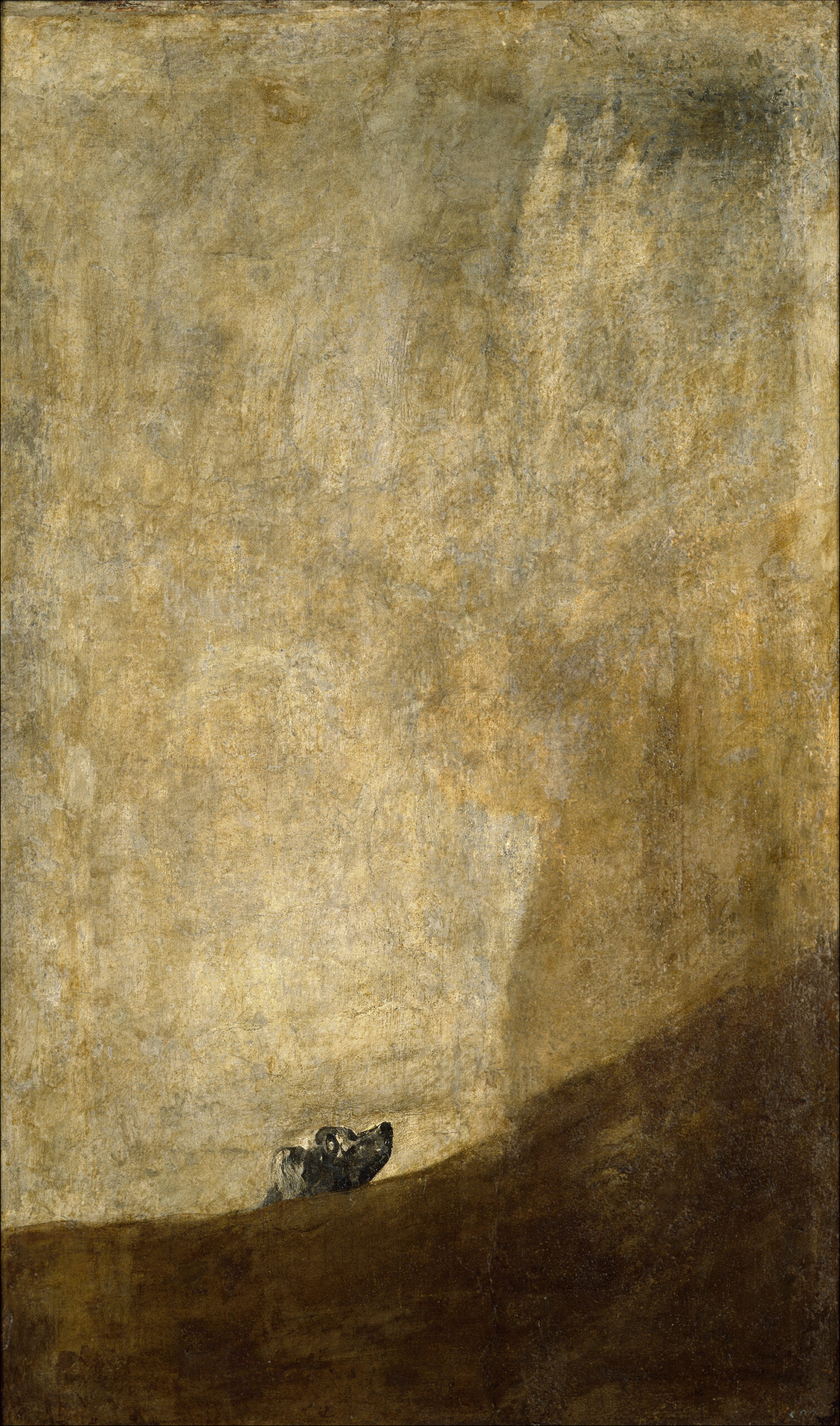
How prescient was the late eighteenth- and early nineteenth-century Spanish painter Francisco Goya? In 2019, while Madrid was hosting the annual UN climate conference, the Prado Museum mounted an exhibition called +1,5ºc Lo Cambia Todo (+1,5 ºC Changes Everything). 1,5 ºC above pre-industrial levels is the threshold set by the 2015 Paris Agreement, after which the planet would become unliveable. The exhibition, in partnership with the World Wildlife Fund, showed some of the Prado’s masterpieces digitally altered to suggest how climate change would affect the scenes thxey depicted. The King of Spain’s horse executing the levade in Velázquez’s Equestrian Portrait of Felipe IV (1635-1636) was up to its neck in floodwater. Standing on its hind legs turned out to be essential. The young couple with a sunshade in Goya’s El Quitasol (1777) were now refugees sheltering in a grim tent-city.
In October 2022, the UN climate agency announced that because of the world’s failure to reduce emissions, there was now « no credible pathway » for staying below the 1.5 ºC limit. A week later, Goya once again featured in the climate battle. This time, the Prado’s Majas — twin paintings of the same young woman reclining on a divan, in one image dressed in skin-tight white satin, in the other naked — became the object of a guerrilla intervention. Two young activists from the environmental collective Futuro Vegetal glued themselves to the Majas’ gilded picture frames, with an ominous black « +1,5 ºC » scrawled on the wall between them.


Although it was only three years after their own 1.5 ºC exhibition, this time 1.5 ºC did not « change everything » for the Prado, which now condemned « the use of the museum as a place to make a political protest of any kind ». What would Goya — whose work is so often seen as a cry against tyranny and human folly — have thought of that stance?
This article is behind the paywall. Want to keep reading this article?
Subscribe to the European Review of Books, from as low as €5,00 per month.
Already a subscriber? Sign in