 Skip to content

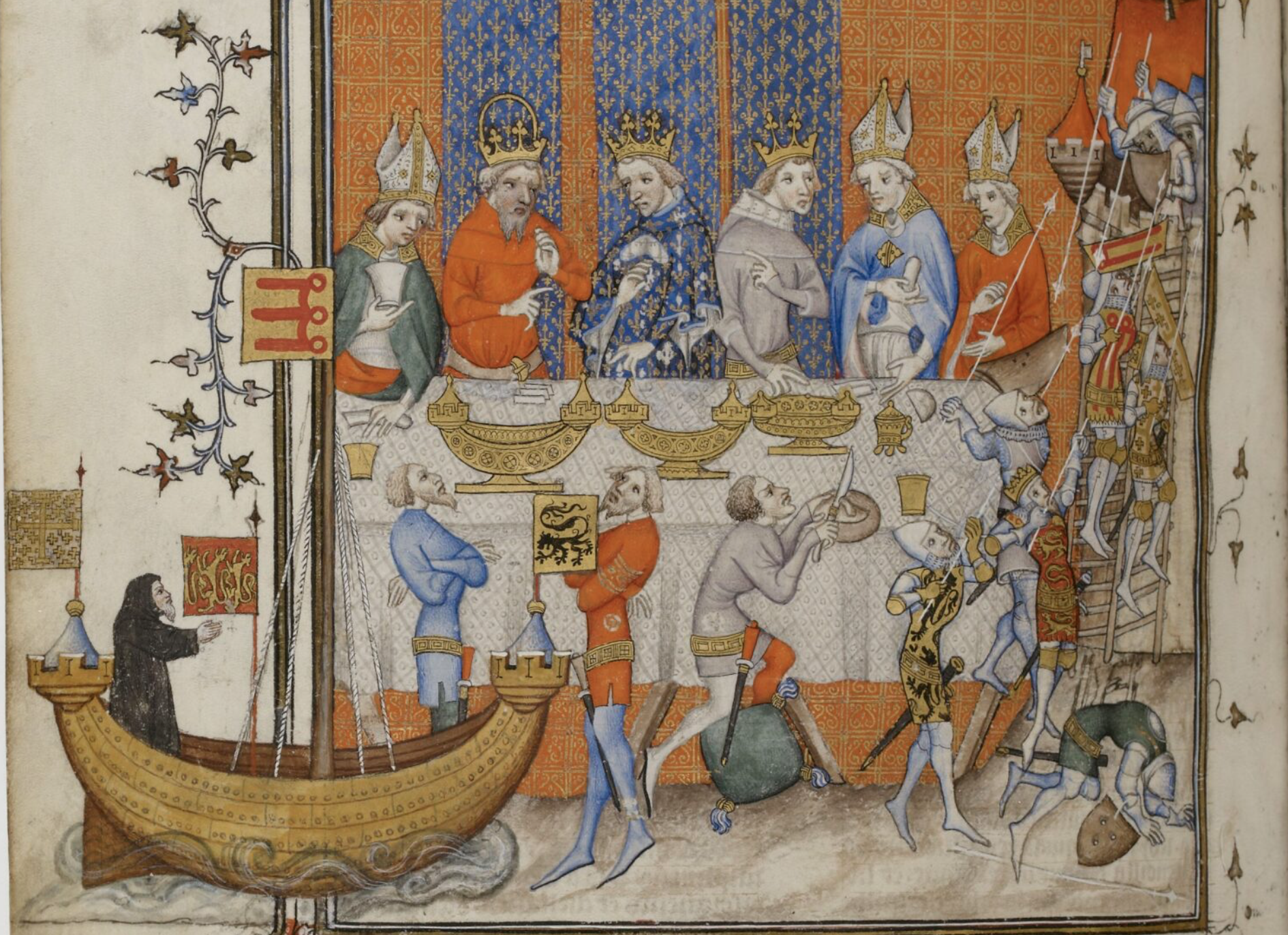
On Friday 9 June 1458, a pirate ship swerved and fired on two Bristolian trading boats as they passed the coast of Malta, on their return from the Levant. I found the event transcribed in a fifteenth-century legal document.1 The Katherine Sturmy and the Marie were captained by the Bristol merchant Robert Sturmy, and contained over £18.000 worth of Syrian and Mediterranean goods — nearly £11.6 million today. The attacking ship was captained by the notorious pirate Giuliano Gattilusio (1435–1480). The pirates pursued the merchants for three days, before capturing both ships. The survivors who returned to England described how crew members were « horribly and grievously without pity and compassion murdred, slayne, drowned and cast into the sea. » In the words of the Viceroy of Sicily, the assailants « placed… the said Robert and others who after the harsh battle and cruel slaughter and bloodshed remained half-alive, on the Isle of Malta. And they sailed to Libya with the two ships. »
According to official records, Sturmy died on 11 June, leaving a widow in Bristol, Ellen. Gattilusio commandeered his ships with their precious cargo and steered them to Libya. Sturmy’s business partner, John Heyton, survived and made his way home with the other surviving crew members.

When he returned to England, Heyton brought a case before King Henry VI « in his own name and that of Robert Sturmy ». He argued that they deserved compensation for the value of the lost goods, plus an additional £10.000 damages for « the hevyous affraye, grievous woundyng, maiming and bloodletting of them done by the Genoese… and for their lechecrafte [medicines], costs and expenses done by them in coming home by straunge countries. »
The pirate Gattilusio was out of reach in Libya. Instead, the Genoese residents of London and Southampton — who had no connection to the events off the Maltese coast — were charged for the value of the lost goods. When the Genoese were unable to pay, they were imprisoned and put on trial in London. In my readings of medieval history, this is a unique event. It was highly unusual for an immigrant group to be effectively held hostage in England in retribution for actions taken by their countrymen overseas. The coverage of the time speaks to the significance of the incident. One English chronicler described how the London Genoese were arrested and « adjudged to pay for the harmys that their nacion had done ». In the medieval period, the term natio was used to describe a person’s place of birth and mother tongue. This discourse and emergent structure of nationhood was already present in the Middle Ages, even if the modern nation-state was not yet in operation.
Sturmy’s voyage came at a tipping point in this history of migration and nationhood, in terms of both European colonialism, and English legislation around national minorities. Sturmy’s stolen commodities — spices, raw minerals, gold coins — would become the basis of early modern trade and settlements across the Atlantic. The Genoese who happened to be in Southampton and London in 1458 were thus caught in the crossfire of international struggles for economic power across the Mediterranean.
This article is behind the paywall. Want to keep reading this article?
Subscribe to the European Review of Books, from as low as €5,00 per month.
Already a subscriber? Sign in