pxl

, ,

KRIEG

Stefan Zweig, Marcel Proust, Thomas Mann & Romain Rolland: lessons from the trenches, for AI models

 | Published in 


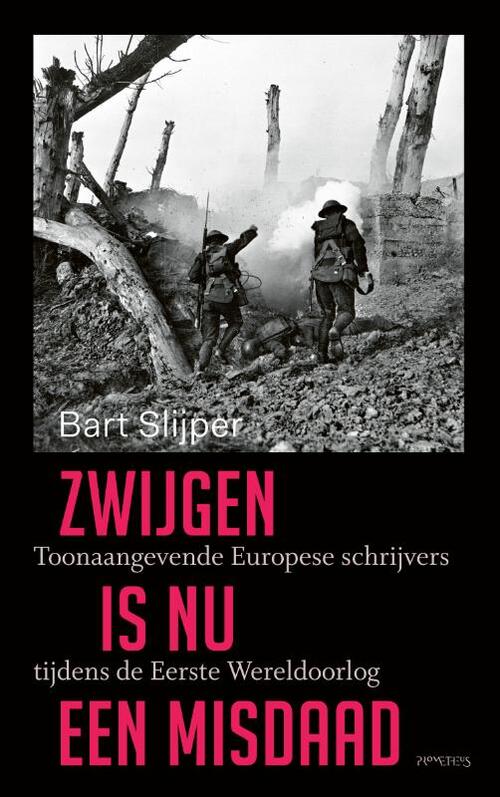
Zwijgen is nu een misdaad
(Silence is now a crime)

Bart Slijper

Prometheus, 2026


The Dutch writer and psychiatrist Frederik van Eeden often felt that he was destined to improve the world. In the 1910s, he embarked on another one of his ambitious projects. Van Eeden was going to unite « the great minds » of his time. This enthusiastic, reckless man, with his full black moustache, had by then made his mark as a utopian: in 1898, he had founded the Walden colony 25 kilometers from Amsterdam — an alternative community inspired by Henry David Thoreau.1 It was a socialist utopia where workers owned the land, profits were shared and capitalism was kept at the gate. The colony went bankrupt within ten years.

Now Van Eeden wanted to achieve something greater: a world parliament of « royal » thinkers and poets, focused on the rejection of materialism and the fight against social injustice (this time with Tolstoy and Steiner as examples). From Germany, he invited the philosopher Erich Gutkind, whom he had met in Berlin in 1910, and from the US, the socialist writer Upton Sinclair. The Irish playwright and political activist George Bernard Shaw wanted nothing to do with the project: « Have you no sense of proportions? », he responded. Genuine interest was shown by Walther Rathenau — head of the industrial giant AEG, fabulously wealthy, and a widely read philosopher who warned about the alienation of man in a mechanized society.

When war broke out, the grand project evaporated. Rathenau was overcome by nationalism, and Gutkind (to Van Eeden’s astonishment) regarded the war as a holy struggle against materialism. Van Eeden then wrote to the French writer Romain Rolland — in French, like all their correspondence:

Like you, I am convinced that public opinion has enormous power in this day and age. But how can you influence it in the most effective way? That is what worries me and almost paralyses me.2

Next project: in January 1915, Van Eeden became editor of De Amsterdammer, where he established a weekly « Internationale Tribune ». Prominent foreign authors wrote open letters for it, in French, German and English, which were published untranslated. Sigmund Freud wrote on 17 January 1915 that the war proved that man’s evil, primitive impulses do not disappear but are at most only being suppressed in times of peace. The intellect was merely a plaything of our instincts and passions.

Van Eeden wanted to do things. Rolland worked for the Red Cross in Geneva and asked him to help trace Belgian citizens: hundreds of thousands had fled across the Dutch border; others were imprisoned in Germany. Van Eeden appointed himself on a mission: he visited agencies and got Dutch Foreign Minister John Loudon to promise help.

Read more