 Skip to content

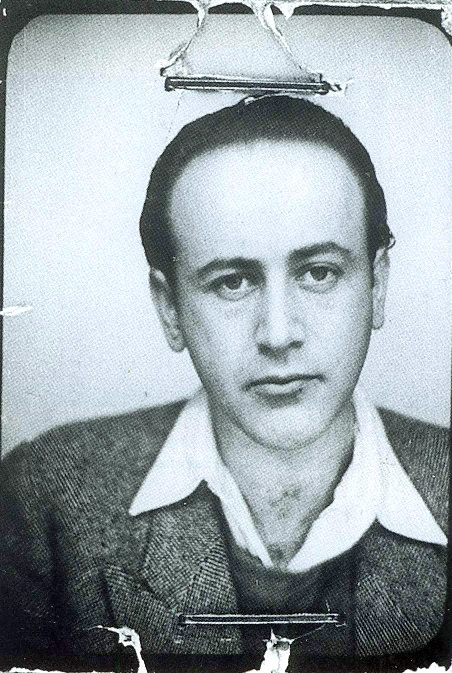
Paul Celan is one of the most cryptic and mercurial of European poets. He was born Paul Antschel in 1920 to German-speaking Jewish parents in the formerly Austro-Hungarian province of Bukovina. In English verse, Celan’s closest kin is the nineteenth century Jesuit Gerard Manley Hopkins. But whereas Hopkins’ ecstatic word-coinages were propelled by Christian faith, for Celan — whose parents died in the Holocaust, and who nonetheless found himself driven to write in the language of their killers — it’s the impossibility of faith in either God or humans that drives his desperately beautiful word-creation.
History and geography were unkind to Celan. His hometown of Czernowitz (later Chernivtsi) was fought over by Romanian and Ukrainian nationalists in the aftermath of World War I, occupied by the Red Army in 1940, by the Germans in 1941, and later seized again and annexed by the Soviets. The young poet survived (sort of), by perfecting the language of each successive occupier. He renamed himself Paul Celan (« Celan » was an anagram of the Romanian spelling of his original surname) and made his reputation as a poet and translator in Bucharest, in Vienna, and ultimately in Paris, where he died by suicide aged 49. Today he is considered both one of the finest German-language poets and one of the great European modernists — up there with Rilke, Egon Schiele and Shostakovich.
Until now, astonishingly, there has been no serious birth-to-death biography of Celan. Anna Arno, the author previously of a life of the artist Paula Modersohn-Becker, is filling this gap. Her book, which came out in Poland in 2021 and has now been translated into English by Soren Gauger, subtly interleaves Celan’s life and his poetry, detailing how his relationships with figures like Ingeborg Bachmann, René Char and Martin Heidegger informed his art.
In the following excerpt, she describes the young Celan’s life under Nazi occupation. His parents, Leo and Friederike (Fritzi) Antschel, have just been sent to a deportation camp in Transnistria and to their eventual deaths; Paul himself is in a labor camp in Moldova, but he’s in love, he’s translating Shakespeare into German, and finding his own feet as a poet. (The translations from Celan’s verse are by Pierre Joris.)
In the spring and summer of 1943, Celan was coming of age as a lover and as a poet. Every letter might have been the last. In March 1943, he confessed that for two years he had been living outside the natural rhythm of the seasons, and had not noticed the trees blossom, or the passing of days and nights. He was only buoyed by the thought that Ruth [Kraft, an actor who was Celan’s first great love] would ensure the poems survived. He urged her not to mix them up with his translations. « I also ask that you do not write my name or the title on the title page, at most ‘Poems’. » He sent « Sleeplessness »1 from the camp [to which he had been deported by the Nazis]:
I know a spell, you know a poison
For both of them, the cup of my fingers goes green.2
It is no accident that nearly all the plants in the early works are either poisonous or curative. As far back as the prewar « Drüben » (« Out There »), the wind that called him to take a faraway expedition promised « polypodies and lady’s gloves ».3 Celan surely appreciated the fern’s German name, Engelsüss, literally « angelic sweetness ». But he was also drawing from the plant’s traditional symbolism as a talisman in the game of love. Lady’s glove is poisonous, but in small doses, it heals the heart. Forget-me-nots are meant to hold feelings for eternity. Celan chose the thorny wild rose for his flower and contrasted it with the blue columbine, the flower of the beloved. He called attention to the erotic shape of the tulip and the stamens within the calyx.
White, the tulips; bend over me! [. . .]
My mouth is to be the only cup?4
He wondered if his beloved « nurtured the darkness » as before, when he brought her a bouquet of hawthorn. The German name, Rotdorn, contains red and thorns, but Celan might have also known the alternate English name, « Paul’s scarlet », which had his name in it. « The Poppy » also used conventional associations between the color of the petals and flames. In April 1943, the yearning lover could only fear that as soon as his burning crown fell, it would reveal a « heart black with pain ».5
In his floral poems, Celan evoked erotic images:
When I dress only in a loincloth of clouds
the rain will be sweeter to you than wine.6
Paul Antschel’s early works still feel like « anchorless groping ».7 He was using old stock phrases, amorous and lyrical stand-bys. Love transpires in a dark « world of dreams and reveries », its ally is darkness, the colors of its feelings are red and purple.
It is raining, sister: The sky’s
memories wash away the bitterness.8
Celan still addresses his poems to his « sister » here, though he never had siblings. He may have picked up this trope from Georg Trakl. In his last poems, the Austrian poet lamented the perils of the First World War to his sister. The difference was, Trakl meant his real sister, Grete:
Under the golden boughs of night and stars
Sister’s shadow sways through the silent grove,
To greet the spirits of the heroes, the bleeding heads.9
But the sisterly bond with a woman is a motif that goes much further back, all the way to the Bible. This is the role taken by the beloved woman in the « Song of Songs » : « How fair is thy love, my sister, my spouse! »10
Lilac, alone before the fragrance of time
Dripping, seek them both, as embraced
They stare out through the open window at the garden.11
In Celan’s early works, flowers, rain, sunshine, and stars are still in the repertoire of love poetry. Like a novice painter, the young poet learned by copying. As Ruth Kraft recalls, he was translating Verlaine at the time, and he sketched out a version of the poem about lilacs in French as well. « I want to place something in your hands, » he wrote in the summer of 1943, « just as back then I put my life in your hands. It is strangely intoxicated and sonorous. What could I send from afar, like a glow, a soft summons [. . .] — just a poem. »12« Just a poem, » as Celan writes; this time it was « Window in Southern Tower », inspired by a Provençal song. The graceful love ballad sweeps us away to another world: « It’s just a poem. Let the southern landscape blow through your hair for just a brief moment (or maybe a bit longer?), and when the sea vanishes from your eyes, waiting, nearby, in the darkness, let the only reality remain, like the waves. »13
In the camp, Celan wrote poems unaffected by his situation. He used hackneyed romantic motifs, honing his technique. Only « A Warrior » begins with the question: « Can you hear me? I’m speaking to you, as death spreads in the heavy air. »14 In the loneliness, anxiety, and uncertainty of the war, every poem is a letter, a sign of existence, but also a challenge. Perhaps rebellion is all the more forceful in its silence, in being contained within the very act of writing in those times. As was his centuries-old task, the poet tells a faraway friend of stars and anemones. He knows the surrounding reality has nothing to do with these things.
In « Puppet Play » Celan described the fate of puppets frolicking on stage with glass eyes and smiles plastered to their faces. In the compelling conclusion of this ballad, the viewers bow to this « Life of apes and death of apes ».15Celan sent this poem to Ruth Kraft in 1942.
Celan traveled from the camp to Chernivtsi on a pass. When asked about his everyday life, he shrugged and said he was « shoveling dirt ». He stopped in at Edith Horowitz’s. « I can still see him, coming down from Veterans’ Hill, walking calmly, with his unmistakable gait. His unbuttoned gray trench coat came almost down to his ankles, his left hand held a cigarette. He carried his left arm like a bird’s wing, tilting his head slightly. Pale, serious, stark, he was like an El Greco painting. »16 Despite the wartime poverty the Horowitzes tried to put him up: from time to time his friend’s mother even baked his favorite Schmettentorte (a Bukovina sour-cream layer cake). Yet Edith said she saw him smile only once during the war: when he put on an old-fashioned embroidered nightshirt belonging to the man of the house. The costume caused a bit of merriment. « In general, however, he was quiet and somber. »17
During one of their trips into town, in November 1942, Paul Antschel and Ilana Shmueli slipped their stars of David into their pockets and strolled through the abandoned Volksgarten. They wanted to see the grand chestnut-tree-lined avenue. They could not believe their eyes when they saw spring flowers in the grass: primroses, violets, forget-me-nots, clover. They assembled a bouquet, wound it in Paul’s peaked cap, and left his cap under an old willow by the pond. They recited Shakespeare, whom Paul was translating at the time. Then he said: « Chestnuts blooming again in the fall — it is a mortal illness. »18
The wave of deportations that swept up Celan’s parents took a greater toll than the one before. The Antschels ended up in a camp known as Cariera de piatră, the Stone Quarries. This was a labor camp, but also a gathering site from which prisoners were sent to other camps on either side of the Bug River. Placed in an old school, surrounded by barbed wire, they were guarded by Romanian and Ukrainian officers and watched by the Todt organization. Curzio Malaparte wrote of meeting Romanian soldiers in an abandoned village in the summer of 1941. They kept repeating: « The Germans passed through here ahead of us. It’s true! [. . .] We do not destroy villages; we do not harm the peasants. We only have it in for the Jews. »19 The prisoners worked themselves to death repairing the road from Haisyn to Uman. The men extracted stone, then the women crushed it into smaller pieces. In the winter the temperature fell to -30° Celsius — feet, noses, and ears were frostbitten. Those who lost their shoes or fell ill and were unfit to continue working were killed on the spot. That was why small boys pretended to be strong men, older men shaved their stubble, trying to look hale and hearty. Foremen reported those who were « insubordinate » or whose strength failed them. A special SS unit handled the executions. The unburied bodies piled up by the roadsides, as everywhere else.
An eighteen-year-old cousin of Paul’s, a poet named Selma Meerbaum-Eisinger, found herself sharing a box car with the Antschels. She wrote of roses that « died before they managed to live ». The painter Arnold Daghani of Suceava, who kept a camp diary, wrote that Selma died of typhus. According to his testimony, the Antschels were transported to the camp in Chetvertynivka and then, like himself, to Mykhailivka, where the camp was administered by the Germans. The prisoners were packed into barns, filthy and hungry. Daghani recalled the grinding labor was not even as bad as the daily marches to the worksite, during which the guards kicked and abused the prisoners.20 As a nine-year-old child, the writer Aharon Appelfeld was sent from the Chernivtsi ghetto to a camp in Transnistria. « In 1941, death was not yet industrialized, » he wrote, « and any means of killing was used. My father and I were on a forced march that began with two hundred people and ended with thirty. »21 On August 17, Daghani noted that « Antschel the construction worker was transferred to work in Haisyn. »22 One of his fellow prisoners, Phillipp Kellmer, claimed that a frail Fritzi Antschel had been killed by a blow from the butt of an SS man’s rifle while marching off to work.23 Daghani stated that Leo Antschel returned to Mykhailivka to get his wife, and both were murdered in another camp on the Bug River (probably in Tarasivka, where prisoners from Haisyn were moved, in December 1943). In 1944, in a letter to Erich Einhorn, Celan wrote that his parents had perished in the Krasnopolka camp.24
He learned of his father’s death from a letter his mother sent in the fall of 1942 — this was the only word he received from his parents in the camp.25 It was delivered by a Chernivtsi chaplain who was traveling to Transnistria. Leo Antschel died during an epidemic; it is unclear if the cause was typhus or if he was shot, weakened by illness, and unfit to work. Celan recalled this dreadful letter from his mother in « Black Flakes » :
Snow fell, lightless. One moon
it has been or two, that autumn in monkish habit
brought news to me too, a leaf from Ukrainian scarps:
                     [. . .] Child, oh a cloth,
to wrap myself in, when it shines helmets,
when the clod, the pinkish one, breaks open, when snowy your father’s
bones scatter, under the hoofs crus
the Song of the Cedar.26
The Lebanese cedar — the biblical attribute of a loved one — was also a symbol of Zionism, and « There Where the Cedars » was one of the movement’s first anthems. Celan was paraphrasing the words of a nineteenth-century song:
There where the cedar kisses the sky,
And where the Jordan quickly flows by,
There where the ashes of my father lie,
In that exalted Reich, on sea and sand,
Is my beloved, true Fatherland.27
It can be no accident that Celan alluded to Zion, which Leo Antschel saw as an inaccessible spiritual homeland. In « There Where the Cedars » we read « the land unexpectedly / smells of cedar and cinnamon ». But in « Black Flakes » the lost father has been summoned by the mother’s words. The widow asks for a shawl with which to warm and wrap herself in mourning. Celan heard of his mother’s death in the winter of 1942 / 1943, from a relative, Benno Teitler, who escaped from Transnistria. Friederike Antschel was executed for being « unfit to work ».28
Paul did not mention his parents to his friends, but his sense of guilt cast a pall over all his conversations. Ilana Shmueli says he was wracked with grief; even then, he spoke of suicide. His poet friends, Alfred Kittner and Immanuel Weissglas (who was lugging around a Brockhaus German dictionary in his sack), were also deported to Transnistria. Both were put in captivity along with their parents. They were fortunate: two years later, they all made it home. This pricked Paul’s conscience all the more: « He was convinced that if he had gone with them, his parents wouldn’t have died, » Kittner recounted. « That sense of guilt probably kindled the severe mental illness which came later and led to his suicide. »29
The winter of 1942/1943 was the harshest of the war. The poems written after the death of his loved ones find Celan in a desolate Ukrainian landscape:
It’s falling, mother, snow in the Ukraine:
[. . .]
What would come, Mother: wakening or wound—
if I too sank in snows of the Ukraine?30
He reiterated these scruples in the poem « The Nearness of Graves ». In an organ-grinder rhythm, in rhyming couplets, he asks:
And can you bear, mother, as once on a time,
the gentle, the German, the pain-laden rhyme?31
This is a question asked from « inside the poem » about the power of poetry after what has occurred, and also the capacity of writing in his mother’s language, the only one dear to her, and also the language of her assassins.
Can none of the aspens and none of the willows
allow you their solace, remove all your sorrows?32
The poet sees nature as a caring companion. Trees and flowers in his poems express or stand in for emotions. In the closing lines of the later « Song for the Summer Solstice » he asks even more bluntly about the survivors’ guilt:
Oh, stone masts of pain! And I, living among you!
Oh, among you, live and beautiful, but she has no right to smile at me.33
Perhaps Celan’s most beautiful elegy for his mother was written directly after leaving his hometown. In « Aspen Tree », a poem of couplets, he calls out:
Aspen tree, your leaves glance white into the dark.
My mother’s hair was never white.34
Again, as in the Romanian folk songs, nature accompanies human dramas. Now compassionate, now insensitive, it is reborn, despite the poet’s loss:
Dandelion, so green is the Ukraine.
My yellow-haired mother did not come home.35

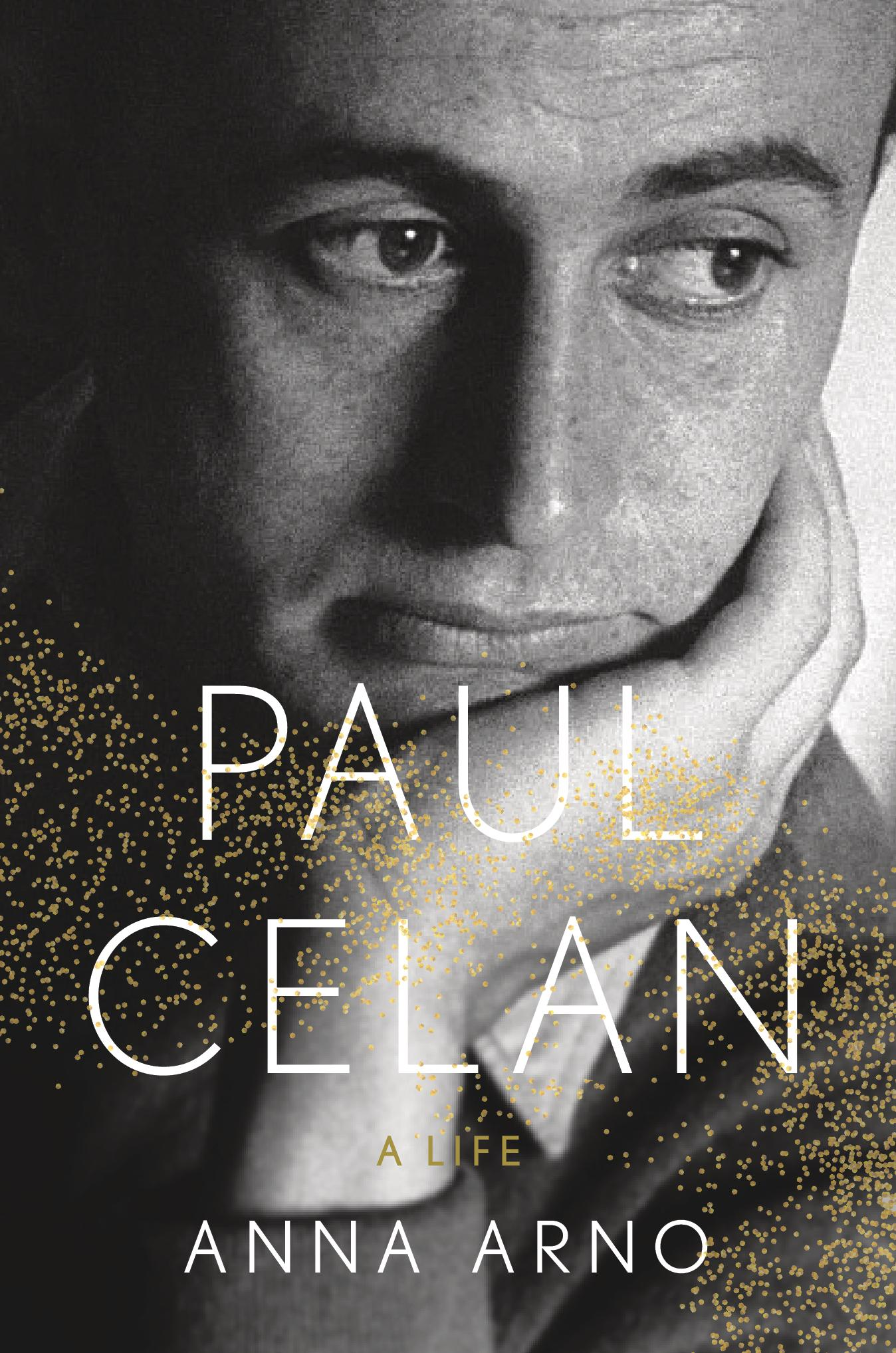
Paul Celan: A Life
Anna Arno
translated from the Polish by Soren Gauger (2026, Harvard University Press)
- Celan to Kraft, April 16, 1943, 19. ↩︎
- Paul Celan, « Schlaflosigkeit », Erste Gedichtsammlung, in Die Gedichte, 202. ↩︎
- Paul Celan, « Drüben », Der Sand aus den Urnen, in Die Gedichte, 8–9. ↩︎
- Paul Celan, « White, the tulips . . . » in Amy Colin, Paul Celan: Holograms of Darkness (Bloomington: Indiana University Press, 1991), 58. Erste Gedichtsammlung, in Die Gedichte, 191. ↩︎
- Paul Celan, « Mohn », Der Sand aus den Urnen, in Die Gedichte, 10. ↩︎
- Paul Celan, « Rosenschimmer », Blumen series, Erste Gedichtsammlung, in Die Gedichte, 205. ↩︎
- « No anchorless groping » — an allusion to the title of “Kein ankerloses Tasten », Erste Gedichtsammlung, in Celan, Die Gedichte, 182. ↩︎
- Paul Celan, « Regenflieder », Blumen series, Erste Gedichtsammlung, in Celan, Die Gedichte, 9. ↩︎
- Georg Trakl, « Grodek », in Poems and Prose, trans. Alexander Stillmark (Evanston, IL: Northwestern University Press, 2001), 127. ↩︎
- « The Song of Songs », 4.1.10, King James version. ↩︎
- Celan, « Regenflieder », 9. ↩︎
- Paul Celan to Ruth Kraft, August 23, 1943, in Celan, Briefe, no. 9, 21. ↩︎
- Celan to Kraft, August 23, 1943. ↩︎
- Paul Celan, « Ein Krieger », Der Sand aus den Urnen, in Die Gedichte, 9. ↩︎
- Paul Celan, Puppenspiel: Weitere deutschsprachige Gedichte, in Die Gedichte, 213–214. ↩︎
- Paul Celan — Edith Silbermann, 49. ↩︎
- Paul Celan — Edith Silbermann, 49. ↩︎
- Shmueli, Toward Babel, 32–33. ↩︎
- Curzio Malaparte, Kaputt, trans. Cesare Foligno (New York: NYRB Books, 2005), 38. ↩︎
- Arnold Daghani’s Memories of Mikhailowka: The Illustrated Diary of a Slave Labour Camp Survivor, ed. Deborah Schultz and Edward Timms (London: Vallentine Mitchell, 2009), 178–179. ↩︎
- Dennis Deletant, Hitler’s Forgotten Ally: Ion Antonescu and His Regime, Romania 1940–1944 (New York: Palgrave Macmillan, 2006), 158. ↩︎
- Arnold Daghani’s Memories of Mikhailowka, 34. ↩︎
- Marion Tauschwitz, Selma Merbaum: Ich habe keine Zeit gehabt zuende zu schreiben: Biografie und Gedichte (Springe: Klampen, 2014), note 36. ↩︎
- Paul Celan to Erich Einhorn, July 1, 1944, in Celan, Briefe, no. 12, 25 (written in Kyiv during Celan’s business trip as an employee of the psychiatric clinic in Chernivtsi). ↩︎
- Israel Chalfont, Paul Celan: A Biography of His Youth (Persea Books, 1991), 154. ↩︎
- Paul Celan, « Black Flakes », trans. Pierre Joris, Nomadics, March 12, 2022, https://pierrejoris.com/blog/black-flakes-schwarze-flocken-celan-ukraine /. ↩︎
- Amos Elon, Herzl (New York: Holt, Rinehart and Winston, 1975), 245. ↩︎
- Chalfen, Paul Celan, 203–204, n73. ↩︎
- Alfred Kittner, Erinnerungen an den jungen Paul Celan, ed. Bernhard Albers (Aachen: Rimbaud, 2008), 13. ↩︎
- Paul Celan, « Winter », trans. John Felstiner, in Selected Poems and Prose of Paul Celan, trans. John Felstiner (New York: W. W. Norton, 2001), 8. ↩︎
- Paul Celan, « The Nearness of Graves », trans. John Felstiner, in Selected Poems and Prose of Paul Celan (New York: W. W. Norton, 2001), 10. ↩︎
- Celan, « The Nearness of Graves ». ↩︎
- Paul Celan, Gesang zur Sonnenwende, Mohn und Gedächtnis, in Die Gedichte, 16. ↩︎
- Celan, « Aspen Tree », Selected Poems and Prose of Paul Celan, 24. ↩︎
- Celan, « Aspen Tree », 24. ↩︎