 Skip to content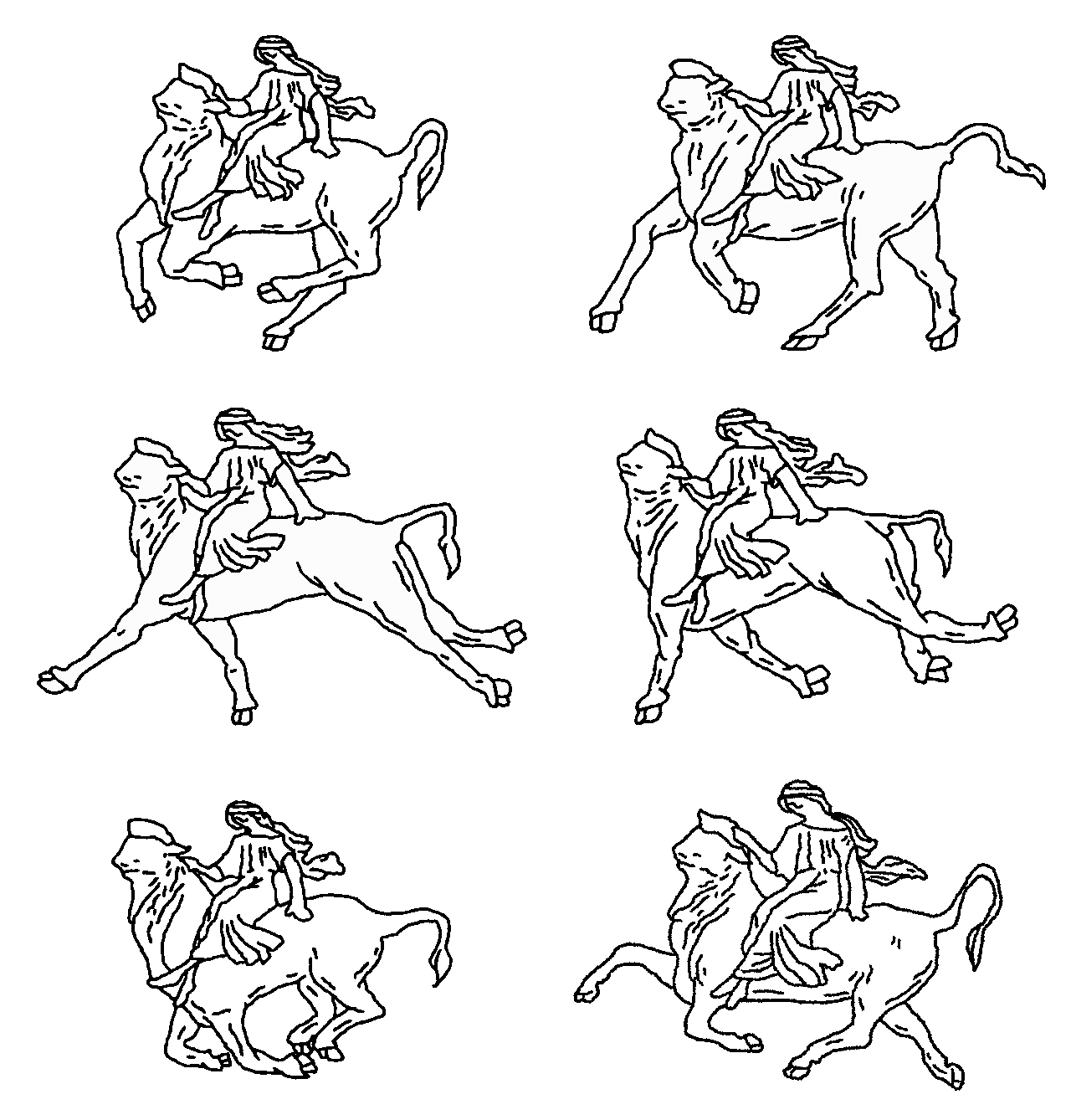

Eadweard Muybridge’s moving pictures,
Ambrogio Lorenzetti’s moving sounds
When horses trot, do all four hooves leave the ground at the same time? The question spurred a debate in the 1870s among American railroad magnates — a group preoccupied with motion, distance, horses, iron and otherwise. By the time the pioneering photographer Eadweard Muybridge published his aptly titled photo series Animal Locomotion in 1887, he had borrowed a racehorse from railroader Leland Stanford in Palo Alto, California, to settle the debate. Muybridge arranged a series of cameras at intervals in a row, with each camera connected to a wire stretching across the horse’s path. As the horse trotted, tripping the wires one by one, the corresponding camera took a photograph. Muybridge developed the photos and lined them up: motion at such speed had never before been visible to the human eye. The photographs revealed that a horse in trot did indeed have all four hooves off the ground, but only when directly under the horse’s body. It’s said the French equine painter Jean-Louis-Ernest Meissonier wept with astonishment and disappointment when he saw Muybridge’s miraculous pictures. Like most artists, Meissonier had been painting horses’ four legs stretched out before and behind them mid-trot or gallop, as if in flight. Muybridge’s later invention, the zoopraxiscope, displayed a series of images rapidly enough to animate a horse’s movement, as a form of photographic cinema. He projected these first motion pictures onto walls in San Francisco.
This article is behind the paywall. Want to keep reading this article?
Subscribe to the European Review of Books, from as low as €5,00 per month.
Already a subscriber? Sign in