

« The Emperor’s Clothes »
Any fool can see that the head of state is naked, that he is a complete phony — except for himself. Such appears to be the premise of The Emperor’s Clothes, a fairy tale I see referred to more and more. Apparently, Hans Christian Andersen’s 1837 parable is awfully relevant today.
Reading yet another reference to the naked leader, I thought: is the fairy tale telling us something about the hubris of a vain dictator? How about the citizens of the state? Why does it take a child to notice that the emperor has no clothes?
I imagined three options: a) the people, like their leader, convince themselves that they see an invisible cloak; b) the people are so stupid that they believe everything their leader tells them, even the stupidest lies they somehow swallow; and c) they are too afraid to speak their minds.
Turning to Hans Christian Andersen, I learned that many allusions to the fairytale have been made over time: Hitler, Franco, Stalin –– almost all concern the behavior of dictators. The original text is only a scrappy four pages long and begins by telling how much the emperor loves beautiful clothes. His soldiers, the outside world, the theatre: nothing concerns him except showing off his fine clothes. « Keiseren er i Garderoben »; the emperor is in his wardrobe, is what the people say.
Outside the palace, life continues merrily, until two swindlers arrive, claiming to make the most splendid clothes and fabrics, with the miraculous feature that they are invisible to anyone who is stupid or unfit for his office. So, the emperor thinks, if I wear them, I will find out who in my court is foolish or incompetent.
The weavers receive an advance of money, silk, gold, costly materials to set up their workshop. After some time, the emperor sends a wise old minister. The weavers pretend to spread the clothes before him, but the poor man sees nothing. He thinks: am I stupid? Am I unfit for my office? No one must find out, so he lies to the emperor about how magnificent the outfit is. Same goes for the second minister, who thinks to himself: I am not stupid, so am I unfit for my office? He too lies and reports on the wonderful clothes he’s been shown.
When the ruler himself comes to look, he sees nothing and is alarmed: « This is terrible! Am I a fool? Am I unfit to be Emperor? »
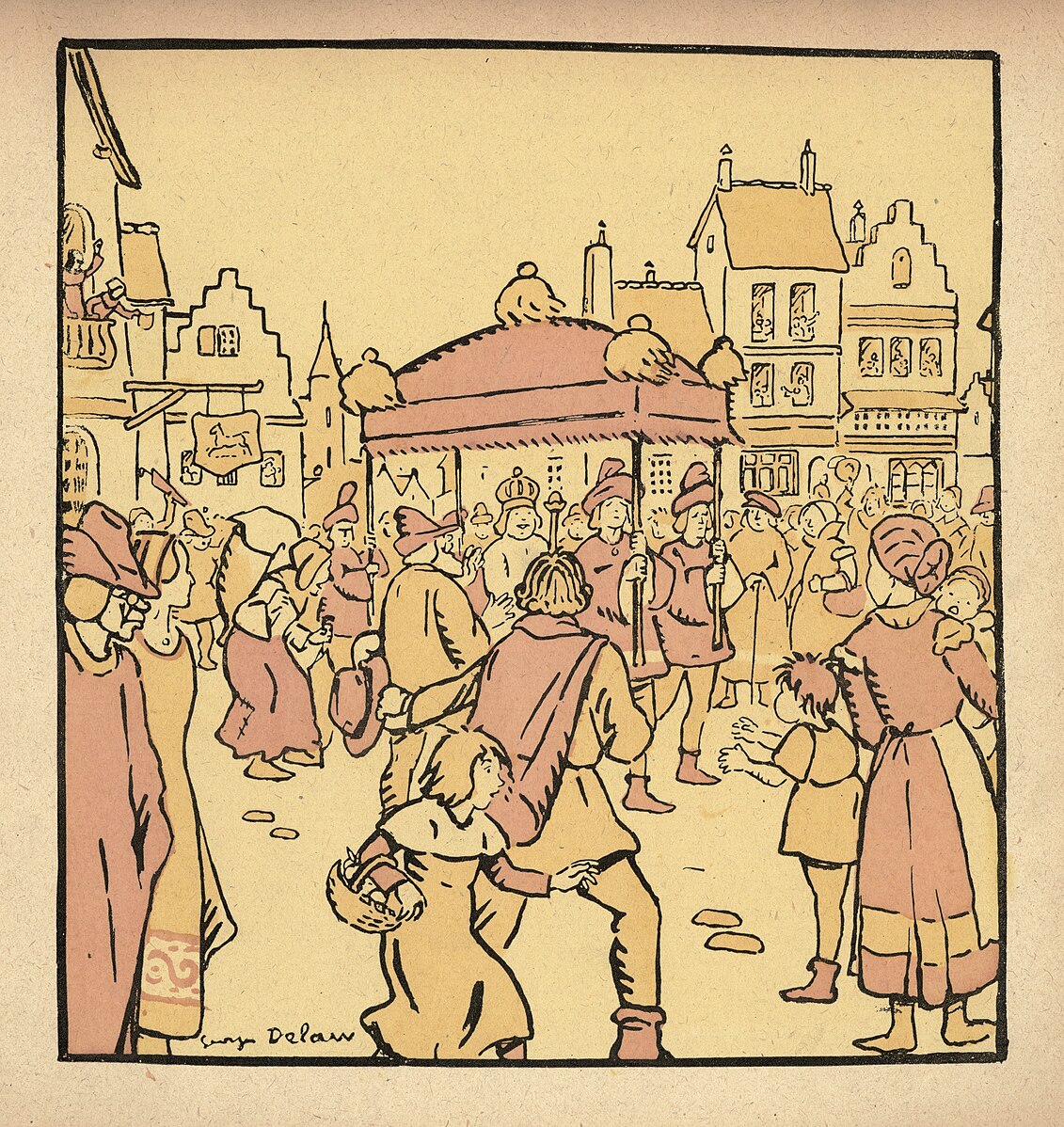
He goes all in: praises the weavers and lets them, through pantomime, dress him in the invisible clothes; his servants, his entourage and even the citizens all play along when he holds a solemn procession through the city.
Why?
« No one wished to let it be noticed that he could see nothing, for then he would have been declared unfit for his job, or very stupid, » is what Hans Christian Andersen writes.
So, the answer to my question seems mostly c), the rulers’ subjects are afraid of losing their position or of being thought stupid. The Emperor’s Clothes is more than just a fairytale about a dumb, vain and incompetent head of state, it is also about how far people will go before they stop supporting their leader.
At last, a child speaks up. « Men han har jo ikke noget på! », and soon the whole crowd is repeating, « But he has nothing on! » What then? Is the head of state overthrown, or does he at least embarrassedly flee home? Will the end of the fairytale give relief to those today who refer to « the emperor’s new clothes »? Sorry, the emperor does indeed realize that he’s naked but thinks: « I still must go through with the procession. »
And so he continues, with his sycophants carrying his non-existent train.
The cover photo: Illustration of Hans Christian Andersen’s « The Emperor’s New Clothes » by Vilhelm Pedersen (1820–1859). Public domain, via Wikimedia Commons.
