 Skip to content

Last week, I found myself waiting in a long line of twenty-something-year-olds in fancy dress, Goths in black leather and chains, trans waifs in white pancake makeup and platform wedgies.
The line snaked around a block by London’s St. James Palace; the evening was warm, and the mood convivial. It was opening night: we were all waiting to get into an exhibition by the conceptual artist Marina Abramoviç. The show was in a newish gallery founded by the daughter and son-in-law of an artworld titan. The Abramoviç works being shown — two thin strips of stills from videos of an old performance — were utterly without interest: the point was being there. Various DJs and live musicians were playing — including my friend, drummer Pike Ogilvy who was accompanying a performance artist called Charlie Osborne; there would be free booze, and lots of celebrities, including « Marina » herself, were promised.
I never would have made it through the pearly gates, if Pike hadn’t come and fetched me, swearing to the bouncers I was his aged mother.
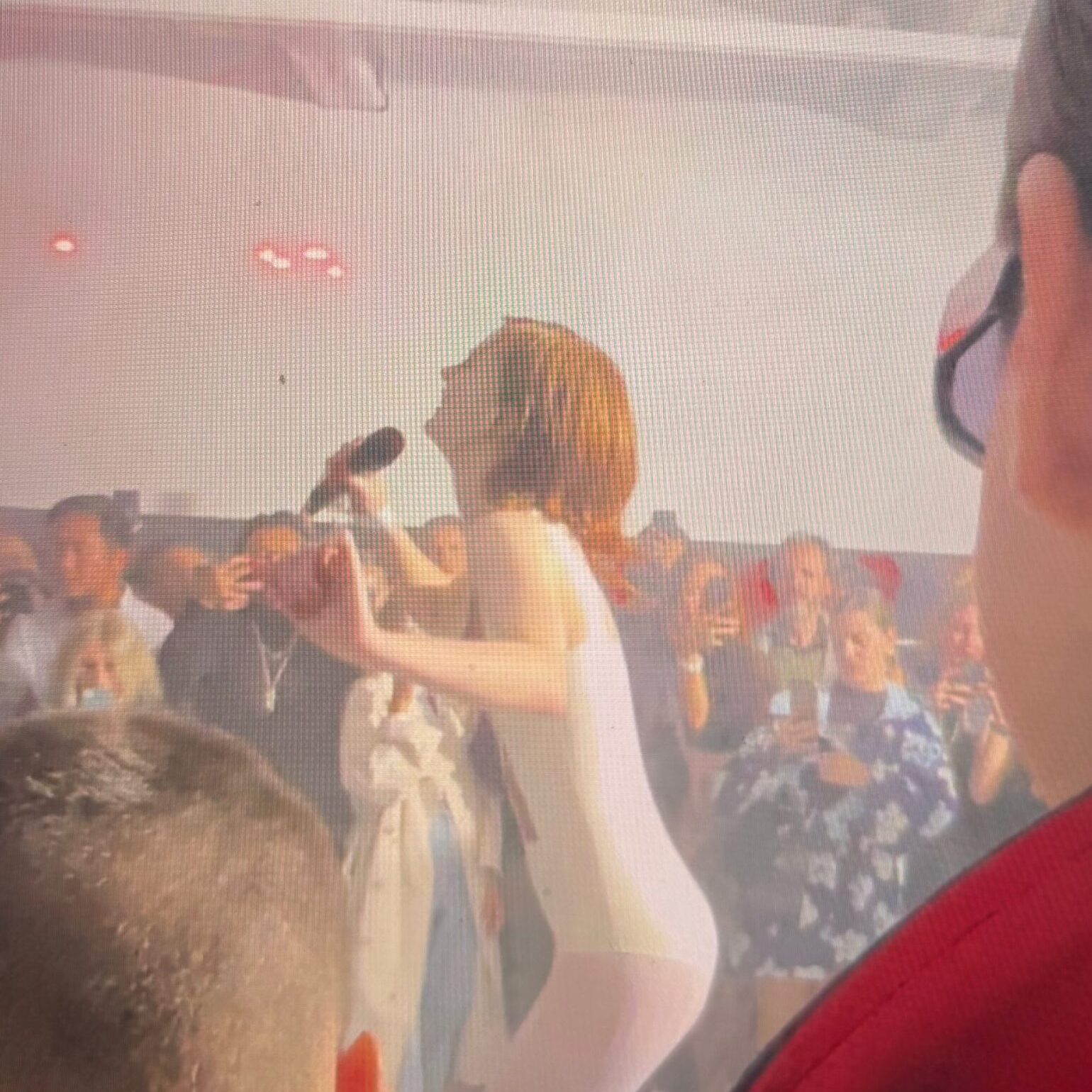
Inside, several hundred people were jammed into the cavernous space. The first set began: Charlie, rake-thin, with plastered-down red hair, wearing a cream-and-maroon latex leotard, kneeled, crouched, screamed and murmured into the mic, accompanied by Pike’s steel percussion, while the crowd — every single person in the room but me, it seemed — lifted their phones in a silent salute. The emotional dynamic of live performance is different now, I realized: Charlie was angling her kneeling and her mewling towards the phones, playing to the machines and not the humans. What appeared to be a live event was in fact auxiliary, like a stem-cell baby that had been birthed in order to serve as spare parts for someone else’s ailing body — in this case, as fodder for the social media biosphere.
The phones weren’t easy to satisfy. Voracious for fresh content, their sunflower faces periodically re-pivoted towards an unseeable spot in the crowd, indicating that « Marina » had emerged from the VIP backroom; sometimes the phones turned their backs on the paid performers, battening on another spectator’s crumpled handbag or dreadlocked topknot.
The next day, I learned on Instagram that the evening was being rebranded as a « rave ». A rave in a St. James art gallery? And why did the waiting in line outside, chatting with the German art-school student who’d heard you could pick up one of the Abramoviç prints for a mere 1400 GBP and flip it — much as Abramoviç herself had flipped her original art-concept from live performance to video to print collectibles — seem like the most fun part of the evening?
I was reminded of Stendhal’s novel La Chartreuse de Parme, where his young hero Fabrizio fights in what turns out to be the Battle of Waterloo, but actually his own experience of the day is of repeatedly getting left behind and separated from the action and being rescued by a kindly food-cart lady who helps him catch up. Afterwards, Fabrizio keeps wondering, « Was I really there? »
Even if you were a soldier wounded in the most famous battle of the Napoleonic Wars, it seems, there was still this anxiety about authenticity, about whether you’d really been there and what « there » was — an anxiety that the age of smart phones has madly compounded.