 Skip to content


Pétrole
A play adapted and directed by Sylvain Creuzevault

Petrolio
Pier Paolo Pasolini
(Garzanti, 2025, nuova edizione a cura di Maria Careri e Walter Siti)
Translated by Ann Goldstein (Pantheon 1997)

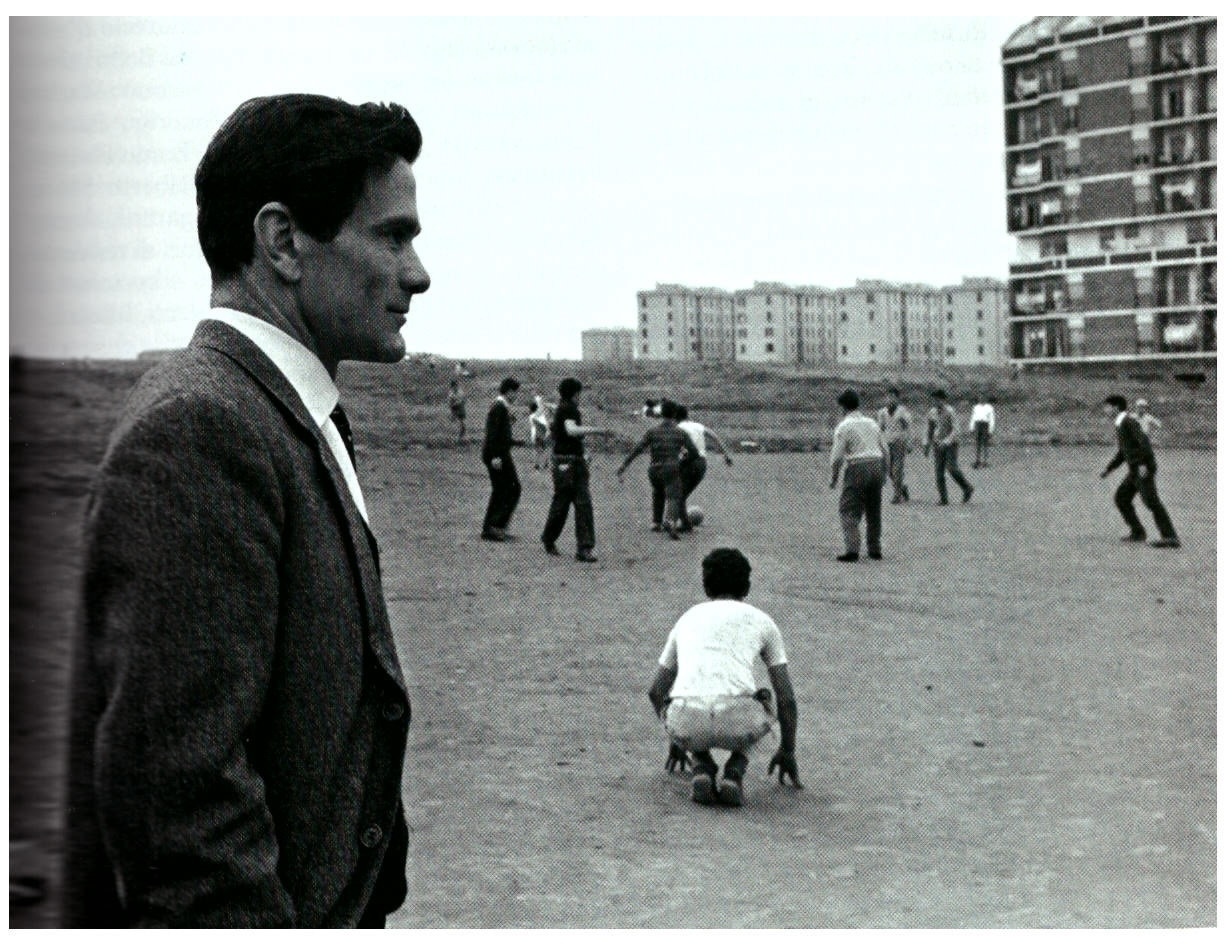
On 2 November 1975, Pier Paolo Pasolini — poet, filmmaker, novelist, newspaper columnist — was found assassinated on a patch of scrubland near Rome. The seventeen-year-old boy whom he’d brought there for sex the night before was convicted of Pasolini’s murder, but the police investigation was farcically inept, and all the evidence that there were multiple assailants was ignored. Fifty years on, new theories about his assassination keep being voiced. One of the more intriguing is that Pasolini was killed to stop him from publishing Petrolio, the massive roman à clé he was writing in the last few years of his life.
Petrolio (« petroleum » or « crude oil » in English) is, among other things, an inquest into ENI, Italy’s petrochemical conglomerate, whose charismatic director Enrico Mattei was killed in 1962 when a bomb was planted on his plane. Pasolini’s novel examines the shady business empire amassed by Mattei’s deputy and then successor Eugenio Cefis. It suggests that Cefis hired the Sicilian Mafia to kill his boss. Did Cefis also order Pasolini’s murder to keep him from publishing his exposé? The latest critical edition of Petrolio, which came out in Italy last summer, says « probably ».
One problem in identifying Pasolini’s assassins has always been: who didn’t want him dead? Pasolini was a dog who bit everyone: in his writings of the 1970s, he repeatedly named and excoriated all the institutions and individuals he believed had helped turn contemporary Italy from a place of living traditions to what he called a hollow « penitentiary of consumerism ».
This article is behind the paywall. Want to keep reading this article?
Subscribe to the European Review of Books, from as low as €5,00 per month.
Already a subscriber? Sign in